Hellfire explained – meaning & symbolism

Hellfire

The term "hellfire " originates from English and literally translates to "hellfire." It is deeply rooted in religious, mythological, and cultural beliefs and symbolizes damnation, punishment, and destruction, but also power, passion, and transformation. In Gothic and dark culture, hellfire is understood not only as a religious concept but also as a powerful symbol of inner conflict, rebellion, and emotional intensity.

Origin and religious significance

Historically, Hellfire originated primarily in the Christian worldview. Hellfire was considered eternal punishment for sinners and unbelievers and was used as a cautionary image in sermons, writings, and works of art. Fire symbolized both physical torment and mental anguish. The purpose of this depiction was less about description than control: fear of Hellfire was meant to enforce moral behavior.

Hellfire became an integral part of religious iconography as early as the Middle Ages. Flames, demons, and burning souls shaped the image of hell and influenced the cultural understanding of guilt and redemption for centuries.

Symbolic meaning of Hellfire

Beyond religious dogma, Hellfire symbolizes extreme conditions. It represents destruction, but also purification. Fire destroys, transforms, and creates space for the new. In this interpretation, Hellfire is understood not only as punishment, but as a necessary process of transformation.

In many modern interpretations, Hellfire represents inner passion, suppressed emotions, or radical self-transformation. It is the fire that burns away old structures to give rise to new identities. This ambivalence makes the term particularly attractive to alternative subcultures.

Hellfire in Literature, Music and Art

In literature and music, hellfire is frequently used to depict emotional extremes. Gothic rock, metal, and darkwave take up the motif to express themes such as guilt, desire, pain, or spiritual rebellion. Hellfire is understood not only as a place, but also as an inner state.

Hellfire also serves as a visual element in the visual arts, creating intensity and drama. Flames, contrasts between light and darkness, and demonic motifs are integral parts of these depictions.

Significance in Gothic and Dark culture

Within the Gothic and Dark scene, Hellfire represents deliberate provocation and a rejection of religious morality. The term is often used ironically, critically, or empoweringly. It symbolizes a break with societal norms and the acceptance of darker aspects of one's own personality.

Hellfire is not understood here as something to be avoided, but as a source of strength and authenticity. It represents accepting pain, anger, or passion as part of the human experience.

Hellfire in Dark Fashion

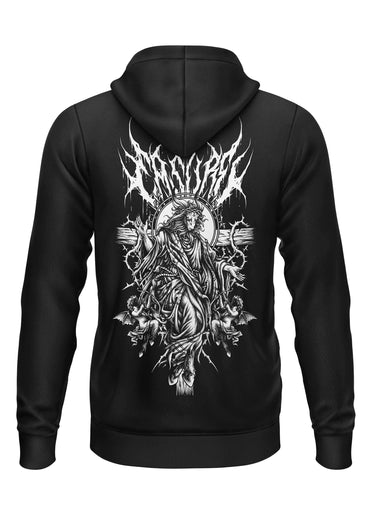
Hellfire is a recurring motif in dark fashion. Flames, infernal lettering, and symbolic representations are found on clothing, jewelry, and accessories. They lend designs emotional depth and a clear visual statement.

Hellfire serves as a metaphor for inner strength, nonconformity, and radical individuality. Those who wear such motifs do not express destruction, but rather self-determination and a conscious confrontation with societal taboos.

Contemporary significance

Today, Hellfire is a cultural symbol that transcends religious concepts. It represents transformation, resistance, and emotional intensity. In Gothic and Dark culture, Hellfire embodies the courage to confront one's own shadows and draw strength from them.

Hellfire is therefore less a place of damnation than a symbol of the fire of self-realization – destructive and creative at the same time.