Materials science: Patches & appliques

A patch typically consists of three main components :

1. Carrier material (base material)

The backing material forms the base of the patch. Commonly used materials include:

  • Cotton – robust, easy to sew

  • Polyester – dimensionally stable, durable

  • Canvas / Twill – particularly durable

This material ensures that the patch remains stable and can be easily sewn or ironed on.

2. Motif material (embroidery, printing or weaving)

The design varies depending on the type of patch:

Embroidered patches

  • Design made from embroidery thread (polyester or cotton)

  • Raised, textured surface

  • Very durable & high quality

Woven patches

  • The design is woven directly into the fabric.

  • Fine details possible

  • Flat, clean look

Printed patches

  • Design printed on textile

  • Ideal for complex graphics

  • Smooth surface

3. Back (fastening)

The back side determines how the patch is attached:

  • Sew-on patches – uncoated, classically sewn

  • Iron-on patches – with adhesive coating (usually thermoplastic)

  • Hook and loop patches – with hook and loop fastening system

Many patches can also be sewn on , even if they are iron-on – for extra hold.

Features & Benefits of Patches

  • Very durable

  • Individual & interchangeable

  • Resistant to wear and tear

  • Ideal for clothing, bags & vests

  • Classic scene accessory

Patches are a sustainable way to upgrade or repair clothing.

Areas of application for patches

  • Jackets & vests (e.g. battle jackets)

  • Hoodies & Shirts

  • Bags & Backpacks

  • Caps & Accessories

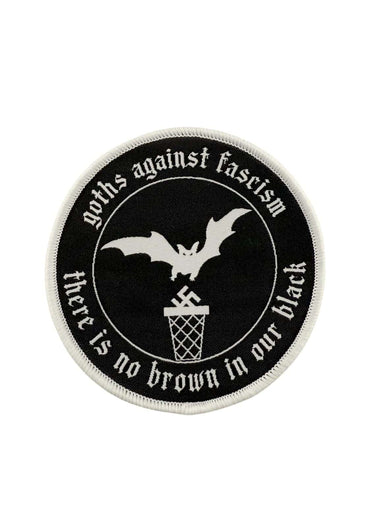
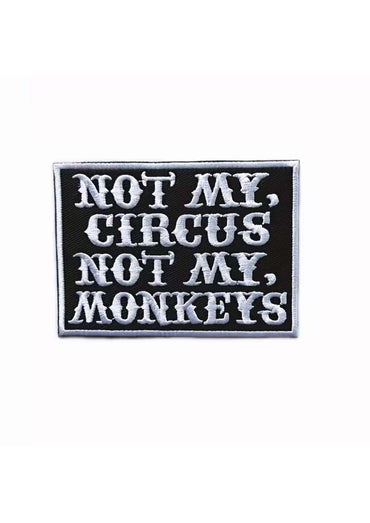
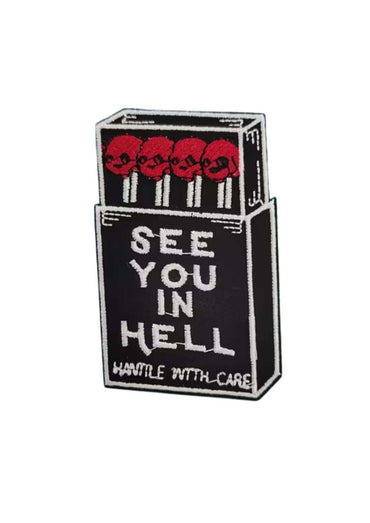
Especially in the Gothic, Metal and Punk scenes, patches are a personal statement .

Care & Durability

  • Avoid ironing directly over it if possible.

  • Gentle wash recommended

  • Sewn-on patches last longer than ironed-on ones.

  • For high stress: additional stitching required.