Satanism – Explanation, History and Modern Significance

Satanism – Explanation, History and Modern Significance

What is Satanism?

The term Satanism does not refer to a single belief system, but rather encompasses diverse philosophical, religious, and cultural movements that relate symbolically or ideologically to the figure of "Satan." Contrary to widespread prejudice, in most cases this is not devil worship, but a conscious counter-position to dogmatic religions, especially Christianity.

In many forms, Satan is not the central figure as a supernatural being, but rather as a symbol of individualism, self-determination, rebellion, and critical thinking . Satanism is therefore often more of a worldview or philosophical stance than a classical religion.

Historical origins of Satanism

The roots of Satanism lie less in organized cults than in Christian demonology . For centuries, the term "Satanist" was used by church authorities to defame dissenters, heretics, or political opponents. A truly existing, structured Satanism is historically difficult to substantiate.

It was only in the 19th and 20th centuries that Satanism developed as a conscious counterculture. Literary works, occultism, Romanticism, and later modern pop and subculture shaped a new image: Satan as a symbol of free will and the rejection of authoritarian moral concepts.

Modern Satanism and the Church of Satan

Modern Satanism is significantly shaped by the founding of the :contentReference[oaicite:0]{index=0} in 1966 by :contentReference[oaicite:1]{index=1} . With the "Satanic Bible", LaVey formulated a clear, atheistic philosophy that remains the most well-known point of reference for contemporary Satanism.

The Church of Satan explicitly does not understand Satan as a real being , but as a metaphor for human qualities such as pride, rationality, personal responsibility, and a zest for life. Supernatural beliefs, magic in the religious sense, and sacrificial practices are rejected.

The central values ​​of LaVey Satanism are:

  • radical individualism
  • Personal responsibility instead of blind morality
  • Criticism of hypocrisy and dogma
  • Enjoying life in the here and now

Symbolism in Satanism

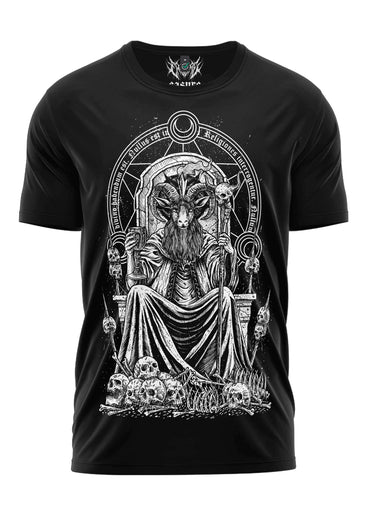
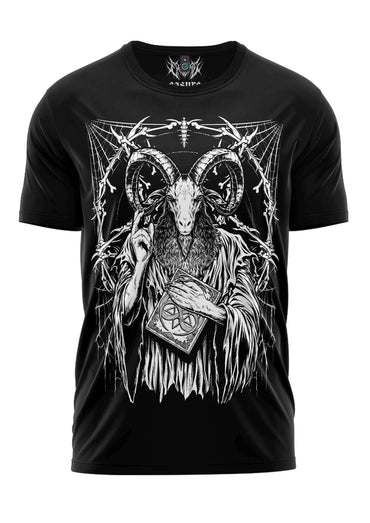
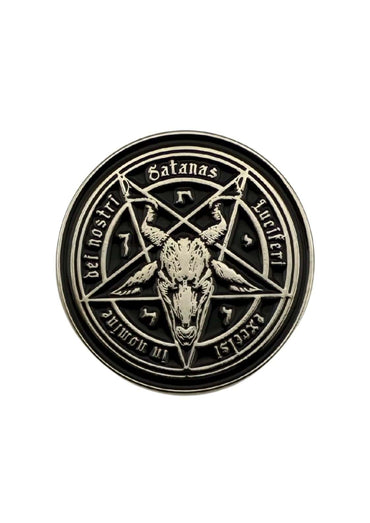
Satanic symbolism is often misunderstood. Symbols such as the pentagram, depictions of goats or demons usually have a symbolic character . They represent opposites, natural forces, the earthly realm, or the rejection of religious notions of purity.

In art, fashion, and music, this visual language is deliberately used to express provocation, transgression, and nonconformity. Particularly in subcultures like Gothic, Metal, and Dark Art, satanic symbolism is part of an aesthetic and cultural self-definition.

Satanism and Society

To this day, Satanism is heavily influenced by myths and media exaggerations. It is repeatedly and falsely associated with violence, extremism, or illegal practices. However, reputable Satanic organizations clearly distance themselves from criminal acts and emphasize personal responsibility and adherence to state laws.

In societal debates, Satanism often serves as a mirror reflecting religious power structures . It raises questions about morality, freedom, and individual self-determination, and deliberately provokes where absolute truths are claimed.

Satanism today

Today, Satanism exists in many forms: as a philosophical stance, a cultural statement, political satire, or aesthetic expression. Besides the Church of Satan, there are other groups and movements that position themselves differently – from secular-humanist to deliberately provocative.

Regardless of its specific form, Satanism remains above all one thing: a critique of authority, dogma and external control , as well as a commitment to the autonomy of the individual.

Summary

Satanism is not a monolithic belief system, but rather an umbrella term for diverse worldviews, cultural perspectives, and philosophical approaches. Modern, atheistic Satanism, in particular, understands Satan as a symbol—not as a deity. Anyone who examines the topic objectively quickly realizes that it is less about religion and more about self-determination, provocation, and critical thinking.