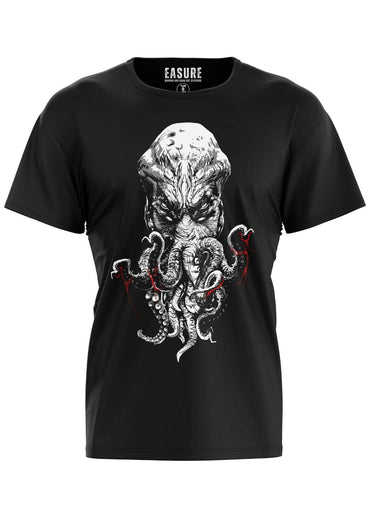
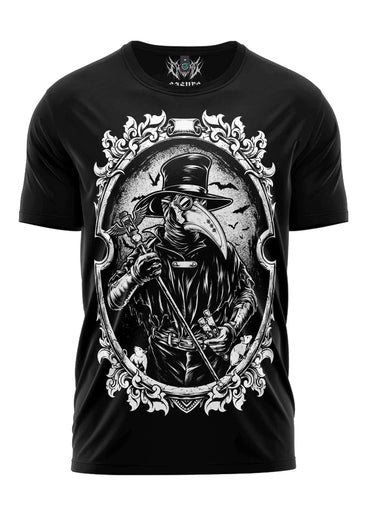
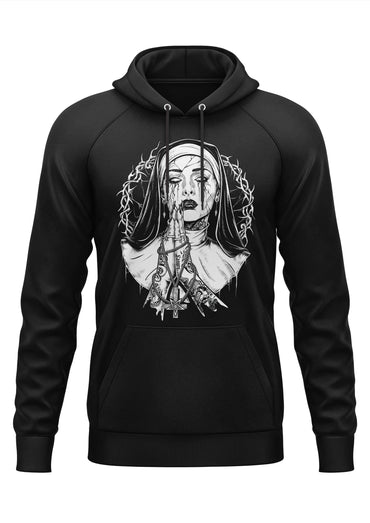
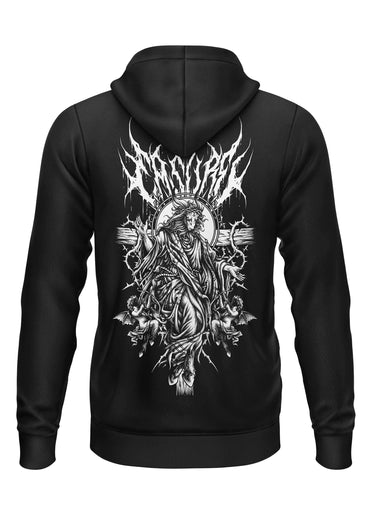
Black Metal vs. Death Metal
Share
If you're involved in the scene, sooner or later you'll stumble across the topic of Black Metal vs. Death Metal . To outsiders, both genres might just sound like noise, but for you, they represent a unique universe of aesthetics, ideology, and sound design. We'll take a closer look: Where do the differences lie, where do the styles intersect, and how do you incorporate all of this into your own style, your festival outfits, and your everyday life?
Black metal vs. death metal is more than just a genre debate. It's about questions like: What kind of atmosphere are you looking for? What themes resonate with you? Which scene feels like "your" pack? And: What clothes, symbols, and accessories fit your personal mix of frost, decay, and blast beats?
What does "Black Metal vs. Death Metal" even mean?
When you talk about black metal vs. death metal, you're encountering two extremes within heavy metal. Both subgenres share roots in thrash and early extreme metal, but take them in different directions:
- Death Metal: Focus on physical brutality, groove, technical precision, morbid physicality.
- Black Metal: Focus on atmosphere, coldness, spirituality (whether satanic, anti-Christian, occult or nature-mystical), ascetic production.
Many bands exist on the borderline, playing blackened death metal or blending elements of both styles. For you as a listener or musician, the "pure doctrine" is less important than the question: What kind of experience are you looking for when you press play?
Historical overview: From thrash to death, from death to black
Death Metal – when thrash became too morbid
Death metal emerged in the mid-1980s, when thrash bands became even harder, deeper, and darker. Lower tunings, more complex riffs, and more brutal lyrics forged a new sound. Early influences included bands like:
- Possessed
- Death
- Morbid Angel
- Obituary
- Sepultura in their early years
Death Metal focused on:
- deep, distorted guitars
- guttural vocals
- abrupt changes in pace
- intense double bass and blast beats
While thrash often seemed socially critical and punk, death metal went deeper into physicality, horror, and metaphysical darkness.
Black Metal – the cold flame of the North
Black metal also emerged in the 1980s, inspired by bands like Venom, Bathory, and Celtic Frost. What you know today as the "typical" black metal sound took shape in the early 1990s, primarily in Norway, with bands like Mayhem, Darkthrone, Burzum, Emperor, and Immortal.
Typical features of the early Norwegian style:
- brighter, sharper guitars with tremolo picking
- shrill, croaking vocals
- cold, raw production
- Strong emphasis on atmosphere rather than technical brilliance
Thematically, Black Metal was aggressively directed against Christianity and established morality, embraced Satanism, occultism and paganism, and presented itself as a radical counterculture.
Black Metal vs. Death Metal: The most important musical differences
You can often recognize a song in just a few seconds if you know what to look for. When comparing black metal vs. death metal, it's worth looking at some key characteristics.
Guitars: Tremolo Frost vs. Chugging Graves
Death Metal :
- low tunings (D, C, B or lower)
- Heavily distorted, powerful guitar sounds with lots of low end
- Palm muting, staccato riffs, chromatic runs
- technically demanding riff structures, often complex song forms
Black Metal :
- mostly standard or slightly lower tuning, but less focus on "heavyness"
- thinner, screeching guitar sounds with a lot of treble.
- continuous tremolo picking over sustained chords
- Dissonant intervals (tritone, minor seconds), repetitive-hypnotic riffs that build atmosphere
Death metal "hacks" its way through the song, black metal "blows" like an icy storm.
Vocals: Growl vs. Screech
In many discussions about Black Metal vs. Death Metal, the first voice that comes up is:
- Death Metal : deep, guttural growls, “Pig Squeals” in the brutal/slam range, occasional high screaming – the sound sits in the gut and in the chest.
- Black Metal : high-pitched, croaking or screaming shrieking, often nasal, rough and tortured – the voice sits in the throat, sometimes almost in the head.
This distinction seems superficial, but it helps for initial orientation: Growls often indicate Death, screeches often indicate Black.
Drums and rhythm: Groove vs. frenzy
Death Metal :
- Alternating between groovy mid-tempo passages and extremely fast blast beats
- many accent shifts, breaks, complex patterns
- Drums support the "physical" violence of the sound.
Black Metal :
- Blast beats seem endless, almost mantra-like.
- Fewer breaks, more sustained pace for a trance-like effect
- Drums merge with guitars into a total fog.
Of course, technical black metal drummers and simple death metal exist, but generally, with death metal you look for groove and precision, and with black metal the feeling of unbridled fury or icy emptiness.
Texts, themes and ideology: Gore, spirit and transgression
Death Metal: Body, violence and morbid fiction
Death metal lyrics traditionally revolve around:
- Splatter and slasher horror
- Body decay, disease, death, war
- societal abysses, religion, politics
- cosmic horror, Lovecraft, science fiction
Many bands deliberately employ shock aesthetics. The line between artistic persona and personal stance varies from band to band. Modern death metal acts often address socio-critical or philosophical themes in which violence functions more as a metaphor.
Black Metal: Spirituality, Anti-Religion and Nihilism
Black metal focuses more on metaphysical, spiritual, or ideological themes:
- Anti-Christian, satanic and occult motifs
- Paganism, nature mysticism, heathenism
- Individualism, nihilism, existential emptiness
- Esoteric or literary references, philosophy
The lyrics build more of a worldview than just a horror scenario. Especially in the second wave of Norwegian black metal, the distinction from the "mere splatter" of death metal became very pronounced.
Black Metal vs. Death Metal soundcheck: What does it actually sound like?
Imagine two playlists.
“Death Metal” playlist: A punch to the gut.
You are listening:
- dull, thumping, deep guitars
- massive pressure in the bass range
- strong emphasis on the kick drum
- Growls that sound like they're coming from a bottomless abyss
- Precisely cut breaks, syncopated riffs, hooks despite complexity
The sound feels "massive", as if a battering ram were simultaneously going through a concrete wall in slow motion and at high speed.
Playlist “Black Metal”: Frosty wind over an empty field
You are listening:
- piercing guitars in the high register
- Drums laying down a dense carpet of blast beats
- Vocals that scream, howl, lament, or whisper
- an almost blurred wall instead of differentiated individual sounds
- Melodies that convey a mood rather than functioning as a "riff-hook" ( en.wikipedia.org )
The sound is like wind passing through a dilapidated building, more ghostly than physical.
Black Metal vs. Death Metal in production: Lo-fi cult and studio precision
Death Metal: Studio sound as a drum cannon
Classic and modern death metal rely heavily on studio technology:
- clear separation of the instruments
- differentiated drum mixing, trigger on the kick drum
- deep, controlled bass range
- Guitar sound with an emphasis on pressure and punch
Many modern productions use very "clean" mixes. The aggression arises from precision, not from dirt.
Black Metal: Intentional Roughness
Especially in the second wave, lo-fi aesthetics were considered part of the ideology:
- thin, hissing guitar sound
- rough, sometimes washed-out drums
- Vocals that sound like they were blasted through a cheap recorder
- Hardly any studio effects, instead room sound from basements, rehearsal rooms or deliberately "bad" sounding rooms.
Of course, symphonic, highly produced black metal exists – but the cult surrounding demos, rehearsal room tapes and “authentic” production remains defining for the scene.
Black Metal vs. Death Metal: Bands, Classics and Entry-Level Albums
Death Metal Bands: The Entrance to the Abyss
For an impression of death metal, take a look at:
- Death
- Morbid Angel
- Cannibal Corpse
- Obituary
- Entombed
- Bolt Thrower
- Carcass
- Suffocation
These bands cover different styles from old-school to technical and melodic death metal.
Black Metal Bands: The Call of Darkness
The following are suitable for the typical black metal sound:
- Mayhem
- Darkthrone
- Burzum
- Emperor
- Immortal
- Gorgoroth
- Marduk
In addition, there are countless regional scenes in Eastern Europe, Germany, France, or South America, each with its own distinct characteristics.
Blackened Death Metal: When two worlds collide
Blackened death metal combines deep growls and heavy riffs with black metal harmonies and atmosphere. Typical characteristics:
- very gloomy atmosphere
- Deeply tuned guitars
- A mix of tremolo picking and death metal riffs
- satanic, occult, or anti-religious themes
Examples:
- Behemoth
- Belphegor
- Akercocke
- Sacrament
Especially for listeners who can't decide between "atmosphere" and "brutality", blackened death metal represents an exciting middle ground.
Black Metal vs. Death Metal in the context of other metal genres
Search queries like "heavy metal vs death metal vs black metal" or "death metal vs doom metal" show how many listeners want to clarify the boundaries between subgenres. A brief overview helps with classification.
Death Metal vs Doom Metal
- Doom Metal: slow tempos, strongly focused on heaviness and melancholy, rather plaintive or deep vocals, long arcs of tension.
- Death Metal: significantly faster, more aggressive, more technically sophisticated, more brutal thematically.
Death-Doom combines both: deep growls, drawn-out riffs, slow tempo and oppressive atmosphere.
Death Metal vs. Thrash Metal
- Thrash: sharper, less deep guitars, often political or socially critical, vocals more screamed than grunted.
- Death Metal: lower tunings, guttural vocals, more complex, more extreme rhythms.
Many early death metal bands started as thrash acts before taking the step towards something more extreme.
Black Metal vs Heavy Metal
- Traditional heavy metal: clear vocal lines, strong hooks, melodic solos, anthemic character.
- Black Metal: distorted screams, dissonant harmonies, focus on atmosphere rather than singability.
If you come from the direction of classic metal anthems, black metal initially seems like a cult shock – and it is precisely this cult shock that fascinates many.
Black Metal vs. Death Metal from a scene perspective: Identity, community, values
Subculture and outsider status
Both black and death metal scenes function as spaces for people who turn away from the mainstream:
- You're looking for intensity, not background noise.
- You want topics that don't hide how brutal, absurd, or empty the world seems.
- You use music to channel anger, frustration, isolation, but also freedom and self-determination.
Politics and ideology: Drawing boundaries in the darkness
Discussions about black metal versus death metal repeatedly raise the question of how political the genres are. Historically, parts of the black metal scene have exhibited far-right tendencies, which continue to spark debate today. As a conscious consumer, you make decisions about which bands you support and which you don't.
Death metal often appears less political, focusing more on horror, splatter, and existentialism. Nevertheless, there are also bands within the genre with clear political statements.
Black Metal vs. Death Metal in everyday life: When does which sound fit?
Many listeners describe their choice between Black Metal vs. Death Metal as depending on the time of day or year:
- Winter, night, fog: Black metal is a good fit if you're looking for coldness, isolation, and spiritual heaviness.
- Summer, workout, aggression release: Death Metal is perfect if you need physical energy, groove and adrenaline.
Table: Black Metal vs. Death Metal at a glance
| aspect | Black Metal | Death Metal |
|---|---|---|
| guitar sound | bright, cutting, tremolo picking, lots of highs | deep, powerful, palm muting, lots of low-end |
| Vocals | high-pitched screams, screeches, croaking shrieks | deep growls, guttural vocals, sometimes pig squeals |
| Drums | long blastbeat passages, trance-like frenzy | A mix of groove, blast beats, and many breaks. |
| Song structure | repetitive, atmospheric, long arcs of tension | complex riffs, frequent changes, technical structure |
| Topics | Occultism, anti-religion, nature mysticism, nihilism | Horror, violence, death, disease, cosmic terror |
| production | often lo-fi, raw, deliberately "dirty" | clear studio sound, focus on power and precision |
| aesthetics | corpse paint, black and white, symbols, landscapes | Goreful artwork, rotting bodies, highly detailed covers |
| Hybrids | Blackened Death, Black/Thrash, Atmospheric Black | Melodic, Technical, Brutal, Progressive Death |
How to find your style between Black Metal vs. Death Metal
Questions for yourself
If you're looking for your place in the "Black Metal vs. Death Metal" spectrum, a few guiding questions will help you:
- Are you more attracted to atmosphere or physical pressure?
- Do spiritual, anti-religious themes feel more appropriate to you, or visceral horror?
- Do you prefer to wear occult symbols or bloody, grotesque depictions?
- Do you prefer a cold, echoing sound or a compact, powerful sound?
Your answers don't necessarily lead you to one camp, but they show what your personal mix looks like.
Black Metal vs. Death Metal for Beginners: How to Learn to Distinguish Them by Listening
Theory helps, but you'll best understand Black Metal vs. Death Metal through targeted listening comparison. A simple method:
- For Death Metal, choose two to three classics (e.g., Morbid Angel, Death, Cannibal Corpse).
- For Black Metal, choose two to three albums from the second wave (e.g., Darkthrone, Emperor, Immortal).
- Pay conscious attention to the following in every song:
- Voice type (growl or scream)
- Guitar tuning and tone
- Production quality (clear or raw)
- Themes of the lyrics (if understandable)
After this exercise, you'll often recognize the differences in the first few bars. Discussions on platforms like Reddit confirm that many listeners use the contrast between death metal groove and black metal atmosphere as a key entry point.
Heavy Metal vs. Death Metal vs. Black Metal: Brief profile for those searching
Search queries like "heavy metal vs death metal vs black metal" usually seek a rough guide. A brief categorization:
- Heavy Metal: Judas Priest, Iron Maiden – powerful, melodic, anthemic.
- Death Metal: Death, Morbid Angel – deep growls, technical riffs, massive brutality.
- Black Metal: Mayhem, Emperor – shrill screams, cold harmonies, spiritual darkness.
If you come from the Gothic scene and are taking your first steps towards Extreme Metal, a look at our article Metal Genres Overview may be helpful before you delve further into Black Metal vs. Death Metal.
Frequently Asked Questions about Black Metal vs. Death Metal
Who is the king of death metal?
The title "King of Death Metal" remains a matter of taste, but it repeatedly surfaces in discussions about Black Metal vs. Death Metal, often with the same names. Frequently mentioned candidates include Chuck Schuldiner of Death, Trey Azagthoth of Morbid Angel, or bands like Cannibal Corpse as a whole. They define the typical Death Metal sound of deep growls, technical riffs, and brutal intensity, thus forming the antithesis to the atmospheric approach of Black Metal.
Is Cannibal Corpse Death or black metal?
Cannibal Corpse is clearly considered a death metal band . Their style relies on extremely deep growls, low guitar tunings, technically ambitious riffs, and drastic, gore-heavy lyrics. This fits the description of death metal perfectly and contrasts with the high-pitched screams, colder production, and more spiritual focus typical of black metal. Listening to Cannibal Corpse, therefore, represents the death metal end of the spectrum in the "black metal vs. death metal" debate.
Who are the 4 fathers of metal?
The question about the "four fathers of metal" refers to heavy metal in general, not specifically to black metal versus death metal. Black Sabbath, Led Zeppelin, Deep Purple, and Judas Priest are frequently mentioned because they shaped the sound and aesthetics of classic heavy metal. On this foundation, extreme genres like death metal and black metal later emerged, radicalizing the sound and pushing it in new, dark directions.
What is the big 4 of black metal?
The term "Big 4" is less rigidly defined in black metal than in thrash, but it often comes up in discussions about black metal vs. death metal. Many scene insiders cite Mayhem, Darkthrone, Burzum, and Emperor as key Norwegian cornerstones. These bands form the core of what many understand as classic second-wave black metal: cold guitars, shrill vocals, raw production, and a strong emphasis on atmosphere and ideology that clearly distinguishes it from death metal.
Is black metal more popular than death metal?
Whether black metal is more popular than death metal depends heavily on region, platform, and scene. Globally, both genres reach only a fraction of the listenership of mainstream metal, but both black metal and death metal acts appear prominently in streaming statistics and festival lineups. Black metal seems more prevalent in Northern European scenes, while death metal is more firmly established in America and parts of Europe.
What is blackened death metal?
Blackened death metal is a hybrid style that blends death metal with elements of black metal. You'll hear deep growls and heavy, low-tuned guitars typical of death metal, but also tremolo picking, dissonant chords, and a dark, ritualistic atmosphere characteristic of black metal. Thematically, many blackened death metal bands address satanic, anti-religious, or occult content, which has led to discussions about the style. Black Metal vs. Death Metal often appears as a "bridge" between the two camps.
How do Death Metal and Deathcore differ?
Deathcore combines death metal with hardcore and metalcore elements. You can recognize deathcore by:
- typical breakdowns with a strong groove
- a mixture of growls and screams
- often modern, very "polished" production
- Influences from metalcore structures
In a comparison of death metal and deathcore, classic death metal appears less focused on breakdowns and more on complex riffs, speed, and technical virtuosity. Within the spectrum of "heavy metal vs. death metal vs. black metal," deathcore represents a newer, genre-crossing subgenre, while black metal emphasizes atmosphere and ideology, and death metal focuses on brutality and technicality.
- https://www.deathmetal.org/article/outsiderness/ – Analysis of the outsider status of death metal and black metal, helpful for deepening the section on subculture and identity.
- https://www.anus.com/metal/about/faq – Comprehensive FAQ on Heavy Metal, Death Metal, Black Metal and Doom Metal with historical context.
- https://glossator.org/wp-content/uploads/2012/06/g6-stephanou.pdf – Academic essay on Black Metal, voice and body, suitable for further exploration of the part on vocals and aesthetics.
- https://diva-portal.org/smash/get/diva2%3A624183/FULLTEXT02 – A scientific paper comparing the differences between Death Metal and Black Metal on several levels.
- https://repositorio.udec.cl/bitstreams/3c8c7979-541d-4a48-b3af-7519ec1372d0/download – Musicological analysis of extreme metal bands with a focus on death and black metal.
Prev post

M'era Luna Festival Guide
Updated on 07 July 2026
Next post

Gothic & Metal
Updated on 30 March 2026