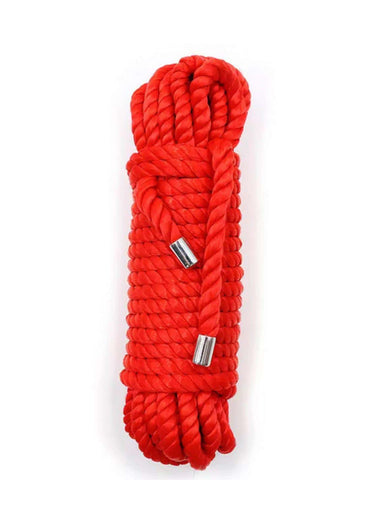
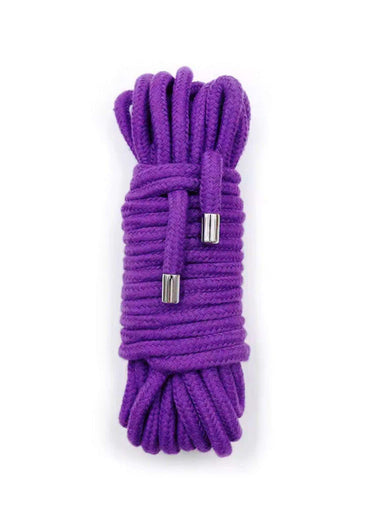
Maximum Control and Sensual Tension High-Quality Bondage Rope for Intense Experiences This red bondage rope, 5 meters in...
Regular price
€9,90 EUR
Sale price
€9,90 EUR
Regular price
Unit price/ per
Category description
Bondage ropes give your look, your ritual, and your kink setup a clear form: controlled, aesthetic, intense, and deliberately chosen. At EASURE, you'll find accessories for an alternative scene that doesn't rely on mainstream decoration, but on expression, attitude, and details with character. In BDSM, rope is more than just a tool. It is line, tension, boundary, adornment, symbol, and an instrument for trust.
Whether you're looking for bondage ropes for your first tying games, for Shibari-inspired body lines, for a Gothic photoshoot, for a festival outfit, or as part of your fetish look: the right choice starts with material, length, strength, feel, and care. A rope does not feel neutral. Cotton feels soft and approachable, synthetic fibers smooth and easy to care for. The right bondage rope matches your style, your experience level, and the way you stage intimacy.
Bondage Ropes as an Accessory between Kink, Goth, and Body Art
Bondage ropes combine function and aesthetics in a way that perfectly fits dark outfits, fetish-inspired looks, and alternative fashion. A black rope over a mesh top, a red rope as a contrast to deep black, or natural fiber on bare skin: each variant tells a different story. At EASURE, we don't see accessories as mere embellishments, but as part of your identity.
If you want to build your look with clear lines, combine bondage ropes with a Gothic and fetish-style harness. A harness brings structure, the rope brings movement. Together, they create an outfit that combines club, concert, dungeon aesthetic, and dark fashion statement. For a harder styling, a choker as a dark neck accent works well, as it visually draws more focus to the neck, shoulders, and chest area.
Which Bondage Ropes Suit Your Experience Level?
For beginners, pleasant feel, controllable handling, and a surface that gives you feedback are important. Soft cotton ropes lie gently on the skin and are suitable for decorative ties, simple restraints, and first experiences with rope bondage. Grippy jute or hemp ropes are more for experienced users, as natural fibers feel rougher, yield less, and require more attention to tension, care, and placement.
Start with clear, simple applications and only increase complexity with practice, knowledge, and communication. Bondage ropes create arousal through limitation, not overwhelm. Before each session, discuss boundaries, signals, taboos, and safe words. Keep suitable scissors close at hand, regularly check skin color, temperature, numbness, and finger mobility. Bondage thrives on consent, trust, and clean craftsmanship.
Material Comparison: Cotton, Hemp, Jute, and Synthetic Fiber
The material determines how bondage ropes lie on the skin, how knots hold, and how much care your rope set needs. Cotton feels soft and approachable, absorbs moisture, and is often easy to clean. Hemp brings a rustic, natural feel with a lot of grip. Jute is light, dry, and popular in the Shibari scene. Synthetic fiber excels with a smooth surface, color stability, and easy care, but requires attention during handling, as smooth ropes react differently than natural fibers.
easy to clean, use with heat and friction awareness
Length and Strength: How to Choose Your Bondage Rope
Bondage ropes differ not only in material, but also in length and diameter. Short ropes are suitable for wrists, ankles, decorative details, and quick restraints. Medium lengths offer more scope for the upper body, hips, or simple rope patterns. Longer ropes are suitable for more complex figures, but require more experience to keep loose ends, pulling direction, and pressure distribution controlled.
For strength, many users opt for ropes in the range of approximately 6 to 8 millimeters, as they feel good in the hand and distribute pressure more broadly than thin cords. Thinner variants appear more delicate, but cut in more quickly when pulled. Thicker ropes create a strong look, require more space, and less fine knots. For beginners, grippy, not-too-thin bondage ropes with a pleasant surface are usually the more comfortable choice.
Safety in Tying: Consent, Control, and Clear Signals
Good bondage ropes alone do not make a safe session. Safety comes from preparation, attention, and respect. Before tying, agree on a safeword or nonverbal signal if the tied person cannot speak freely. Test knots without time pressure. Avoid pressure on the neck, joints, nerve pathways, and areas with restricted circulation. Tingling, numbness, cold fingers, pale skin, or sharp pain are stop signals.
Suspension, i.e., hanging from a rope, is not for beginners. It requires instruction, anatomical knowledge, suitable suspension equipment, and experienced guidance. For most setups, floor bondage, decorative rope patterns, light restraints, and outfit styling are sufficient. If you use bondage ropes as part of your dark fashion aesthetic, you can create an effect without risk: through criss-cross lines, hip accents, chest details, or combinations with Gothic-style outfits from EASURE.
Bondage Ropes for Your Outfit: Dark, Body-Hugging, and Expressive
Bondage ropes don't just work in a private BDSM context. They make a strong visual statement in Gothic, Industrial, Darkwear, Fetish Fashion, and Clubwear. Over a black shirt, light ropes create harsh contrasts. Black ropes create a tone-on-tone structure. Red ropes appear dramatic, almost ritualistic. Natural-colored ropes bring raw texture to an outfit that otherwise consists of faux leather, metal, mesh, and cotton.
For a coherent styling, combine ropes with jewelry that shares the same visual language. A Gothic necklace with occult symbolism reinforces the focus on the neck and chest. A Baphomet necklace as a dark statement suits ritual aesthetics, Black Metal vibes, and occult-inspired looks. This way, bondage ropes don't become an alien element, but part of a look that shows attitude.
Shibari, Kinbaku, and Rope Bondage: What's the Difference?
Shibari and Kinbaku originate from Japanese tying culture and place great emphasis on line art, posture, tension, and the relationship between the binder and the tied person. Rope bondage, in a broader sense, describes tying with rope, from simple wrist ties to artistic patterns. In everyday life, many people use the terms interchangeably, but they differ in their demands.
If you're looking for bondage ropes for a Shibari-inspired aesthetic, pay attention to grip, length, and consistent workmanship. Jute and hemp are popular in this area because they hold knots well and show a clear line on the body. For decorative looks, photoshoots, or first ties, cotton or soft blended materials often feel more approachable. In the EASURE context, we don't just think of rope technically, but as a visual language for intimacy, control, trust, and dark beauty.
Care and Storage: How to Keep Bondage Ropes Beautiful Longer
Bondage ropes need care to maintain their feel, shape, and strength. Store them dry, clean, and protected from direct sunlight. Moisture promotes odors and material fatigue, especially with natural fibers. Remove dust and skin particles after use. Regularly check your ropes for frayed areas, hard kinks, discoloration, loose fibers, and damaged ends.
Cotton ropes are often easier to clean than hemp or jute, depending on the design. Natural fibers react more sensitively to water, heat, and improper treatment. Synthetic fibers dry faster, but generate more friction heat when moved quickly over the skin. Loosely coil your bondage ropes instead of kinking them tightly. This way, they remain grippy, dimensionally stable, and ready for your next setup.
Buy Bondage Ropes at EASURE: For People with Style, Not Mass-Produced Goods
At EASURE, you'll find products for people who don't see Gothic, Dark Art, and alternative fashion as a costume. Our selection is aimed at scene people who consciously wear accessories: for club nights, festivals, photos, rituals, outfits, and intimate moments. Bondage ropes fit this aesthetic because they create clear lines and frame the body like a dark drawing.
Choose bondage ropes that match your body feel, your experience level, and your aesthetic. Focus on quality, conscious handling, and clear communication. Then a rope becomes not just any accessory, but an expression of trust, tension, and dark elegance.
Frequently Asked Questions about Bondage Ropes
What is the art of tying called?
The art of tying is called Shibari or Kinbaku in the Japanese-influenced context. In the broader BDSM area, it falls under rope bondage. Shibari often emphasizes aesthetic line guidance, while Kinbaku refers more to emotional tension, connection, and controlled surrender.
What are the disadvantages of hemp rope?
Hemp rope feels rougher than cotton, requires more care, and is less suitable for unprepared beginners. It can fuzz, absorb odors, and suffer from improper storage. For bondage ropes made of hemp, you need clean handling, dry storage, and a good feel for tension.
Which bondage ropes are suitable for beginners?
For beginners, soft, grippy bondage ropes with a pleasant thickness are suitable. Cotton is popular because it feels skin-friendly and is easy to control. Start with simple restraints, short sessions, and clear signals instead of complex Shibari figures.
What length is sensible for bondage ropes?
Short ropes are sufficient for wrists, ankles, and decorative details. For the upper body, hips, and simple patterns, medium lengths offer more scope. Longer bondage ropes are suitable for more complex ties, but require practice, clean rope guidance, and precise control.
How do I properly care for bondage ropes?
Store bondage ropes dry, dark, and loosely coiled. Check them after each use for damage, hard kinks, and frayed areas. Clean cotton according to the manufacturer's instructions. Treat hemp and jute gently, as natural fibers tolerate moisture and improper care less well.
Can I wear bondage ropes as part of a Gothic outfit?
Yes, bondage ropes work strongly as a Gothic and fetish accessory. Over shirts, harnesses, mesh fabrics, or dresses, they create clear lines and dark tension. Make sure decorative ties fit comfortably, do not cut in, and maintain your freedom of movement in the club or at the festival.


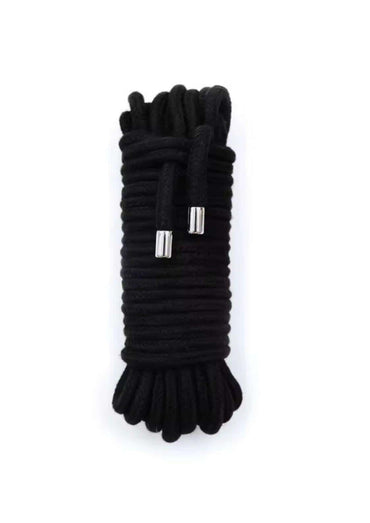
 Sold out
 Sold out
 Sold out

 Sold out
 Sold out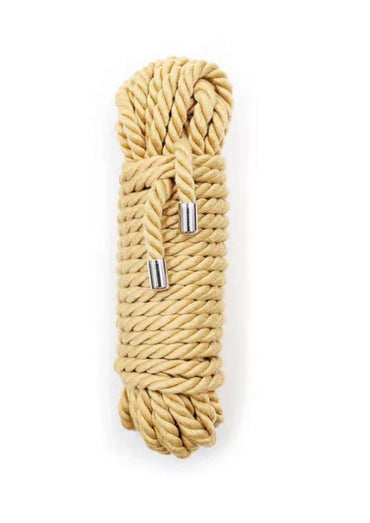
 Sold out



 Sold out
 Sold out
 Sold out