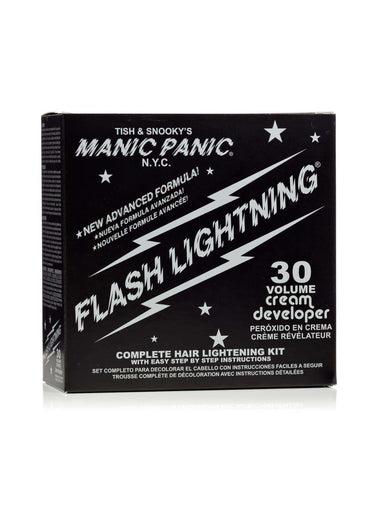
Bleaching might conjure up images of summer hair and a beachy look – but at EASURE you'll find something quite different: controlled chaos in your hair, light-dark contrasts to complement your black wardrobe, and the perfect base for Directions & Co. In this category, you'll find everything you need for blonde hair.
Bleaching
Black clothing, dark makeup, piercings, metal merch – and then flashes of light in the hair. Blonde hair creates stark contrasts to dark clothing and pale looks, opening up several style possibilities:
- cool, icy strands with black eyeliner
- golden highlights that only peek out sporadically under a hood or hoodie
- Heavily lightened sections that serve as a base for vibrant Directions hair colors
At EASURE, bleaching doesn't fit with mainstream Barbie blonde, but rather with dark clothing, occult symbolism and deliberately chosen stylistic breaks.
If you're already working with Directions hair dye , you'll quickly notice that many shades remain dull without proper bleaching. This category is exactly where it comes in.
Bleaching at EASURE – what you'll find in this category
In the bleaching category at EASURE, we focus on products and accessories that are perfect for smart DIY experiments . Our selection will support you if you:
-
If you want to add fine bleached highlights to dark blonde hair
-
You need a stronger lightener for dark hair in order to then work with intense colors.
- Plan precise highlights in the fringe, parting or underlayer area
- If you want to build highlights as a contrast
In addition, you will find suitable accessories and complementary products in the shop, for example:
At EASURE you don't get a generic drugstore shelf, but a selection that is inspired by the DIY scene, festival reality and dark aesthetics.
Which is more damaging: lightener or bleach for highlights?
Many people wonder: What's more damaging – bleach or lightener? The honest answer: It depends heavily on the concentration, processing time, and the area you're treating.
- A mild, low-percentage bleach applied to the entire hair can cause less damage than an extremely strong bleach on sensitive ends.
- Conversely, a well-dosed bleaching treatment for highlights is often gentler because you are only stressing a part of the hair.
Important factors:
-
H2O2 concentration (developer) : 3–6% for lighter lightening, 9–12% for stronger levels – higher concentrations are more damaging to the hair structure.
-
Exposure time : Longer exposure results in more brightness, but also more structural breakage.
-
Initial condition : Hair that has already been bleached, is brittle, or heavily dyed is more sensitive.
The best way to use bleach is:
- with a suitable developer, adapted to your base tone
- with a realistic goal (not going from black to platinum blonde in one step)
- in conjunction with intensive care before and after application
In the article "How to dye your hair at home like a pro" you will find additional information on processing times, strand thickness and care.
Bleaching step by step – how to do it at home
Important note: Bleaching is a chemical process. Always read the package instructions, follow the mixing ratio and application instructions. If you are unsure, spread the process over several days or go to a hairdresser.
1. Assess the initial situation
Before mixing bleach, check:
- Natural hair or already dyed?
- Hair condition: healthy, dry, brittle, split ends?
- Starting color: Dark brown, light brown, dark blonde, already bleached?
The darker and more damaged your skin, the more carefully you should plan. An article like "How to perform a skin compatibility test" will also help you mitigate allergy risks.
2. Prepare the bleach and accessories
For bleaching you will need:
- Bleaching powder or cream
- Developers of suitable strength
- Dye bowl and brush
- Comb and clips
- Gloves
- optional highlighting cap or foils
Set up your workspace so you can work in a controlled and clean manner . Good preparation makes the difference between "accidental stains" and deliberately placed highlights .
3. Plan your strands – a pattern instead of chaos
Consider the following before applying:
- Do you want many fine strands or a few wide ones?
- Should the lightest strands be positioned at the front of the face?
- Does the neck remain darker so that it disappears into the shadows under a hoodie?
Tip: Always start at the nape of the neck, work your way upwards, and finish with the most noticeable highlights at the front. This way, the bleach will have the shortest contact time in those areas, and the hair will remain more resilient.
4. Mix and apply the bleach.
- Separate off narrow sections.
- Place the strand on foil or pull it through the cap.
- Apply bleach evenly from the mid-lengths to the tips, then towards the roots.
- Make sure to completely wet each strand without letting the bleach run uncontrollably into the rest of the hair.
No rushing, no big blobs. The cleaner you work, the more even your result will look.
5. Inspection and rinsing
During the exposure time:
- Check the level of lightening regularly.
- It's better to rinse a little earlier and, if necessary, plan a second, milder round after a few weeks, rather than forcing everything in one session.
After rinsing:
- Wash your hair thoroughly until no traces of bleach can be felt.
- Use a nourishing treatment or mask to restore protein and moisture to the hair.
Bleached hair loves care. Without regular conditioning, even the most beautiful strands will look dull and straw-like.
Bleach as a base for Directions & colorful dyes
A large part of the EASURE community doesn't use bleach for final blonde results, but rather as a base for vibrant colors. In the Directions hair color category, you'll find shades that look particularly intense on bleached strands:
- Violet, Lagoon Blue, Turquoise
- Flamingo Pink, Pillarbox Red
- Silver, White Toner for cool, ashy effects
Bleaching helps you to create targeted areas in your hair where these colors shine:
- Underlayer strands that you can flash into your updo hairstyles.
- colorful tips on light blonde lengths
- Colored accents in the bangs or on the sides
With this combination of bleaching and semi-permanent color, you build layers in your style: clothing, make-up, jewelry, hair – everything together tells your story.
Post-bleach care – so your hair stays scene-ready
Bleached hair needs more care. Especially if you love festivals, club nights, cold weather and frequent styling, your hair needs a protection plan.
Basic rules for bleached highlights
-
Use low-sulfate or color-protecting shampoos to prevent the lengths of your hair from drying out further.
-
Use regular courses of protein and moisture to prevent fractures.
- Heat styling (straightening iron, curling iron) only with heat protection .
- Avoid chlorinated water and excessive sun exposure, or protect your hair with a hat/hood.
In the blog section “How to remove Directions hair color” you will also find information on how to gently get rid of old pigments without unnecessarily stressing your already bleached strands.
Common mistakes when bleaching hair – and how to avoid them
Many damages are not caused by the product itself, but by errors in its use :
Excessive concentration from the developer
You choose 12% hoping for "turbo blonde," but end up with brittle, rubbery lengths. Better: moderate strength and more time.
Strands that are too thick
Thick, extremely light highlights can look cool, but they quickly appear patchy. For a modern blonde look, it's better to work with different strand thicknesses.
Uneven exposure time
You start at the front, the most visible area, and finish at the back. The bleaching process then takes significantly longer at the front – resulting in uneven shades. Better to start at the back and do the front last.
No aftercare required
Blonde highlights need more than just shampoo. Without treatment and conditioner, the hair structure will break down in the long run, leaving your hair looking dull.
Bleaching on already damaged hair
Old perm, repeatedly dyed lengths, split ends – and then bleaching? A risk of massive hair breakage. Better to cut it shorter, condition it, and work in several stages.
If you're unsure how best to prepare your hair, take a look at the article "Tips and tricks on how to dye your hair at home like a pro" – there you'll get additional confidence for your bleaching project.
Your next step: Discover bleaching at EASURE
You've read this far, so you're probably ready for more than a spontaneous drugstore experiment. You want control, scene-ready looks, and products that fit your value system.
In the bleaching category on EASURE you will find:
- Suitable bleaching products for highlights
- Accessories that allow you to work cleanly
- Additions in the categories of hair color and hair color accessories , so you can fully complete your look.
Get your bleaching highlighting products now, consciously plan your next color trip and let your hair become just as much a part of your dark identity as your shirt, your choker and your make-up.
Frequently asked questions about bleaching highlights
How do I bleach highlights?
To bleach your hair, divide it into sections, separating fine or wider strands, and apply the bleach with a brush. Place each strand on foil or pull it through a highlighting cap to prevent the bleach from getting onto the rest of your hair. Using a suitable developer, clean sections, and a controlled processing time are essential to ensure your bleached strands look even and not patchy. After rinsing, treat your hair with a hair mask and conditioner to keep the bleached sections strong and shiny.
What is the difference between bleaching and highlights?
When bleaching, you treat all of your hair or large sections with bleach, lightening all parts evenly. Highlights, on the other hand, mean you only treat individual strands of hair with bleach or dye. This creates more depth in the hair, makes the look more vibrant, and distributes the stress on the hair more evenly. Bleached highlights are perfect for gothic and alternative styles because they create targeted contrasts and highlights without affecting your entire head of hair.
Is bleaching harmful?
The damage depends primarily on the concentration of the developer, the processing time, and the area being treated . A gentler lightening treatment all over the head can be less damaging than an extremely strong bleaching on already brittle ends. At the same time, a controlled application of bleach to highlights is often gentler because you're only lightening individual sections. Realistic goals and intensive aftercare are crucial to ensuring your blonde color stays vibrant.
Is it possible to gently apply blonde highlights to dark blonde hair?
Blonde highlights on dark blonde hair are considered a relatively gentle option because your base color is already quite light. Using a highlighting bleach specifically formulated for highlights and a mild developer, you can achieve beautiful highlights without completely damaging your hair structure. You can start with fine highlights, test the effect, and lighten more sections later if desired. Combined with good care, such as regular conditioning treatments and heat protection, your bleached highlights will remain soft and provide a strong base for alternative looks or vibrant colors.
How do I properly care for my hair after bleaching?
After bleaching, your hair needs moisture, protein, and protection . Use a color-safe shampoo, apply a hair mask at least once a week, and use conditioner with every wash to smooth the hair cuticle. Avoid unprotected heat styling as much as possible and always use heat protectant spray with flat irons or curling irons. This care routine will keep your bleached strands shiny, less prone to breakage, and ensure they stay healthy for longer.
Can I lighten already dyed hair with bleach?
Previously colored hair reacts differently than natural hair because the existing pigments are broken down first. Bleaching highlights are suitable here to carefully lighten individual sections instead of stressing the entire head of hair. With dark or red under-coloration, expect warm, coppery highlights initially and plan for several lightening sessions with sufficient time in between. Combining with toners or Directions dyes will still allow you to achieve strong effects without over-processing your entire head of hair.


 Sold out