How to use incense sticks correctly
How to Use Incense Sticks Correctly: Learn step-by-step how to safely light, set up, and fully extinguish incense sticks. Discover practical tips on ventilation, burning time, and suitable holders for a pleasant fragrance experience during meditation, yoga, and everyday life.
Share
How to Properly Use Incense Sticks – The Complete Guide for Beginners and Advanced Users
For centuries, incense sticks have been among the most popular methods for filling living spaces with pleasant scents, creating a relaxed atmosphere, or accompanying meditation and yoga. However, many people wonder: How do you use incense sticks correctly? In fact, there are several important points to consider to ensure optimal fragrance, burning time, and safety.
In this comprehensive guide, you will learn step-by-step how to light incense sticks correctly, which mistakes you should avoid, and how to achieve the best scent experience.
Why Using Incense Sticks Correctly Is Important
Those who use incense sticks correctly benefit from:
- even burning
- more intense fragrance development
- longer burning time
- less smoke production
- higher safety
Whether sandalwood, patchouli, dragon's blood, or Nag Champa – the correct application makes a big difference.
What You Need Before Lighting
Before you start, you should have the following items ready:
- incense sticks of your choice
- suitable incense stick holder
- lighter or matches
- heat-resistant surface
- well-ventilated room
A high-quality holder prevents ash from falling onto furniture or carpets.
Step-by-Step Guide: How to Light Incense Sticks Correctly
1. Insert the Incense Stick into the Holder
Carefully insert the wooden stick into the opening of the holder.
The incense stick should sit stably and point slightly upwards at an angle. This way, the ash falls cleanly into the holder.
2. Light the Tip
Hold the coated tip in the flame for a few seconds.
Wait until it burns evenly.
3. Blow Out the Flame
Let the tip burn for about five seconds.
Then, gently blow out the flame.
Only the glowing tip should now be visible.
This glow is precisely what produces the characteristic fragrance.
4. Enjoy the Fragrance
The incense stick will now slowly smolder down.
Depending on the length, the burning time is between 20 and 60 minutes.
During this time, the fragrance spreads evenly throughout the room.
How Long Should an Incense Stick Burn?
The burning time depends on the manufacturer and length.
Typical values:
- short incense sticks: 20–30 minutes
- standard size: 30–45 minutes
- long premium sticks: up to 60 minutes
For small rooms, 10 to 20 minutes are often sufficient.
The Best Place for Incense Sticks
Not every location is equally suitable.
Ideal locations are:
- living room
- bedroom (before bedtime)
- bathroom
- meditation room
- yoga corner
- home office
Avoid drafts, as this will make the incense stick burn down faster.
How Often Should You Use Incense Sticks?
That depends on personal preference.
Many people use them:
- in the morning to start the day
- while reading
- while meditating
- while practicing yoga
- in the evening to relax
In between, you should regularly ventilate the room.
Safety Rules for Burning Incense
Incense sticks are easy to use, but you should still observe some basic rules.
- Never leave burning incense unattended.
- Keep away from children.
- Do not use near curtains.
- Only use heat-resistant holders.
- Do not place directly under shelves.
- Ventilate well after burning incense.
These simple measures ensure a safe scent experience.
Common Mistakes When Using Incense
Blowing Out Too Early
If the flame is extinguished immediately, no stable ember will form.
The incense stick will go out again.
Not Using a Holder
Loosely placed incense sticks can damage furniture or cause burn marks.
Drafts
Open windows or fans cause incense sticks to burn down significantly faster.
Inferior Products
Cheap incense sticks often contain artificial fragrances.
High-quality products consist mainly of natural resins, woods, and essential oils.
Which Scents Are Suitable for Which Purpose?
Incense sticks are available in countless fragrances. Here are a comparison of popular incense stick scents.
Sandalwood
Warm, woody scent.
Ideal for relaxing and unwinding.
Nag Champa
The classic among incense sticks.
Perfect for meditation and yoga.
Patchouli
Strong, earthy, and oriental.
Popular in the Gothic, alternative, and hippie scenes.
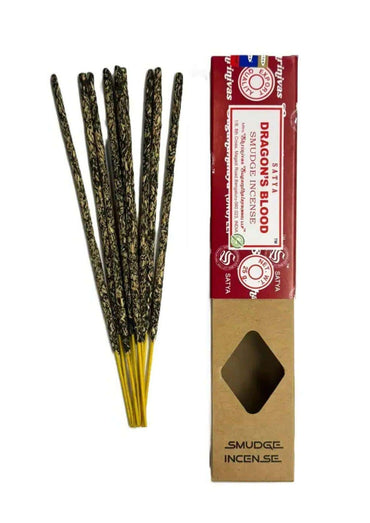
Dragon's Blood
Resinous, intense scent.
Often used for special incense ceremonies.
Lavender
Calming and pleasant.
Ideal before bedtime.
Disposing of Incense Sticks After Use
Allow the ash to cool completely.
Only then should you dispose of it in the general waste.
The holder should also be cleaned regularly to prevent ash residue from accumulating.
Proper Storage
Store incense sticks:
- dry
- dark
- cool
- as airtight as possible
This way, the fragrance and quality will be preserved for a long time.
Conclusion
Using incense sticks correctly is straightforward if you follow a few simple rules. With a suitable holder, high-quality incense, and a safe environment, you can enjoy intense fragrances and a relaxed atmosphere. Whether for meditation, reading, or simply for more coziness – when used correctly, incense sticks quickly become a permanent part of your well-being routine.
Frequently Asked Questions (FAQ)
How do you light incense sticks correctly?
Hold the tip in the flame for a few seconds, let it burn briefly, and then gently blow out the flame. The glowing tip produces the fragrance.
How long do incense sticks burn?
Depending on the size and manufacturer, between 20 and 60 minutes.
Do you need to ventilate when burning incense?
Yes. After use, you should ventilate the room well. During the burning of incense, slight air circulation is sufficient.
Can you use incense sticks daily?
Yes. With normal use, there is no objection. Just make sure to ventilate sufficiently and use high-quality incense sticks.
Which holder is the right one?
A heat-resistant incense stick holder that fully catches the ash is the safest and cleanest choice.
Prev post
Incense Sticks for Meditation and Yoga
Updated on 13 July 2026
Next post
Incense for Beginners
Updated on 12 July 2026