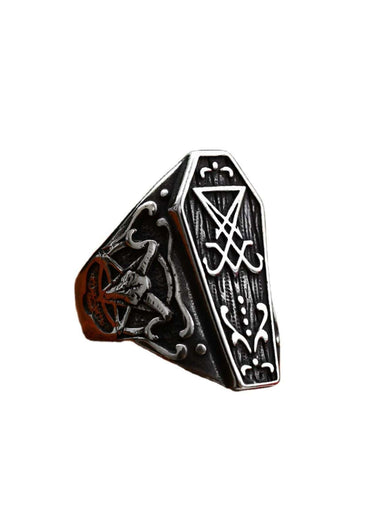
Morbid – Meaning, Definition, and Explanation
Brief Definition
Morbid describes something that deals with illness, decay, death, or a dark aesthetic.
Brief Explanation
The term morbid stands for a fascination with or depiction of transience, death, and decay. Morbid is often used to describe a dark, eerie, or melancholic mood.
What is Morbid?
Morbid is an adjective that describes a dark aesthetic or mindset characterized by death or decay.
Detailed Description
The term morbid comes from the Latin "morbidus," which means "sick" or "ailing." In modern usage, however, morbid describes not just illness, but primarily an aesthetic or emotional preoccupation with themes such as death, transience, decay, and darkness.
In art, literature, and popular culture, the morbid is often deliberately employed to create a specific atmosphere. Morbid depictions can be fascinating, disturbing, or thought-provoking and often encourage engagement with existential themes. Especially in the Gothic scene, the horror genre, or Dark Art, morbid aesthetics play a central role.
The term can be used both neutrally and slightly negatively. While "morbid" is sometimes understood as eerie or macabre, many also see it as an artistic form of expression that discovers beauty in the transient. Related terms and synonyms include macabre, somber, eerie, death-related, decayed, melancholic, or dark aesthetic.
In modern usage, morbid often describes a mix of fascination and unease – a tension between aesthetics, emotion, and existential reflection.
Frequently Asked Questions (FAQ)
What does morbid mean, simply explained?
Morbid means that something is associated with death, decay, or a dark mood.
Is morbid something negative?
Not necessarily – morbid can also be an aesthetic or artistic form of expression.
Where is the term morbid used?
Often in art, literature, horror, and the Gothic scene.
What is the difference between morbid and macabre?
Macabre is often more focused on shocking depictions, while morbid also has an aesthetic component.
Why do people find morbid themes interesting?
Because they encourage reflection on transience, life, and death.