Understanding Occultism: Glossary Guide to Your Dark Symbols
Occultism has fascinated, provoked, and inspired for centuries – as secret knowledge, as a spiritual practice, and as a powerful visual language for all that is hidden. If you live a Gothic lifestyle, love dark art, or are drawn to symbols like the pentagram, Ouija board, or tarot, you've long been immersed in areas rooted in the history of occultism. In this glossary entry, we at EASURE explain what lies behind the term, how occult thinking has developed, which symbols you constantly see on Gothic clothing and jewelry, and how to wear them consciously and thoughtfully.
What is occultism?
Occultism encompasses all teachings, practices, and symbolic systems that deal with "hidden" or "secret" knowledge. The term derives from the Latin "occultus ," meaning "hidden, concealed." Historically, occultism describes movements that dealt with:
Magic and rituals
Secret Societies
esoteric symbol systems
Divination practices such as tarot, astrology, or pendulums
Contact with spirits or "other planes"
work and understand this as access to a deeper "reality".
Occultism appears in many forms in everyday life today:
in pop culture (films, series, games)
in subcultures such as Gothic, Metal, Witchcraft or witch cult scenes
In fashion : occult-inspired prints, jewelry, accessories
esoteric offerings include: Tarot readings, astrological consultations, and incense rituals.
For you as part of the Gothic community, occultism often plays less of a role as a religious system, but rather as an aesthetic and symbolic language with which you express your inner self, your attitude and your break with the mainstream.
Origins of occultism: Where does it all come from?
From the Middle Ages to the modern era
The term "occult" already appears in medieval philosophy. Back then, it referred to hidden properties of things – forces you can't see directly, such as magnetism or astrological influences. Later, the focus shifted:
During the Renaissance , Hermetic philosophy, magic, astrology, and Kabbalah flourished. Scholars sought a kind of "key" to reality in secret correspondences between the macrocosm (universe) and the microcosm (humanity).
In the 19th century , modern occultism developed, influenced by spiritualism, theosophy, and secret societies. Organizations such as the Theosophical Society, magical orders, Rosicrucian groups, and lodge-like circles emerged.
Occultism was never a unified system. Rather, it was a patchwork of symbols, rituals, magical theories, and spiritual experiments that constantly intertwined with art, politics, philosophy, and subcultures.
Occultism as a counterpoint to the Enlightenment
The Enlightenment brought with it a rational, scientific worldview. Occultism was not unaffected by this. Many movements deliberately played the opposite role:
Trust in intuition, vision, trance, mediumship
Emphasis on the mystical, the irrational, the numinous
Criticism of a purely "machine-like" view of the world
It is precisely this tension that makes occultism so appealing to this day – especially for those who feel repelled by a sober, consumer-oriented everyday world and demand space for darkness, ambivalence and mystery .
Occultism, esotericism and religion: What are the differences?
You constantly encounter terms like esotericism , occultism , spirituality , or religion . In everyday life, these fields often blur together, but it's worthwhile to distinguish between them.
religion
based on openly accessible teachings and holy scriptures
Community is built through worship, rituals, and a shared morality
closely linked to identity, tradition, family, culture
Examples: Christianity, Islam, Buddhism.
Esotericism
offers "inner" or "secret" knowledge
emphasizes personal development, personal experience, individual truth
works with symbols, meditation, energy work, astrology, reincarnation
Esotericism encompasses a very broad field. Occultism is often considered a specific branch of it.
occultism
focuses more on secret powers, magical techniques and rituals
uses complex symbol systems (Kabbalah, Tarot, Sigils)
is intensely interested in contact with the afterlife, spiritualism, demonology, magic
In short: All occultists operate in an esoteric field, but not all esotericists engage in occultism.
Central themes in occultism
Occultism is like a vast, branching labyrinth. Some themes reappear time and again – even in Gothic aesthetics and alternative fashion.
1. Secret knowledge and initiation
Occultism operates on the idea that the world contains more than you can see with the naked eye. This "more" often remains reserved for initiated circles .
secret teachings
encrypted writings
Symbols that only experts can interpret
This is exactly the vibe that appeals to many in the Gothic scene: the feeling of belonging to a community of initiates who see the dark spaces in reality – and wear them proudly.
2. Magic and Ritual
Many schools of occultism understand rituals, spells, and magical acts as tools to:
To direct energy
to communicate with spiritual beings
To influence fate, luck, love, protection, or knowledge
Whether you personally believe in magic or interpret it as a symbolic language for inner transformation – ritual work has a strong presence in occultism.
3. Communication with the “other”
Occultism often revolves around contact with:
Ghosts, the deceased, ancestors
demons or angels
"higher beings", egregors or archetypes
This is where Ouija boards , séances, trance mediums, pendulums and similar practices come into play, which you know from horror movies, games or occult motifs on dark art shirts .
Occult symbols: pentagram, sigils, tarot & co.
Occult symbols form a kind of visual language that you constantly see in Gothic fashion. They act like small gateways into worlds full of myths, rituals, and stories.
Pentagram: Star between protection, magic and rebellion
The pentagram – the five-pointed star – is one of the best-known occult symbols. Throughout history, it has carried many meanings:
Protection symbol
Symbols of the elements (earth, water, fire, air, spirit)
magical seal in rituals and magic circles
Symbol of man in the cosmos
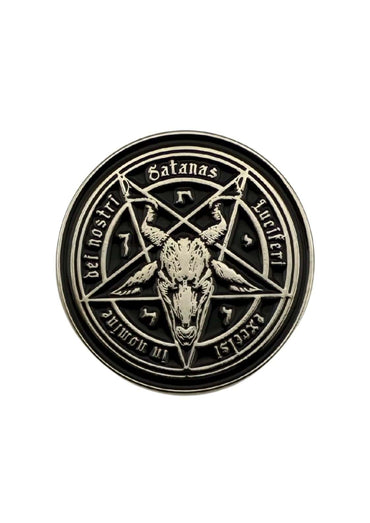
In reversed form and linked with a goat's head, it appears as the Baphomet pentagram in satanic contexts. Within the Gothic scene, the pentagram often expresses:
Self-empowerment
Breaking with church moral rules
Belonging to a dark, independent aesthetic
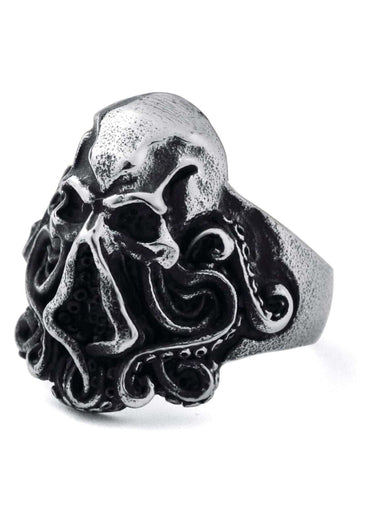
You can find pentagrams at EASURE on rings, necklaces, patches and pins , for example in our Pentagram collection or on occult Gothic shirts in the Occult category.
Ouija boards: Between séance and style
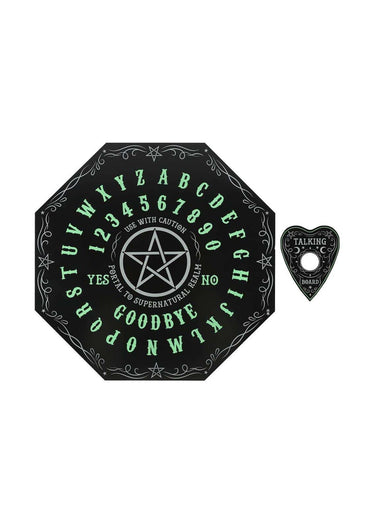
The Ouija board – a wooden or cardboard board with letters, numbers, and the words "Yes"/"No" – originated during the spiritualist wave of the 19th century. Participants place their fingers on a pointing board (planchette), which glides across the board as if by magic.
In classical occultism, the Ouija board serves as a tool for communicating with the afterlife .
In horror films, it serves as a projection surface for fear of loss of control and the unknown.
In the Gothic scene today, it often symbolizes contact with the repressed , the courage to face the shadows.
At EASURE you'll find decorative boards and decor in the Ouija Boards collection and accompanying Dark Art designs in Occult & Ritual Decor . They take the aesthetics of the Ouija away from the cliché and give you the opportunity to transform your home into a personal ritual space – regardless of how you interpret spirituality.
Tarot: Archetypes, self-reflection, and a flood of symbols
Tarot cards originated in the late Middle Ages/early modern period and later developed into an esoteric system of interpretation. In occultism, they serve as:
Access to archetypes and inner processes
Mirror for life situations
Tool of Divination
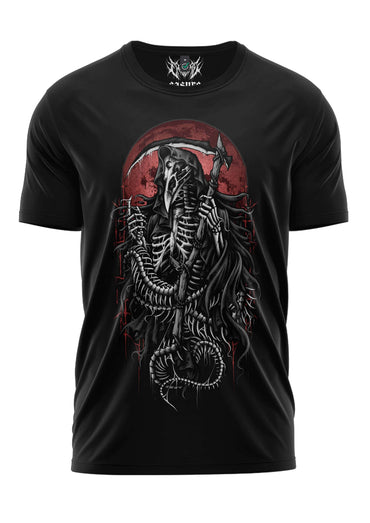
The Major Arcana cards – Death, The Devil, The Tower, The High Priestess, and The Fool – visually define the Dark Art world. Motifs like Death can be found on shirts such as our "The Death" design in the Gothic Shirts category, combining Tarot symbolism with Gothic fashion.
What do occultists believe?
"Occultists" do not form a homogeneous group. Nevertheless, recurring beliefs emerge in many different branches:
Reality comprises visible and invisible levels .
Interactions exist between these levels, which you can influence through symbols, rituals, intention, and consciousness.
Humans possess hidden abilities (intuition, vision, extrasensory perception) which they develop through initiation or practice.
Symbols such as pentagrams, sigils or planetary signs not only have a decorative effect, but also an energetic or spiritual one .
Some occultists see their practice as a spiritual path, others as a "science of the hidden," and still others as an art form through which they express inner states. In the Gothic scene, these attitudes merge with aesthetic self-presentation : You use symbolism to tell your own story.
Examples of occultism: Which practices are considered occult?
The term "occult practices" encompasses a range of techniques and systems that are considered "fringe phenomena" in schools, churches, or mainstream culture, but have a strong presence in alternative scenes. Typical examples include:
Spiritual communication : séances, automatic writing, speaking in trance, pendulum dowsing
Magic and witchcraft : Ritual magic, modern witchcraft rituals, candle magic, sigil magic
Astrology : Interpretation of birth charts, transits, synastry
Alchemy and Hermetic Philosophy
Kabbalah in its esoteric-hermetic form (not to be confused with the Jewish religious tradition)
Ritualized symbol work with pentagrams, Baphomet, planetary seals, elemental symbols
These practices are the focus of discussions about "occultism in schools ," "occult games," or "dangers of the occult." It is precisely at this point that a more nuanced perspective is warranted.
Occultism and dangers: Where the risks lie
Occultism appears threatening because it plays with taboos – death, demons, spirits, transgressions. Therefore, in religious and educational debates, buzzwords like "the dangers of occultism" frequently appear. Some of these risks deserve to be addressed clearly:
Psychological overload
Those who delve deeply into occultism and take every experience literally risk:
Anxiety or panic attacks
Loss of touch with reality
Fixations on "negative energies" or supposed curses
Young people or people with mental health issues are particularly sensitive to horror fantasies, detailed lists of demons, or extreme rituals.
Abuse and addiction
“Occult advisors” or “masters” sometimes exploit fear and dependency:
overpriced "cleansing rituals"
Threats of cursing if you don't pay
cult-like structures with group pressure
The following applies here: skepticism, self-determination and critical awareness are protected.
Fanaticism and ideology
Historically, some movements have linked occult thinking with racist or anti-Semitic ideologies. As EASURE, we stand clearly for anti-fascism, inclusivity, and responsibility . For us, occultism never serves as a cover for exclusion, hatred, or fantasies of superiority.
How to protect yourself
Stay critical and gather information from various sources.
Consciously perceive symbols as art, mythical language, or archetypes , not as a coercive system.
Listen to your mind: If something is constantly disturbing you, get out.
If in doubt, seek professional help if occultism dominates your life or triggers anxiety.
In the Gothic scene, many are less concerned with rituals believed to be real, but rather with an aesthetic approach to darkness, death, and taboo – a creative, reflective approach that we support with our collections.
Occultism and Gothic culture
Why occultism fits the Gothic scene
Gothic works as a counterpoint to the sanitized mainstream. Occultism provides the following:
a rich symbol library (Pentagram, Ouija, Baphomet, Tarot, Sigils)
mythical stories about demons, angels, magicians, witches and fallen angels
a vocabulary for melancholy, darkness, existentialist questions
When you buy an occult gothic shirt or a pentagram ring, you're not dressing neutrally. You're consciously sending a signal: "I accept shadows, I question norms, I allow ambivalence."
Occult clothing: Wearing symbols on the body
Many people understand occult clothing to mean:
Shirts with Tarot motifs, Grim Reaper, Baphomet, ritual scenes
Hoodies with occult sigils, planetary symbols, pentagrams
Matching pentagram jewelry in the Pentagram category
Baphomet and satanic angel motifs in Baphomet and on special Gothic rings under Gothic rings
Dark art shirts with occult imagery, collected in Dark Art
All these pieces convey occult imagery with a clear statement: individual, reflective, anti-fascist, alternative.
Use occult symbols consciously
Especially in the Gothic scene, you don't wear symbols just because they look "cool." They express your attitude. Using them consciously helps you to convey your message more clearly and respectfully.
Questions you can ask yourself
Do I associate a personal meaning with this symbol?
What historical or religious contexts does it touch upon?
Does it align with my values (e.g., anti-fascism, inclusivity)?
Many symbols have been appropriated by problematic ideologies. Within the Gothic community, there is a strong awareness of the need to avoid right-wing or misanthropic codes . At EASURE, we pay attention to these historical contexts when choosing our motifs and publicly advocate for a clear anti-fascist stance – for example, in our Against Anti-Fascism collection.
Witchcraft, witch cults and modern occultism
Witch cult and witchcraft
Modern witch cults and witchcraft movements draw on older folk magic, ritual traditions, and newer esoteric concepts. They combine:
Nature spirituality
Lunar and seasonal festivals
Herbal knowledge, incense burning, altar design
personal magic rituals
Occultism, witchcraft, and witch cults overlap: symbols like the pentagram, triple moon, or tarot blend with their own rituals. Many modern witches see their work less as "show magic" and more as self-empowerment , a path to healing, and an active way of dealing with inner and outer darkness.
At EASURE you will find suitable pieces for the Witchcraft aesthetic in the Witchcraft collection, from occult shirts to symbolic Gothic jewelry in the Gothic jewelry category.
Occultism in pop culture and horror
Films, series and games play extensively with occultism:
Demon summoning
cursed Ouija boards
satanic cults
occult conspiracies
These pop culture images shape what people associate with occultism. On our blog, you'll find relevant film reviews, for example, of "The Conjuring," "Nosferatu," or "Evil Dead" in the Film Reviews section. There you can see how much horror and gothic aesthetics mutually reinforce each other and how occultism functions as an artistic tool.
Occultism in English, Latin and everyday language
Terms related to occultism appear in several languages:
German: Occultism, occult, occult symbols
English: occultism, occult, occult symbols
Latin origin: occultus = hidden, secret
If you follow international scene accounts on Instagram, TikTok, or in forums, you'll encounter many English keywords: occult fashion, occult jewelry, occult symbols, occult tarot . They all describe the same core: a fascination with the hidden .
Studying occultism: Knowledge instead of flying blind
Those who want to delve deeper often wonder if occultism can be "studied ." A traditional university degree in "occultism" doesn't exist. Nevertheless, you can find several approaches:
Academic
Study programs in religious studies, cultural studies, history, sociology
Specializations in esoteric history, modern spirituality, subcultures
This allows you to learn about occultism as a cultural phenomenon without having to be a practitioner yourself.
Scene and self-study
Reading classic authors from esotericism and occultism
Exchange within communities, at festivals and in alternative scene meeting places
Reflection of personal experiences, dreams, symbolic images
In our News & Background section of the blog, we explore topics from Gothic, Dark Art, symbolism, and subculture, and connect them to fashion. This way, you regularly get input that goes beyond "just shopping."
Occultism and fashion at EASURE
Why occultism fits our brand
As an independent Gothic online shop focusing on Dark Art, occult symbolism and anti-fascist statements, we see occultism not as a "hype", but as a cultural language with which you turn your inner cosmos outwards.
We print on organic cotton , locally in Krefeld, in small print runs.
Many motifs incorporate Tarot, Pentagram, Baphomet, Ouija, demon figures, Grim Reaper and similar imagery.
You receive pieces that not only look stunning, but also express an attitude : conscious, subcultural, against right-wing co-optation, for self-determination.
How to create your occult look
Combine:
Statement shirt with an occult motif (e.g. “The death”, “Demon Nun”, “The crow”)
Gothic rings with pentagram, sigils or Baphomet from Gothic rings
Find out a little about its origin: A few background details are enough to avoid obvious misunderstandings.
Take a clear stance : No room for right-wing, anti-Semitic or misanthropic codes.
Use symbols creatively : Combine them with your story, your values, your kind of darkness.
Invest in quality : An iconic symbol has a stronger impact on a well-made organic t-shirt or a solid ring than on a mass-produced item. Our Gothic clothing and jewelry provide the perfect backdrop.
Stay open to discussion : If someone asks you about the meaning, you can explain why you wear this symbol – and what you stand for.
Frequently Asked Questions about Occultism
What are some examples of occultism?
Among the best-known examples of occultism are practices and systems such as Tarot, astrology, ritual magic, spiritualism, séances, dowsing, crystal ball gazing, sigil magic, Hermetic Kabbalah, and modern witchcraft. Working with symbols like the pentagram, Baphomet, planetary seals, and magical alphabets also falls under this category. In the Gothic scene, occultism also appears in the form of occult clothing —for example, in occult prints, Ouija board motifs, Tarot illustrations, and pentagram-adorned Gothic jewelry, which you can find in our Occult and Gothic Jewelry collections.
What are occult practices?
Occult practices are actions that work with hidden knowledge or supernatural powers. These include forms of divination such as tarot, runes, astrology, and crystal balls; magical rituals; sigil magic; incantations; contact with the afterlife via Ouija board or séance; and various witchcraft rituals. They utilize symbols, gestures, words, incense, and altars to address invisible planes of reality. Whether you believe in these practices literally or understand them metaphorically as inner work depends on your approach to spirituality and occultism.
What is the difference between occultism and esotericism?
Esotericism describes a broad field of inner or secret teachings that emphasize personal growth, spirituality, and the search for meaning. This includes meditation, yoga, energy work, reincarnation beliefs, angel work, and channeling. Occultism forms a specific area within this field, working more closely with magical systems, rituals, secret societies, and complex symbolic worlds such as the pentagram, Ouija board, Kabbalah, and tarot. In short, esotericism encompasses many forms of spirituality, while occultism focuses more clearly on hidden powers, magical techniques, and occult symbols .
What do occultists believe?
Occultists generally assume that reality has more levels than the visible, material world. They believe in invisible forces, spiritual beings, or archetypes that influence life and can be addressed through symbols, rituals, intentions, and consciousness. Many occultists see pentagrams, tarot cards, sigils, or Ouija boards not merely as decoration, but as tools for interacting with these realms or for making inner processes visible. The specific school of thought varies considerably—from the rational "magic as psychology" to explicitly spiritual or religious interpretations.
Is occultism dangerous?
Occultism appears dangerous because it deals with taboo subjects such as death, demons, curses, and spirits. It becomes dangerous when fear, fanaticism, or dependency come into play: for example, when people attribute every everyday experience to curses, allow themselves to be manipulated by "masters," or treat psychological problems with rituals instead of professional help. A reflective, informed approach to occultism and occult symbolism—as is common in the Gothic scene—significantly reduces risks. It remains crucial to stay critical, respect boundaries, and not disguise misanthropic ideologies under the guise of "occult."
What does the pentagram mean in occultism?
In occultism, the pentagram usually symbolizes the five elements (earth, water, fire, air, spirit) and humankind as beings between heaven and earth. In magical traditions, it serves as a protective symbol, a sacred circle, or a seal in rituals. Upright, it often represents harmony and spiritual development; inverted and combined with a goat's head, it signifies rebellion against religious authorities or certain satanic movements. In Gothic fashion, the pentagram primarily functions as a powerful occult symbol , demonstrating your connection to dark aesthetics, individuality, and nonconformity—for example, on rings, necklaces, and shirts from our Gothic Rings and Occult categories.
How does occultism fit with Gothic clothing?
Gothic clothing revolves around darkness, melancholy, taboo, breaking with norms, and the interplay of death and transcendence. Occultism provides the perfect symbolic world for this: pentagrams, Baphomet, Ouija boards, tarot, sigils, occult circles, and demonic figures. On shirts, hoodies, rings, chokers, patches, and pins, they transform your body into a living canvas for hidden stories. At EASURE, you can combine this visual language with sustainable production and an anti-fascist stance, for example, in our Gothic clothing , Gothic jewelry , and our themed collections like Occult or Baphomet .
///Comment: Tips for external links for E‑E‑A‑T
https://www.ezw-berlin.de/publikationen/lexikon/okkultismus – A short, factual encyclopedia article from a church-affiliated institution that places occultism in its historical and theological context. It is useful to read after the sections "What is Occultism?" and "Occultism, Esotericism and Religion".
https://www.britannica.com/topic/occultism – An encyclopedic overview of occultism in English with a historical focus. A useful supplement for readers researching "occultism in English," especially after the section "Occultism in English, Latin, and everyday language."
https://journals.sagepub.com/home/jr – Journal of Contemporary Religion, a specialist journal for religious studies that regularly publishes scholarly articles on esotericism and occultism. Recommended as a general reference after the section "Studying Occultism: Knowledge Instead of Flying Blind".