"Predator: Badlands": First impressions and film review
If the word "alien" immediately conjures up images of slimy Xenomorphs, dark corridors, and desperate Marines, then "Predator: Badlands" perfectly fits your prey profile—while simultaneously subverting it in an interesting way. In this film review, we'll examine why this new entry in the Predator universe is a must-see for fans of the Alien franchise , gothic aesthetics, and dark sci-fi worlds, where it rubs some people the wrong way, and how it subtly expands upon the old "Predator vs. Alien" rivalry.
If the word "alien" immediately conjures up images of slimy Xenomorphs, dark corridors, and desperate Marines, then "Predator: Badlands" perfectly fits your prey profile—while simultaneously subverting it in an interesting way. In this film review, we'll examine why this new entry in the Predator universe is essential viewing for fans of the Alien franchise and dark sci-fi worlds, where it rubs some people the wrong way, and how it subtly expands upon the old "Predator vs. Alien" rivalry.
We, with a weakness for cinematic darkness, are particularly interested in: How dark, how brutal, how atmospheric is "Predator: Badlands" really – and what does it trigger in you if you grew up with "Alien" or "Predator"?
Between the Alien franchise and Yautja honor: Where does "Predator: Badlands" stand?
“Predator: Badlands” is set in the same expanded universe as the Alien film series – including the legendary Weyland-Yutani Corporation , which not only provides an Easter egg but actively intervenes in the plot.
Instead of once again chasing a squad of marines or mercenaries through the jungle, the film shifts the action to the extremely deadly planet Genna , a cosmic hellhole that can easily stand alongside LV-426 from the first Alien film .
It becomes clear within the first few minutes:
- Not an earthly jungle, but an alien planet as a stage.
- Not a human protagonist, but a young Yautja (Predator)
- Weyland-Yutani androids as a morally and emotionally compelling counterpart
In this way, the film stylistically approaches the Alien 1979 vibes: alien world, strong survival atmosphere, claustrophobic fear – only here the focus is on the hunter himself and not the victim.
Plot of "Predator: Badlands" – Code of honor in deadly Genna
Summary without cheap spoilers
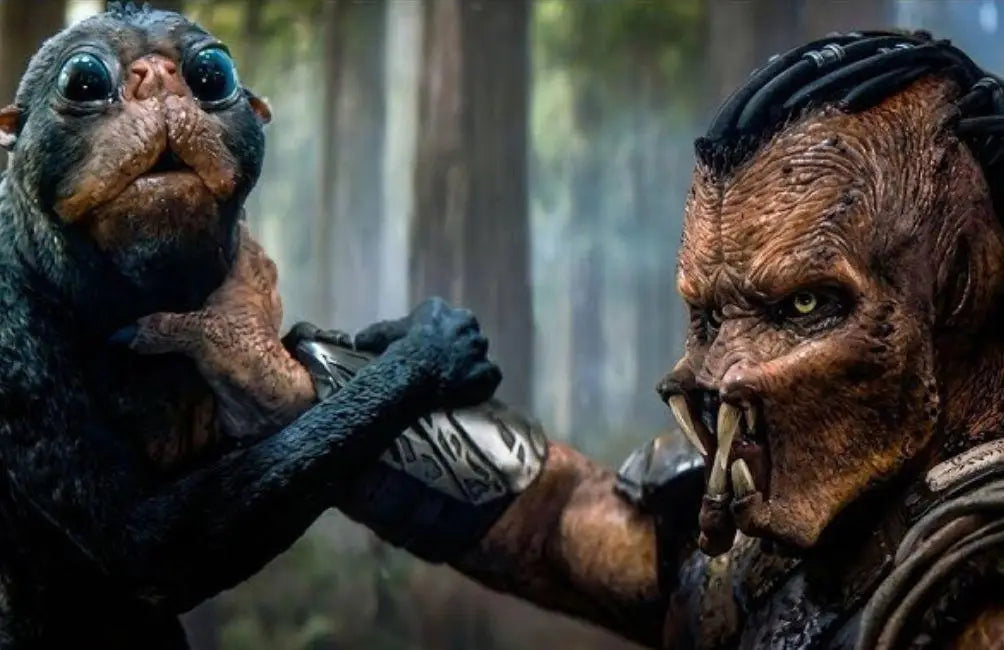
At the center is Dek , a young Yautja, branded a "Runt" by his clan, physically inferior, and internally torn apart. His father, Njohrr , leads the clan alpha and embodies the brutal, toxic understanding of "strength" familiar from previous Predator films – honor through hunting, status through kill count.
Dek wants this honor, but not at any cost. Together with his brother Kwei , he plans to hunt the legendary Kalisk , the ultimate Apex alien on the death planet Genna . Whoever slays this monster will receive the highest status in the clan and the iconic active cloaking system you know from "Predator".
The plan backfires spectacularly: Njohrr demands the death of his "weak" son. Kwei resists, paying with his own life – and in the final act of defiance, still sends Dek to Genna. Crash, wrecked landing, almost all the equipment gone. Left behind:
- a plasma blade
- rudimentary Predator tools
- a broken code of honor
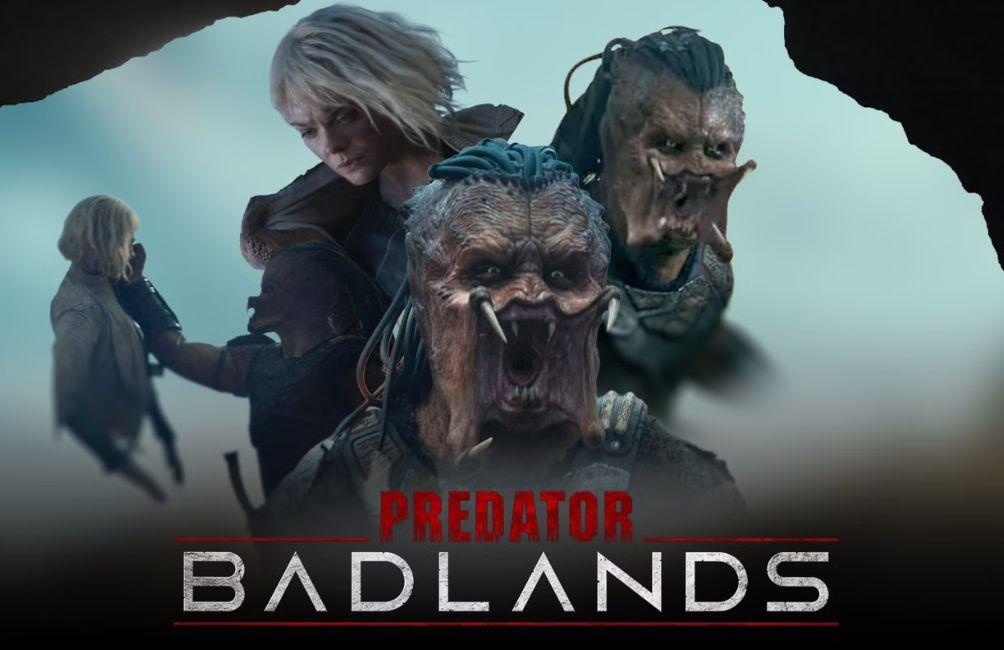
On Genna, Dek encounters Thia , a damaged android from Weyland-Yutani , whose research team was already wiped out by the Kalisk. Thia is synthetic, but her behavior, trauma, and search for meaning seem more human than many real human characters in the franchise.
Dek and Thia form a pragmatic alliance: she wants answers, he wants plunder and honor. As the story unfolds, this alliance of convenience shifts towards a genuine bond, while the planet Genna torments them both with grotesque creatures, toxic vegetation, and hostile Yautja factions.
Genna functions like an evil sister of LV-426 from the Alien film series : less claustrophobic, but surreal, richly colored, yet deadly in every pore. The hunt for the Kalisk forms the narrative core, which the film pursues consistently, tightly, and without superfluous subplots.
Atmosphere & Worldbuilding: An alien planet as a battlefield
If you're into dark, "painted" sci-fi, Frank Frazetta vibes , the vastness of "Mad Max 2," and games like Shadow of the Colossus , then "Predator: Badlands" will hit the spot. The director combines classic sci-fi elements with fantasy imagery to create a visual dark fantasy album that can easily rival dark art prints on your wall.
Genna is effective:
- like a living nightmare, full of fleshy plants, bony rock formations and glowing spores
- Simultaneously sublime and hostile, like a spiritual counterpart to the corridors of the Nostromo in "Alien - The Uncanny Being from Another World"
- time and again like a natural stage for iconic still images: the Predator silhouette against two moons, Thia in the grainy neon light of a crashed Weyland-Yutani shuttle.
The camera strikes a compromise between operatic visual power and intimate closeness to the characters.
Predator as the main character: emotional closeness instead of an anonymous monster
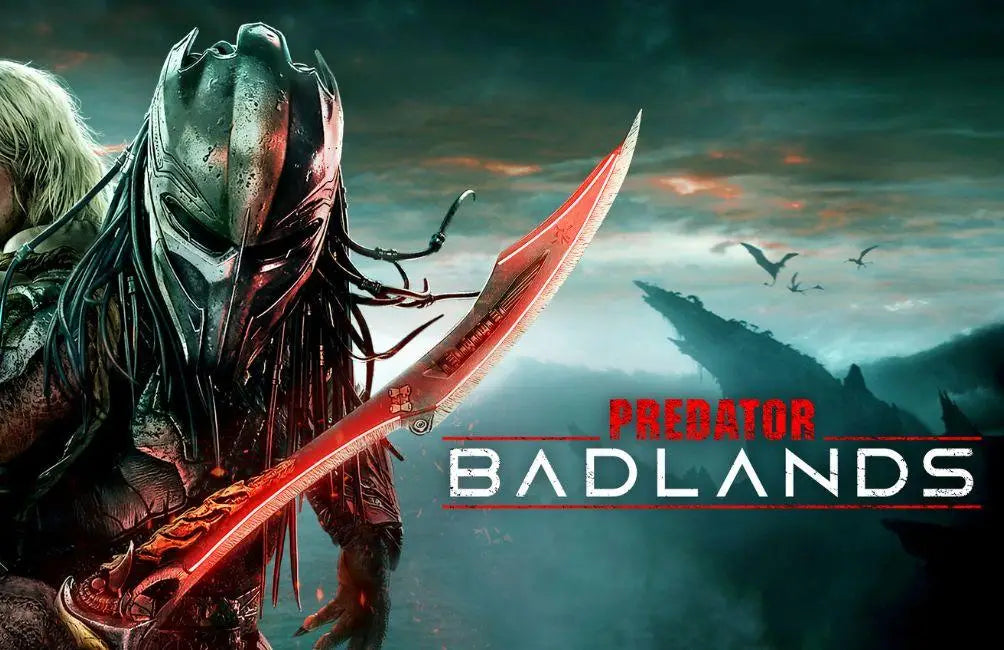
The boldest move in "Predator: Badlands": The Predator is the main character, not the enemy.
Instead of casting panicked glances at an invisible alien from a human perspective, you stay close to Dek. His body appears massive and dangerous, yet at the same time you see:
- his insecurity compared to the other Yautja
- his vulnerability without full gear
- His grief for Kwei is expressed more through gestures, breath and movement than through dialogue.
The film uses the body language of actor Dimitrius Schuster-Koloamatangi to make Dek tangible. It's not a blatant "The Predator now has feelings," but a very physical, sparsely worded performance that draws you into his perception.
For those who have developed an emotional connection to the Predator because they have carried the series in their hearts since the first film, this seems like a logical next step: The character remains dangerous, but you see the inner conflict between clan code, personal morality, and survival on a hostile alien planet.
Thia, Weyland-Yutani and the alien DNA in the film
The appearance of Weyland-Yutani is more than just fan service for Alien franchise lovers. In the Alien series, the company represents exploitative capitalism, body horror, and a cynical disregard for life. In "Badlands," this spirit manifests itself in the character Thia .
Thia is:
- a damaged synth (android) by Weyland-Yutani
- technically "property" of the group
- emotionally complex, with broken protocols and sometimes contradictory behavior
In parallel, there exists her sister Tessa , another synthetic entity who embodies the cold, pragmatic side of the corporation. These two characters subtly recall Ash and Bishop from the Alien film series : androids who leave one wondering where their true loyalty lies.
This deepens the alien DNA in the Predator universe:
- moral gray areas
- Bodily sovereignty vs. corporate interests
- the game with artificial consciousness
Thia and Dek act like mirror images: an artificial being with humanity versus a biological hunter with a code of honor. This dynamic makes the film more interesting than mere "monster-of-the-week" hunts.
Violence, rating and horror: PG-13 in the Predator universe?
A major point of discussion before release: “Predator: Badlands” has a PG-13 rating , while many previous entries in the Predator and Alien film universe were significantly more violent.
What does that mean for you as a fan?
- Less explicit, human splatter images
- Focus on green Predator blood, alien slime, and destroyed android bodies
- Intensity is achieved more through atmosphere, staging, and threat than through maximum gore.
The horror shifts from "gorefetish" to:
- Survival horror on a toxic planet
- Creature horror through the creature world of Genna
- psychological tension in the relationship between Dek, Thia and the rest of the Yautja
If you loved Alien (1979) – a film that relies more on suspense and atmosphere than gore – you'll definitely find something to enjoy in "Badlands." Those who primarily celebrate "Alien 2" or "Alien 3" for their raw violence might find a few scenes a bit too tame, but will benefit from the dense atmosphere and the consistently well-crafted chase.
Comparison with the old Predator and Alien movies
Without simply reciting a list, it's worth taking a look at how "Badlands" fits into the context of the Alien series and the Predator chronology.
Structure & Pace
- "Alien – The Uncanny Creature from Another World" : slow, claustrophobic, almost a horror chamber play.
- "Predator" (1987) : A group of men in the jungle, an escalation from war film to sci-fi horror.
- "Badlands" : A road-movie-style hunt on a deadly alien planet, with a clear quest structure.
The difference: Alien invests a lot of time in setup and suspense, Predator in a critique of masculinity under the guise of action. Badlands works with modern genre mixes: a bit of Western, a bit of road trip, a lot of sci-fi horror.
Figures
- Ripley and Co. fight against the alien as the ultimate otherness.
- Dutch fights the Predator as a reflection of toxic masculinity.
- Dek is fighting against Kalisk, his father Njohrr, and indirectly against a system that cannot tolerate "weakness".
This makes Badlands more emotional without descending into kitsch. It uses nonverbal moments that portray the Predator as a tragic figure without disarming him.
tone and aesthetics
While the Nostromo in "Alien" creates a sweaty, industrial claustrophobia, Badlands opens up the canvas: vast landscapes, strange sky formations, organic colors. Nevertheless, a feeling of confinement remains – not in corridors, but in an ecosystem that is swallowing you whole.
Anyone who wants to complete their love for the series can click through our overview of new Alien releases like "Alien: Romulus" in our film review and thus connect the Badlands perspective with the classic Alien line.
Detailed character drawing: Dek, Thia, Njohrr & the Kalisk
Dek – the outsider-Yautja
Dek combines much of what moves alternative scenes:
- He doesn't fit the norm of his clan.
- The community rates him as "too weak".
- He still finds his own way instead of completely conforming.
The camera stays close to him as he fails, falls, makes mistakes, and hesitates. Dek is not only fighting against external enemies, but also against the internalized ideal of the perfect, merciless hunter. His journey thus recalls the self-assertion of many Goths who find their place in a conventional society—or consciously rebel against it.
Thia – a torn android between Weyland-Yutani and her own will
Thia seems like an echo from alien history: androids programmed "for the company" but who develop their own ethics.
It stands for:
- Trauma and guilt after the loss of her research team
- Fragmented identity due to damage and memory gaps
- The unspoken question of whether an artificial being is even allowed to develop "honor" or emotions.
In combination with Dek, an unusual duality arises: alien hunter and corporate machine work together against a greater threat, even though both were originally designed as tools for systems of death.
Njohrr – Clan leader as the embodiment of a brutal system
Njohrr functions not only as a father figure, but as a living avatar of a suffocating code of honor. According to his logic:
- Weakness = Shame
- Rebellion = Betrayal
- Love or pity = danger for the clan
In this way, he is reminiscent of the cold managers of Weyland-Yutani in the Alien film series , who view human life as a resource. Except that Njohrr operates on a cultural, "traditional" level, while Weyland-Yutani acts capitalistically.
Dek moves between these two extremes, which deepens his inner turmoil.
The Kalisk – Alien as Myth
The Kalisk remains a mythical alien creature for much of the film: rarely seen directly, yet always present. Its reputation as an invincible monster gives it an aura reminiscent of the alien in Scott's debut film: less is more , threat arises through suggestion.
When the Kalisk appears, you feel:
- mass
- ancient power
- an almost cosmic indifference towards the dramas of Dek, Njohrr or Weyland-Yutani
In this respect, “Badlands” returns to a timeless genre truth: The alien embodies something greater than you, something you cannot negotiate.
Action, staging and score: Soundtrack for your next night drive
Action
The action in "Badlands" appears clearly choreographed , with less shaky cam and more focus on legibility. The PG-13 rating forces the film to use more precise visual language.
- Blades that narrowly miss heads
- brutal impacts that are felt rather than graphically shown
- short, violent explosions against the menacing backdrop of Genna
The best set pieces:
- an ambush in a phosphorescent mushroom forest
- a vertical fight on the wall of a gigantic bone cliff
- the final confrontation with Kalisk, in which Genna herself becomes a weapon
Score & Sound Design
The score combines:
- tribal inspired percussion
- Electronic textures with a slightly industrial feel
- Choral, almost sacred sounds when it comes to honor and sacrifice
The sound design places great emphasis on breathing, the rustling of armor pieces, metallic rubbing, and the cracking of alien creatures. In quiet moments, you feel as if you're holding your breath alongside Dek while some alien animal crawls through the underground somewhere.
Themes: Outsiders, honor, capitalism – a dark triad
“Predator: Badlands” uses its genre setting to hint at more than just hunting.
Outsider identity
Dek stands on the fringes of his clan, Thia on the fringes of her own protocols. Both are balancing between:
- Belonging and self-determination
- Coercion and individual morality
- traditional role and personal choice
Honor and violence
The Yautja culture defines honor through hunting and kill lists. The film subtly asks:
- What honor lies in a victory built on betrayal?
- What value does a code have if it destroys individuality?
Especially in comparison with previous Predator installments, it is noticeable that "Badlands" celebrates the joy of hunting less and focuses more on its cost.
Weyland-Yutani and the long shadow of the Alien franchise
With Weyland-Yutani on board, the alien franchise question always lingers: How far will corporations go for data, technology, and weapons?
Thia physically carries this entire history within her: she is a product of a corporation that uses life as a tool, and simultaneously a subject capable of experiencing relationships and guilt. Her fractured nature echoes Ripley, Ash, Bishop, and even the nameless workers of the Nostromo.
Style, camera work and editing: Old-school sci-fi meets modern genre cinema
The director stylistically builds on successes like "Prey" and combines:
- clear, readable action
- strong image composition
- Quiet moments that allow the characters and setting to breathe
The camera uses:
- Wide shot to establish Genna as an epic backdrop
- Medium shots and close-ups to emotionally charge Dek and Thia.
- symmetrical shots where Predator armor and organic landscape collide
The editing remains tight: with a runtime of just under two hours, hardly any scene drags. Even quieter dialogue passages feel relevant because they feed the characters' inner conflict.
Technology & Effects: Creature Design instead of CGI Overload
Creature design
The film's strength lies in its mix of practical effects and CGI support:
- Yautja armor appears tangible, heavy, worn rather than “stuck” to the body.
- Genna's alien ecosystem mixes organic and mineral elements that look like nightmares from an occult nature religion.
- The Kalisk combines aspects of classic movie monsters and modern creature art.
CGI
CGI remains in service of world-building and avoids spectacle for its own sake. Light, colors, and textures blend into a harmonious whole without breaking the immersion.
Those who love "Alien 2" with its miniature and practical effects will recognize in "Badlands" the attempt to preserve a similar physical impression using modern technology.
Who is "Predator: Badlands" suitable for?
For alien fans
You feel addressed if you:
- You've caught up on the Alien film series in the correct Alien order.
- Weyland-Yutani cameos enjoys
- You prefer moral questions to mindless alien shootouts
The film expands the picture of the shared universe without staging a direct Alien vs. Predator battle. Instead, it delves deeper into the Yautja mythology and shows how much Weyland-Yutani is pulling the strings behind the scenes.
For Predator fans
You get:
- classic gadgets (plasma blades, masks, scan-vision)
- Hunting scenes, traps, trophies
- Clan politics and ritual
At the same time, “Badlands” breaks with cherished patterns: no mercenary squad, no pure “Humans vs. Predator” scenarios, but a focus on the inner conflict of the hunter character.
Brief overview: Predator Badlands in the context of Alien and Predator films
To give you an idea of where "Predator: Badlands" roughly fits in the franchise context, a brief overview (simplified selection) will help:
| Film / Series | focus | Horror level | Reference to Alien / Weyland-Yutani |
|---|---|---|---|
| Alien – The eerie creature from another world | Claustrophobic sci-fi horror, "Monster in the Ship" | High (psychological + body horror) | Start of the Alien film series, Weyland-Yutani in the background |
| Alien 2 (Aliens) | Action-packed war film with Xenomorphs | Medium to high (many fights, body count) | Weyland-Yutani drives colonization |
| Predator (1987) | Action in the jungle, hunters vs. elite soldiers | Medium (Blood, Gore, Survival) | Indirect parallel universe, no official Wey-Yu link |
| Alien vs. Predator | Crossover, Ritual Hunt in the Temple | Medium | Direct connection between Alien and Predator |
| Predator: Badlands | Yautja: A Coming-of-Age Story on the Alien Planet Genna | Medium (PG-13, strong survival focus) | Weyland-Yutani is present through Thia & Tessa, Alien franchise DNA is noticeable. |
Frequently asked questions about Alien, Predator and "Predator: Badlands"
In what order is the best way to watch the Alien movies?
If you want to experience the Alien film series chronologically within its narrative universe, this order is recommended: "Prometheus," "Alien: Covenant," "Alien," "Alien 2," "Alien 3," "Alien 4," followed by the crossover films like "Alien vs. Predator." This way, you can follow the Weyland-Yutani Corporation's journey from initial experiments to the later Xenomorph disasters and better understand how the company's policies evolved leading up to the events of "Predator: Badlands."
What is Predator: Badlands?
"Predator: Badlands" is a sci-fi action film set in 2025 and the seventh installment in the Predator franchise. The film takes place on the alien planet Genna and tells the story of young Yautja Dek, who seeks to hunt down the ultimate alien monster, Kalisk, to regain his honor. He is accompanied by the android Thia, who works for Weyland-Yutani . The film's blend of Predator mythology, alien world-building, and striking visuals clearly distinguishes it from many standard sequels.
Does Predator: Badlands have anything to do with the Alien film series?
Yes, but more in the background. No Xenomorphs from the Alien franchise appear directly, but Weyland-Yutani plays a central role through the androids Thia and Tessa. This makes "Predator: Badlands" feel like a spin-off of the Alien timeline: same corporate logic, similar moral conflicts, familiar themes revolving around synthetic beings and dangerous alien worlds. Fans of "Alien 1979" and "Alien 2" will immediately recognize typical themes such as corporate interests, exploitation, and the manipulation of artificial life.
Is Predator: Badlands still brutal enough despite its PG-13 rating?
"Predator: Badlands" is rated PG-13 and therefore avoids the excessive human gore you might know from some Alien films . The violence is still intense, however, because it's conveyed strongly through atmosphere, sound, and direction: Predator hand-to-hand combat, deadly alien flora, and the destruction of android bodies. The horror is more reminiscent of "Alien" than splatter-fests. If you enjoy suspense, survival, and menacing alien environments, you'll find it perfectly suited to your taste despite the lower age rating.
Do I need to have seen the old Alien or Predator movies to understand Predator: Badlands?
Helpful, but not essential. "Predator: Badlands" works as a standalone alien survival film with a clear quest structure. However, if you're familiar with classics like "Alien," "Alien 2," and the first "Predator," you'll recognize more details: references to Weyland-Yutani, reinterpretations of the Predator code of honor, and Genna's integration into a larger sci-fi mythology. For an in-depth look at the franchise, check out our other reviews in the Alien-focused film review section.
Where does Predator: Badlands fit in comparison to Alien 3?
“Alien 3” feels like a dark monastery drama in sci-fi garb: prison planet, religious motifs, hopeless atmosphere. “Predator: Badlands,” instead of utter despair, focuses on a bittersweet path of self-empowerment: Dek fights his way free in a merciless alien environment, while Thia gradually breaks free from Weyland-Yutani 's control. Both films share a focus on outsider characters and isolation, but “Badlands” places greater emphasis on epic visuals and a cohesive, chase-oriented plot, whereas “Alien 3” is structured more like a nihilistic final chapter.
Is Predator: Badlands worth it if I'm mainly an alien fan?
If you love Alien 1979 , Alien 2 , and the dark Alien film series , but are also open to other perspectives within the same narrative universe, then "Predator: Badlands" is definitely worth watching. You won't get any Xenomorph action, but you will get Weyland-Yutani intrigue, a brutal alien environment, compelling android characters, and a Predator who is more than just an anonymous monster. Especially if you're interested in artificial life, corporate ethics, and survival horror, the film will enrich your understanding of this shared universe in an exciting way.
Prev post

Dracula - The Resurrection 2025 | Film Review
Updated on 19 March 2026
Next post

Nosferatu
Updated on 04 January 2026