Gothic style through the ages
Gothic Style Through the Ages: Discover how the dark fashion evolved from its roots in Post-Punk and Gothic Rock to modern substyles. Learn which influences, materials, silhouettes, and accessories shaped the Gothic look and why it remains versatile and timeless to this day.
Share
If you Google "Gothic fashion" today, you'll find everything from Victorian-romantic dresses and cyber-goth outfits to subtly dark streetwear looks. At the same time, for many, Gothic fashion remains a lifestyle that goes far beyond clothing. In this guide, we'll take you on a journey through the history of Gothic fashion, show you how the style has changed, and how you can live it authentically, sustainably, and in a way that's practical for everyday life.
What exactly is Gothic fashion?
Gothic fashion describes a dark, often dramatic style of dress that evolved from music, art, and subcultures. Black clothing, symbolism such as pentagrams, bats, skeletons, or witches, as well as materials like lace, velvet, and leather characterize this style.
Gothic fashion stands for nonconformity, individuality, and a conscious break with mainstream trends . For many people in the scene, it's not about dressing up, but about identity. Clothing communicates an attitude: towards life, death, spirituality, politics, and society.
If you want to delve deeper into the basics of the subculture, you can find more information about the term "Gothic - what is Gothic?" in our glossary.
Origins: Black Romanticism, Punk and the birth of Goth
From black romanticism to black eyeliner
Long before the first Gothic band, there was a fascination with darkness, melancholy, and death. Romantic writers like Edgar Allan Poe and the somber atmospheres of Victorian literature formed an aesthetic foundation upon which Gothic could later grow.
Later, horror films, theater, and art took up this interplay of darkness and beauty. Dracula films, expressionist shadow paintings, morbid stage designs – all of this shaped how "dark" aesthetics were perceived.
Punk, Post-Punk and the first Goths
The direct roots of Gothic fashion lie in the punk and post-punk scene of the late 1970s and early 1980s. From ragged, politically charged punk looks, darker, more elegant silhouettes gradually developed:
- Black, tight trousers, studs, leather jackets
- Teased, black hair
- Dramatic makeup with strongly emphasized eyes
- Second-hand coats and Victorian-inspired clothing
Early Goths stood in front of the stage at concerts, sweated in clubs, and built their style from what they found at flea markets, army surplus stores, or second-hand shops. A conscious DIY mentality characterized the scene.
The 80s: Trad Goth, Batcave and iconic silhouettes
Trad Goth: The “classic” Gothic style
In the 1980s, what many now know as "Trad Goth" took shape. Bands like Bauhaus, Siouxsie and the Banshees, The Cure, and Sisters of Mercy influenced not only the sound but also the fashion. Typical:
- Tight black trousers or leggings
- Mesh and lace tops
- Long coats and trench coats
- Platform boots or creepers
- Backcombed, sometimes highly backcombed hair
- Heavy black eyeliner, pale complexion
The traditional goth look combined romance with rebellion. It was never just about "horror," but about melancholy, art, music, and a counterpoint to the garish mainstream trends of the 80s.
The 90s: Romanticism, Industrial and Club Culture
Romantic and Victorian Gothic fashion
In the 1990s, the combination of Gothic and Victorian elegance gained strength. Corsets, ruffled blouses, and long skirts characterized many outfits.
Typical elements:
- Corsets and underbust corsets
- Ruffled blouses, high-necked collars
- Long coats and capes
- Lace gloves, chokers, ornate necklaces
This romantic look reappears today in a toned-down form in "Dark Romance" trends and red carpet looks. Instead of tightly laced corsets , comfortable, corset-inspired cuts and soft corsets that allow freedom of movement now dominate.
Industrial, cyber, and fetish influences
Parallel to the romantic trend, a harder, more technically influenced look developed, inspired by industrial and EBM:
- PVC, lacquer, synthetic leather
- Lots of black combined with neon details
- Platform boots with thick soles
- Gas mask, goggles, futuristic accessories
These influences live on to this day in Cyber-Goth and futuristic Gothic looks.
The 2000s: Commercialization, Emo, Visual Kei and new hybrid forms
Gothic goes mainstream
With films, video games, and series featuring increasingly prominent dark characters, Gothic fashion moved further into the mainstream. At the same time, retailers discovered the "dark look" as a selling point.
Large chains launched "black collections" that were easily accessible but often lacked depth and quality. Many in the scene felt misunderstood: aesthetics without substance, style without attitude.
Emo, Visual Kei and hybrid styles
In the 2000s, emo, metalcore, and Japanese influences like visual kei became widespread. Fashion became more colorful, playful, and sometimes androgynous.
- Black skinny jeans combined with colored belts
- Striped shirts, band shirts, arm warmers
- Colorful streaks in black hair
- Strong emphasis on emotional expressiveness
Many Goths adopted individual elements, mixing classic Gothic fashion with Emo or subculture elements. The boundaries became more fluid, and this is precisely where the diversity within the scene, still noticeable today, begins.
The 2010s: Diversity, gender fluidity and global networking
From rigid labels to individual Gothic styles
Social media and international platforms have led to increased exchange within the Gothic community. Instead of living "the one" Goth style, more and more people are creating highly personal hybrid styles:
- Pastel Goth with light colors and dark motifs
- Soft goth with subtle dark elements for everyday wear
- Nu-Goth as a mixture of streetwear, symbolism and minimalism
At the same time, gender played a less significant role in styling. Skirts, crop tops, makeup – all of these increasingly broke free from traditional gender attributions.
Sustainability and slow fashion in Gothic fashion
At the same time, awareness of sustainability and fair production grew. Many in the industry reject fast fashion because they oppose exploitation, environmental destruction, and arbitrary production.
EASURE addresses this issue:
- Use of organic cotton
- Hand-printed textiles in small batches
- Focus on durable designs instead of short-lived trends
You can find out more about our textile production in the article "We print our shirts ourselves: craftsmanship, attitude and dark identity" .
The 2020s and 2026: Goth meets high fashion, streaming trends and dark aesthetics
TV series, social media and the “Goth Girl” boom
Streaming series with dark characters, Dark Academia aesthetics, and romantic Gothic settings are amplifying the presence of dark looks in pop culture. On TikTok and Instagram, hashtags like "gothic outfit," "gothic style women," and "gothic outfit men" are appearing in feeds that, just a few years ago, only featured pastels and minimalism.
Designers are integrating lace, velvet, all-black looks, and heavy coats into their collections. Runway and street style are inspiring each other. The "Goth Glam" trend brings glamorous, all-black party looks with sequins, chokers, and dramatic silhouettes to the festive season, while everyday combinations of black hoodies, oversized blazers, and dark jeans provide a "soft gothic touch" for the office and university.
Dark Romance, Futuristic Goth and New Dynasties
Current trends in Gothic fashion focus on three visible lines:
Dark Romance Revival
- Lace, velvet, ruffles, deep reds, black
- Soft, flowing fabrics that caress the body
- Intricate Gothic jewelry with symbols such as pentagram, bat or coffin
Futuristic / Cyber Goth
- Techwear elements, reflective surfaces, synthetic leather
- Platform boots, harnesses, visible hardware
- Borrowing from cyberpunk, rave, and industrial music.
“New Dynasties” and radical silhouettes
- Long, dramatic coats
- Emphasis on large, sculptural forms
- A blend of dystopia and elegance
Gothic Style Women: Between everyday life, office and festival
Many people associate Gothic clothing for women with elaborate corset dresses or dramatic evening looks. In reality, for many women and FLINTA individuals, the style is built from a combination of everyday basics and striking details.
Everyday Gothic outfits for women
Do you have an office job, are you studying, or do you work in a creative field? Then you'll benefit from subtle but clearly recognizable Gothic influences:
- Black skinny or wide-leg jeans
- Oversized hoodie with dark art print
- Choker or pentagram necklace
- Black patterned tights to wear with a skirt or shorts
Gothic fashion for festivals and club nights
For festivals, concerts or Halloween, your outfit can be more extravagant:
- Mesh fabrics and cut-outs
- Harnesses and fetish-inspired details
- Corset-like tops
- Statement jewelry (e.g., large Grim Reaper or Baphomet motifs)
Gothic Outfit for Men: From Band T-shirts to Thoughtful Layering
Gothic fashion for men is often reduced to "black shirt + trousers". However, there is more to the scene than that:
Basics for a strong Gothic outfit for men
- Black, well-fitting jeans or cargo pants
- Band or dark art shirts
- Hooded sweaters or zip-up hoodies with a statement motif
- Black boots, preferably with buckles or platform soles
Details that complete your look
The difference in many Gothic outfits for men lies in the details:
- Rings and bracelets from Gothic Rings and Gothic Bracelets
- Necklaces with symbols such as coffin, pentagram or bat
- Belts with striking buckles made of belt
This is how you ensure that your outfit doesn't look like "all-black fashion", but remains clearly recognizable as Gothic fashion .
Gothic clothing for women: affordable vs. sustainable quality
Many people search for "cheap women's gothic clothing" or "gothic clothing shop" because they want to try out the style or quickly replenish their wardrobe. But inexpensive mass-produced goods often have a price you don't see on the price tag:
- Thin fabrics that quickly stretch out or tear
- Cheap prints that fade after a few washes.
- Problematic working conditions in production
- No real connection to the scene, just a superficial "creepy look"
Symbolism in Gothic fashion: Why motifs are more than just decoration
Classic Gothic style elements: Grim Reaper, pentagram, coffin, bat
Many people see Gothic fashion as just "cool pictures". However, within the scene, symbolism means much more:
- Grim Reaper / Death : Confronting transience, not bloodlust. Our collections, such as those on the theme of death, are about awareness of mortality and a conscious attitude towards life and society.
- Pentagram : Often misunderstood, yet historically a symbol of protection. In our pentagram collection, you'll find jewelry that combines spirituality and rebellion.
- Coffin : Memento mori, a reminder of death – and also an invitation to live consciously. Explore our pieces in the Coffin collection.
- Bats, moths, ghosts : creatures of the night, border crossers between worlds. You can find them in collections like Bat or Moth Theme in the Gothic Universe .
Gothic Accessories: Small details with a big impact
Many people begin their journey into Gothic fashion through accessories. This makes sense: low barrier to entry, big impact .
Gothic jewelry: rings, necklaces, earrings
Gothic jewelry transforms even simple outfits:
- A pentagram pendant from the Gothic necklaces category transforms a white shirt and black trousers into a subtle Gothic look.
- Eye-catching earrings like our "Guillotine Earrings" from the Gothic Earrings product category add a strong accent to short haircuts or updo hairstyles.
- Rings with skulls, coffins or Gothic symbols discreetly accompany you through everyday life.
Pins, patches and tights
If you want to upgrade your clothes without buying everything new, accessories are a great option:
- Gothic patches transform old jackets into individual scene pieces.
- Gothic pins decorate bags, robes, caps or backpacks.
- Patterned tights from Gothic Tights transform skirts and dresses in seconds.
If you want to delve deeper into the topic of pins, check out our blog section “Enamel Pins – all about lapel pins, designs & trends” .
Hair, makeup and colors – how much black does Gothic fashion need?
Hair colors: From raven black to poison green
Gothic fashion isn't just about clothing, but also about hair. Whether it's a raven-black mane, blood-red lengths, or platinum blonde highlights – dark styles harmonize with strong color contrasts.
More tips can be found in our blog section “Hair coloring – tips, trends and care” .
Make-up: From “Corpse Paint” to “Ethereal Glow”
Historically, pale skin, dark eyes, and dark lips characterized many Gothic looks. While extreme "corpse" looks dominated in the 90s, the trend today is shifting towards a mix of a porcelain-like complexion, subtle smoky eyes, and deep berry lip tones .
What remains important is: authenticity over rules . You wear the makeup that expresses your personality – not what an algorithm spits out as a "Gothic Makeup Tutorial".
Everyday Gothic fashion: university, office, family, public
Many who love Gothic fashion face the question: "How dark can I be at work or in my family?" The changes of recent years show that Gothic style is now finding its place in everyday life .
Strategies for subtle Gothic looks
- Opt for neutral cuts, but dark colors: black hoodies, long-sleeved shirts, simple shirts.
- Use accessories with symbolism: chokers, rings, subtle pendants.
- Choose one strong element per outfit (e.g., eye-catching tights) and keep the rest understated.
Gothic fashion for different occasions: everyday life, work, party, festival
Everyday life and leisure
- Black shirt with dark art print
- Jeans or leggings
- Simple boots or sneakers
- Subtle jewelry
work or studies
- A subtle graphic shirt to wear under a cardigan or blazer
- Discreet tights
- Simple chain or small pin
Festivals and concerts
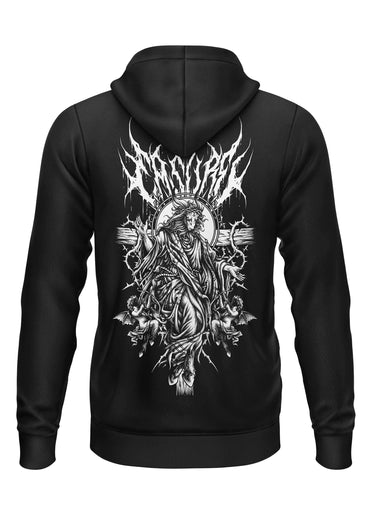
- Statement hoodie made from EASURE Hoodies backprint
- Shorts or sturdy trousers
- Belts, pins, patches, eye-catching jewelry
- Gothic hair jewelry
Gothic style in transition: From rigid categories to fluid identities
The biggest change of the last few decades does not concern the cut of trousers or the shape of boots, but rather the attitude towards one's own identity :
- Gender boundaries are becoming softer, outfits are becoming more fluid.
- Aesthetics such as Dark Academia, Witchcore or Soft Goth overlap with classic Gothic fashion.
- Sustainability and political statements are taking center stage.
Gothic fashion today is less about dress code, more about language. Your clothes speak, even when you're silent.
Frequently asked questions about Gothic fashion and Gothic style
FAQ about Gothic fashion, Gothic clothing and style
What is Gothic clothing?
Gothic clothing – or Gothic fashion – describes a dark, expressive style characterized by a lot of black, symbolism, and strong contrasts. Typical features include black clothing, materials such as lace, velvet, or faux leather, as well as accessories like chokers, rings, and necklaces with motifs such as pentagrams, bats, coffins, or the Grim Reaper.
What defines a Goth?
A Goth isn't defined solely by "Gothic outfits for men" or "Gothic style for women," but by an inner attitude: a love of dark music, art, and literature, and an affinity for themes like transience, melancholy, and nonconformity. Gothic fashion serves as a visible expression of this attitude. Whether you wear a simple black shirt, elaborate Victorian looks, or futuristic cyber styles is less important than authenticity, respect, and scene awareness.
How do I get started with Gothic fashion without dressing up?
Start with simple, black basics and gradually increase the intensity. A black shirt combined with slim-fit trousers, black boots, and a subtle gothic necklace looks natural. Later, add patterned tights, chokers, or rings.
Is there such a thing as Gothic fashion that's suitable for everyday wear for women?
Yes. "Gothic style for women" ranges from understated everyday looks to dramatic festival outfits. For everyday wear, a black dress, patterned gothic tights, a choker, and small bat earrings are often sufficient. At the office or university, many wear black basics and add accents with jewelry and subtle makeup.
How do I put together a Gothic outfit for men without looking over the top?
A practical everyday Gothic outfit for men consists of: black trousers, a Gothic shirt, a hoodie or zip-up jacket, black shoes, and minimalist jewelry. Instead of immediately opting for platform boots and a mesh shirt, focus on quality and fit.
How does Gothic fashion differ from Dark Fashion or Darkwear?
Gothic fashion is closely linked to the Gothic scene and its cultural roots. Dark fashion or darkwear often describes dark, alternative fashion in general, which isn't necessarily tied to a specific subculture. An all-black designer outfit looks dark, but doesn't automatically belong to the Goth scene. If you want to delve deeper, take a look at our glossary article "Darkwear – What is Darkwear?" and our guide "Dark Fashion – Your Guide," where we explain the differences in more detail.
- https://www.britannica.com/art/Gothic-art – Overview of historical Gothic in architecture and art; this link fits in the section on origins (Black Romanticism, Victorian influences).
- https://fashionhistory.fitnyc.edu/goth/ – A specialist article from the Fashion Institute of Technology on the history of Goth fashion; useful to include after the sections on Trad Goth and the 80s.
- https://www.tandfonline.com/doi/abs/10.2752/175174111X13099607947607 – Academic article on subculture, identity and fashion in the Gothic context; recommended in the section on identity (“What makes a Goth?”).
- https://journals.sagepub.com/doi/10.1177/0038026111401236 – Study on subcultures and style as a social sign; fits into the section on symbolism and political statements.
- https://www.commonobjective.co/article/the-environmental-impact-of-fast-fashion – Background on the environmental and social impacts of fast fashion; useful after the section on “Cheap Gothic Clothing for Women vs. Sustainable Quality”.
- https://www.ethicalfashionforum.com/the-ethical-fashion-movement – Overview of the ethical fashion movement; linkable in the context of sustainability and slow fashion in Gothic fashion.
Prev post

Style Guide - Corporate Goth Style
Updated on 25 February 2026