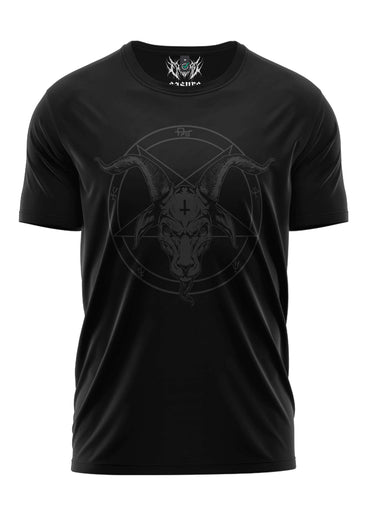
In a world full of mass-produced goods and interchangeable prints, we deliberately choose a different path: We print our shirts ourselves. Each item is handmade with care, experience, and a clear stance. For us, a shirt is not just clothing, but a statement – a wearable piece of Dark Culture, Gothic aesthetics, and individuality.
You can find our self-printed shirts in the Shirt Category.
Why we rely on in-house production
Many online shops outsource production. Faster, cheaper, more anonymous. We have consciously decided against this. In-house production allows us maximum control over quality, design, and execution. From the initial motif to the finished shirt, we keep an eye on every step.
Especially in the Gothic and horror sphere, authenticity is crucial. Our motifs are often complex, detailed, and symbolically charged. This depth can only be implemented cleanly when printing technology, material, and motif work together perfectly.
From design to finished print
It always starts with the design. Inspired by horror films, occult symbolism, dark art, and subculture, motifs are created that want to tell more than just adorn a surface. Skulls, rituals, dark typography, or cinematic references are carefully elaborated.
Printing only begins when every detail is perfect. We test motifs on various fabrics, check contrasts, line work, and durability. This way, we ensure that the motif not only impresses when new but also retains its character after many washes.
Quality of the shirts – more than just fabric
A good print needs a good base. That's why we only use high-quality shirts that are comfortable to wear and suitable for durable prints. Cut, fabric thickness, and surface play a decisive role in the final result.
Our shirts are made to be worn – at concerts, festivals, in everyday life, or as part of a consciously dark look. Comfort and durability are just as important to us as the optics.
Dark Fashion needs control
Especially in the Gothic scene, it's all about details. Black tones must be deep, lines clear, symbols unambiguous. By printing ourselves, we can ensure that every motif has exactly the intended effect – without color deviations or quality losses.
Faulty prints are sorted out. There are no compromises. What leaves our shop meets our own standards for Dark Fashion.
Sustainability through conscious production
In-house production also means responsibility. We print in small batches and avoid overproduction. This results in less waste, fewer leftover stock, and no unnecessary destruction of unsold goods.
Every shirt is produced with intent – not in advance, but for people who consciously choose clothing that matches their identity.
Clothing as an expression of subculture
Gothic fashion is more than a trend. It is an expression of attitude, aesthetics, and often distinction. Our shirts carry this idea forward. They are not fast-fashion items but part of a scene that has developed over decades.
By printing our shirts ourselves, we remain independent, creative, and close to the community. We do not produce for an anonymous market, but for people who understand and want to wear the dark.
Conclusion
Printing shirts ourselves is not a marketing argument for us, but an integral part of our philosophy. Craftsmanship instead of mass production. Stance instead of arbitrariness. Dark Fashion with substance.
Those who wear our shirts wear not just a motif – but a piece of consciously lived Gothic culture.