Incense Overview
Share
Incense has accompanied witches, pagans, goths, and spiritual seekers for centuries. You burn resins, woods, or herbs, the smoke rises, the room shifts into a different mood—and suddenly everything feels more grounded, clearer, or simply more mystical. In this guide, we'll show you how to consciously use incense in rituals : from protection and cleansing to the Twelve Days of Christmas and even dark art-inspired ritual settings.
What exactly is incense?
Incense includes plant parts, resins, and mixtures that you light to release smoke as they smolder. Classic examples:
- Resins: Frankincense, Myrrh, Copal, Dammar
- Herbs: Mugwort, sage, lavender, juniper
- Woods: Sandalwood, Palo Santo
- Blends: Themed blends for love, protection, cleansing, and the Twelve Days of Christmas.
You can find incense as:
- Loose mixture for charcoal or sieve
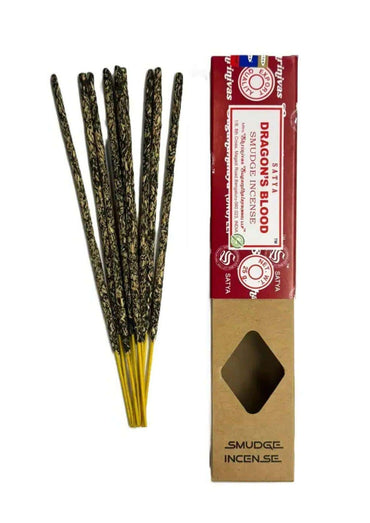
- incense sticks
- Incense cones
- Special incense sets for specific occasions, such as the Twelve Days of Christmas or house cleansing.
In short: Incense is your tool to symbolically change spaces, objects and states – through scent, smoke and conscious attention.
Why incense is so powerful in rituals
Rituals thrive on symbolism, repetition, and focus. Incense combines all of these elements .
Scent anchors memories
Scents become incredibly linked to emotions. For example, if you always burn the same blend of incense before a tarot reading, you condition your system: this scent = focus, intuition.
Smoke as visible energy
When you direct the smoke into the corners, it symbolizes: "Something is happening here, something old is leaving, something new is coming."
Body language & action
You walk through the room, you carry a vessel, you direct smoke. This gives your ritual a clear structure. This strengthens your intention – regardless of whether you work purely psychologically, spiritually, or magically.
Connection to traditions
Whether it's church incense, pagan festivals, burning incense in temples, or in shamanic contexts: incense appears everywhere. When you burn incense, you're joining this long-standing practice.
Types of incense – from resins to sticks
Resins, herbs, woods: loose incense materials
Loose incense blends are perfect if you want to work intensively and consciously in a ritualistic way .
Typical components:
- Incense : Clarification, improvement of mood, "sacred" atmosphere
- Myrrh : Grounding, depth, grief work, rites of passage
- Copal : Cleansing, light, new beginnings
- Mugwort : protection, transitions, dreams
- Juniper : Defense, house cleansing
- Lavender : calming, balancing
- Rose petals : love, opening of the heart
You can choose organic incense if you value pesticide-free and fair sourcing.
Incense sticks and cones
- Incense sticks : measured, relatively even smoke, ideal for small rituals, meditation, everyday life.
- Incense cones : an intense point source of light, often designed for specific scents, good for shorter, focused sessions.
If you celebrate incense sticks: Check out the hand-picked Satya incense sticks – classic scents that fit into mystical settings and altars.
Incense Sets
Incense sets bundle several components:
- various blends (e.g. cleansing, protection, love, abundance)
- Charcoal, incense sand, small spoons, tongs
- Partly instructions for rituals such as the Twelve Days of Christmas
Such sets make it easier to get started if you want to approach smoking in a structured way or if you would like to try out different emotions/occasions.
Basics: Using incense safely and consciously
Before you build rituals, you need basics :
1. The right container
Use a fireproof incense burner:
- Incense bowl made of ceramic, stone or metal
- smoking pan or kettle
- Containers with integrated sieve or holder for sticks/cones
It's best to place something heat-resistant under your container, e.g. a coaster or tile.
2. Incense sand and charcoal (for loose incense)
- Fill the bowl with incense sand .
- Place a charcoal tablet on top and light it.
- wait until the coal is glowing hot
- Use incense sparingly.
Alternative: Use a smoking screen without charcoal, over a tea light or heat-resistant heat source. The result will be milder.
3. Ventilation and Health
Smoke is always a burden on indoor air and respiratory systems, even if you use all-natural incense. Pay attention to:
- Ventilate before and after smoking.
- not stand directly in the smoke
- For those with sensitive airways, shorter sessions and milder mixtures are preferable.
- Choose incense sticks/sets without unnecessary synthetic additives; preferably all-natural or organic incense.
Incense in cleansing rituals – room climate and energy
How to fumigate an apartment: step-by-step
Do you want to start a new chapter, clear your energy after an argument, illness, or move? Here's how to proceed:
Preparation
- Roughly tidy up, open doors to all rooms.
- Prepare the incense burner and light the charcoal or sticks.
Setting an intention
Clearly state what you are letting go of: "I release old heaviness and invite clarity, peace and protection."
Tour of the rooms
- Start at the front door.
- Walk slowly clockwise through the apartment.
- Guide the smoke into all corners, under tables, into dark areas.
- Focus on areas where you feel uncomfortable.
Diploma
- Return to the starting point.
- Express your gratitude, then allow the incense to burn out completely.
Ventilation
- After smoking, open windows and – where possible – doors.
- Allow a draft until the smoke has largely dissipated.
How long should the room be ventilated after smoking?
Adjust the ventilation time according to smoke density and room size. In many cases, 10–20 minutes of thorough ventilation is sufficient; for intensive cleansing smudging, 30 minutes or longer is recommended. The goal: to leave a lingering fragrance, not a thick fog of smoke.
Which plants are suitable for cleansing rituals?
Popular for energetic cleansing :
- White sage (Note: Check origin & sustainability)
- mugwort
- juniper
- incense
- A mixture of sage, juniper, spruce or pine resin
What is the best thing to use for smudging?
There is no "objectively best" incense. For many, a combination of frankincense and mugwort works very well: intensely clarifying, mildly protective, with a strong ritualistic feel. Ultimately, what matters is how you feel with the blend.
Incense in rituals of self-reflection: Tarot, Ouija & shadow work
Incense enhances your rituals involving tarot cards, spirit boards, and intuition work .
Tarot and incense
If you do readings regularly, a fixed “Tarot incense blend” is worthwhile:
- Base: Sandalwood or benzoin (warm, soft, calming)
- Additional ingredients: Lavender (clarity), Rosemary (focus), Sage (cleansing)
- Optional: Rose petals for heart themes
Here's how a short Tarot ritual works:
- Light a candle, prepare a tarot deck.
- Light the incense and circle it briefly above the pile.
- Formulate a question or state an open intention.
- Laying out cards while the smoke gently rises beside you.
Want to delve deeper into card interpretation and symbolism? You'll find suitable inspiration in our article "Reading Tarot Cards" .
Ouija Board, Spirit Boards & Smoke
When working with a Ouija board, subtle incense enhances the atmosphere:
- Not a fog, but a fine veil
- Mixtures with frankincense and myrrh for a “temple vibe”
- A clear protective intention before you begin
You can find detailed step-by-step instructions for your board in our Ouija board guide .
Incense during the Twelve Days of Christmas – A magical time between the years
The Twelve Days of Christmas (typically December 24th to January 6th) are considered a liminal time in many traditions. The old cycle is dying, the new one is already breathing.
Why incense is so popular during the Twelve Days of Christmas
- Room cleaning after the old year
- Protection for house and residents
- Oracle rituals with dreams, tarot, runes
- Journaling, shadow work, goals for the new year
Many people use incense sets for the Twelve Days of Christmas , which contain a different blend for each night. However, you can also work with a basic set:
| Ritual phase | focus | Typical incense materials |
|---|---|---|
| Preparation | cleaning | Sage, mugwort, juniper, frankincense |
| Middle Nights | Introspection, dreams | Myrrh, lavender, mugwort, benzoin, copal |
| Diploma | Protection, stability | Frankincense, juniper, angelica, pine resin |
Incense in everyday life: Mini-rituals without much effort
Not every ritual requires a full moon, a circle, and three hours. Small , everyday rituals with incense can subtly shape your life:
- Morning ritual : A short burn of incense while drinking your coffee. Focus: "How do I want to present myself today?"
- After-Work-Reset : Cleaning your workspace at home when you close your laptop.
- Self-care evenings : bath, face mask, candles, subtle resin or herbal mixture, perhaps with a glass of mead in a suitable mug.
This is how you weave magic into your everyday life without having to plan a grand ritual every time.
Is smoking in the apartment healthy?
Burning incense pollutes the air because it produces particulate matter. This applies to incense sticks, cones, charcoal, and candle smoke. While pure, natural incense with high-quality ingredients often feels more pleasant than cheap sticks with many additives, the following still applies:
- Burn incense consciously and in moderation , not constantly from morning till night.
- Ventilate well before staying in the room for a long time.
- Watch for reactions: headaches, irritated airways, fatigue. If these occur, reduce intensity and duration or use milder mixtures.
- Children, pets, and people with asthma need special consideration.
Practical tips for your incense setup
To avoid having to constantly gather everything together, a small smoking station is worthwhile:
- Box or drawer containing:
- Incense (individual herbs + 1-2 favorite blends + incense sticks if desired)
- Charcoal tablets, incense sand
- Pliers, spoon, matches or lighter
- short notes on your favorite recipes
FAQs about incense in rituals
Frequently asked questions about incense
What is incense?
Incense refers to mixtures of resins, herbs, woods, and flowers that you burn or smolder to produce fragrant smoke. You use incense in rituals for cleansing, protection, meditation, during the Twelve Days of Christmas, or to create a specific atmosphere. It is available as loose mixtures, incense sticks, incense cones, or as complete incense sets with accessories. If you value sustainability, choose all-natural or organic incense without artificial additives.
Is smoking in the apartment healthy?
Burning incense indoors creates fine dust and pollutes the air, but for many, it's a harmonious ritual when practiced consciously. Use high-quality, all-natural incense and burn in moderation. Ventilate thoroughly before and after burning incense to allow the smoke to dissipate. People with sensitive airways, asthma, children, or pets need special attention. Opt for short sessions with mild blends rather than filling the room with incense for extended periods.
How long should the room be ventilated after smoking?
The ventilation time depends on the amount of incense, the room size, and the density of the smoke. After smaller rituals with an incense stick, 10–20 minutes of thorough ventilation is usually sufficient until the smoke has largely dissipated and a pleasant fragrance remains. After intensive cleansing smudging with charcoal and a lot of incense, you should ventilate for 20–30 minutes or longer until the air feels clear again. The crucial thing is that no acrid smoke remains in the room.
What is the best thing to use for smudging?
For smudging a home, cleansing and protective herbs and resins are suitable. Classics include sage (or local alternatives like mugwort), juniper, frankincense, and myrrh. Many people use a blend that both clarifies and protects, such as frankincense with mugwort and juniper. However, there is no single "best" incense, as everyone reacts differently to scents. Experiment with different blends until you find one that feels right for you when smudging.
What types of incense are there?
Incense comes in various forms: loose materials (resins, herbs, woods), incense sticks, incense cones, and pre-made incense sets, for example, for the Twelve Days of Christmas. Loose mixtures are well-suited for intense rituals and allow you to create your own blends. Sticks and cones are practical for everyday use or when you want to quickly use incense without having to prepare charcoal and sand. For conscious practice, pure or organic incense is recommended, ideally without synthetic fragrances.
What is incense used during the Twelve Days of Christmas?
Incense for the Twelve Days of Christmas consists of blends specifically composed for the period between Christmas and early January. Typical themes include cleansing, introspection, and protection. Such blends often contain frankincense, myrrh, mugwort, juniper, pine resin, or gentle herbs for dream interpretation and divination. Many manufacturers offer incense sets for the Twelve Days of Christmas, with a different blend for each night. This allows you to structure your rituals during this special time and connect them with reflection on the past and the coming year.
Where can I get good incense nearby or online?
You can find incense in many esoteric shops, organic shops, markets or specialized online shops.
- https://www.bfr.bund.de/de/a-z_index/raechern_von_lebensmitteln-6002.html – Information page of the Federal Institute for Risk Assessment on smoke and pollutants; suitable as a reference in the section “Is smoking in the home healthy?” after the explanation on particulate matter pollution.
- https://www.umweltbundesamt.de/themen/feinstaub-durch-kerzen-raeucherstaebchen – Technical article by the Federal Environment Agency on particulate matter pollution from candles and incense sticks; also fits into the health section to support the statements on indoor air quality.
- https://www.apotheken-umschau.de/gesund-bleiben/feinstaub-in-der-wohnung-wie-schaedlich-ist-er-875965.html – Advice article from a health portal on the effects of fine dust in indoor spaces; can be linked in the context of “ventilating after smoking”.
- https://www.slowfood.de/themen/nachhaltiger_konsum/fragen_und_antworten_zu_nachhaltigkeit – Information page on sustainability and consumption from Slow Food Germany; suitable for supporting the section “Sustainability and ethics in incense”.
- https://www.dgk.de/gesundheit/atemwege-und-lunge/ – Overview of the German Society for Pneumology on the airways and lungs; useful as a background link in the section on sensitive individuals and respiratory stress.
Prev post

Satya Incense Stick Fragrances
Updated on 28 February 2026