When you hear "zombie," images of shambling undead, splatter scenes, dark nights spent binge-watching TV series, and perhaps an overly strong zombie cocktail in a tiki glass probably immediately spring to mind. This zombie glossary guides you through all facets of the term – from mythology and horror to music, fashion, and lifestyle within the gothic scene.
As EASURE, your Gothic online shop from Krefeld, we look at the topic of zombies from the perspective of a scene brand: culturally interested, genre-loving and with a penchant for dark art, sustainable fashion and a clear stance.
What does "zombie" mean?
The term "zombie" originally refers to a resurrected dead person or a mindless individual stripped of their personality and often used as a tool by alien powers. Today, however, "zombie" stands for much more:
Classic undead in horror movies, series and games
Metaphor for a mindless consumer society, political chaos, or emotional emptiness
Pop culture icon in music, fashion and art
Cocktail legend with loads of rum and tiki vibes
In the Gothic context, many associate the zombie with decay, transience, rebellion against normality – and of course with an aesthetically staged flirtation with death.
Origin of the word "zombie" – where does the word zombie come from?
The question "Where does the word zombie come from?" comes up again and again when you delve deeper into the topic.
Etymological roots
The exact origin is not completely certain, but several clues point in a similar direction:
African languages: The word “zombie” probably originates from West or Central African languages, such as those from the Congo language area (e.g., “nzambi” or “zumbi” for ghost, deity, or deceased person).
Haitian Voodoo context: Through the trafficking of enslaved people to America, beliefs and concepts reached the Caribbean. In Haiti, the "zombi" developed as a figure in Voodoo belief – a person who had been robbed of their will.
This also answers a typical FAQ question: "Why do we say zombie?" Because a term for a will-less, revived or possessed person from African and Haitian traditions has been inscribed in Western pop culture – and spread there through literature and film.
What does "zombie" mean in German?
In German, you use "zombie" directly as a foreign word. A literal translation would be something like:
Undead
Resurrected Dead
A mindless shell
In everyday life and in the media, "zombie" also appears symbolically:
“Zombie companies” in business
"Zombie mode" when you're wandering around exhausted
“Zombie consumption” occurs when people blindly follow everything dictated by the mainstream.
Zombies in Religion, Mythology and Voodoo
Before Hollywood transformed the zombie into a bloody apocalypse, it was a spiritual figure .
The Voodoo Zombie
In Haitian Voodoo beliefs, the zombie does not primarily represent cannibals, but rather:
Will-less beings whose soul (or parts of it) is controlled by a Bokor (black magician).
Victims who are put into a trance-like state through magic, poisons, or rituals
A social metaphor for enslavement, dehumanization, and abuse of power.
This background explains why the term "zombie" is still often associated with loss of control and power structures . This very tension appears in many Gothic and Dark Art motifs: Who controls whom? Where does free will end? And what happens when the system forces you into a soulless state?
The literary zombie – from ancient tales to modern myth
Before streaming platforms played zombie series on a continuous loop, authors shaped the undead in novels and short stories.
Early literary traces
In 19th-century horror literature, stories about revived dead people occasionally appeared, though often without the term "zombie".
Travelogues about Haiti and the Voodoo belief brought the first “zombie” stories to Europe and the USA at the beginning of the 20th century.
The zombie in modern horror
From here, the zombie developed into a recurring motif :
Novels : The undead as an allegory for plagues, wars, totalitarian systems
Comics : Zombie apocalypses as dark parallel worlds
Graphic Novels & Manga : Highly aesthetic, meticulously detailed visualizations of decay, body horror, and inner abysses.
For the Gothic community, these depictions offer a projection surface to process dark themes aesthetically and reflectively .
The movie zombie – from “White Zombie” to Apocalypse
The zombie, as you know it from movies, originated mainly through cinema.
The early years
"White Zombie" (1932) is considered one of the first zombie films. Here, the Haitian Voodoo myth is still central: people are transformed into mindless laborers.
Visually, these early zombies resemble hypnotized humans more than decaying monsters.
George A. Romero and the Modern Zombie
The decisive turning point: "Night of the Living Dead" (1968) . Romero created:
Masses of flesh-eating undead
An apocalyptic setting
Social criticism (racism, consumerism, government failure)
His subsequent films (“Dawn of the Dead”, “Day of the Dead”, etc.) established archetypes: The shopping mall as a cathedral of consumption, the bunker mentality, the question of who is the bigger monster here – human or zombie.
Modern zombie movies
Since then, the genre has exploded in all directions:
Classic horror and splatter
Satires and horror comedies
High-concept films in which the zombie represents plagues, AI, climate collapse
Arthouse horror with a melancholic view of death and memory
If you want to delve deeper: A look at the zombie movie reviews on the EASURE blog provides you with detailed reviews and comparisons from a scene perspective.
Zombie series and streaming – the undead in binge-watching mode
Streaming services breathed new life into the zombie genre. Instead of just 90 minutes of horror, series now tell long, complex stories.
Typical zombie series elements
Slow character development: How does a person change when the world ends?
Moral dilemmas: Whom do you save first? What do you sacrifice to survive?
Society in collapse: militias, sects, primitive religious cults, toxic power structures
Zombie series thus provide exactly the themes that fascinate many Gothic fans: existentialism, ethics in extreme situations, deconstruction of the “civilized” facade.
Zombies in Games – from Survival Horror to Pixelated Undead
Zombies have a regular role in video games.
Typical roles of zombies in the game
Cannon fodder : slow hordes, perfect for "wave-clearing"
Menacing boss enemies : mutated, grotesque forms that take body horror to the extreme.
Atmospheric background : infected cities, abandoned villages, piles of corpses
Transporting zombies in games:
Pressure and threat (survival horror)
Power fantasy (hack and slay, shooter)
Retro charm (pixel zombies and humorous indie games)
Even games like Minecraft integrate "zombie" enemies, which represent a toned-down but symbolically recognizable version of the undead for younger target groups.
The zombie as a social metaphor
Beyond the blood and guts, the zombie acts as a mirror of society .
Consumer critique
In many works, the zombie represents:
People who follow blind consumerism
"Sleepwalkers" who drift through shopping malls and trends without thinking for themselves.
the desire to break free from this state and to live awake and consciously again
Political and social interpretation
Zombies embody:
Mass phenomena that get out of control (panic, incitement, wars)
People whose individuality is robbed by the system and power structures
the feeling of being "dead inside" in the same old daily routine
The song "Zombie" – The Cranberries and the meaning of the song
Many people immediately associate the word "zombie" with the iconic 90s anthem by The Cranberries .
What is the meaning of the song "Zombie"?
"Zombie" was released in 1994 and deals with the Northern Ireland conflict ("The Troubles"). The focus is on:
Terrorist attacks and violence
The question of how long humans can endure destruction
Children born into violence
The "zombie" in the song doesn't refer to the undead in horror movies, but to:
Hardened, brutalized conditions
People who are stuck in patterns of hate
A society that numbs itself and keeps spiraling further and further into a cycle of violence.
Dolores O'Riordan screams the central question in the refrain: How many more victims will there be before those responsible wake up? The zombie here is a metaphor for intellectual and moral paralysis.
Zombie as a cocktail – what's in a zombie cocktail?
Besides the undead and songs, there is another very earthly, but dangerous variant: the Zombie Cocktail .
What exactly is in a zombie cocktail?
The basic idea: Lots of rum, tropical flavors, and insidious strength. Most recipes contain:
At least three types of rum (light, dark, overproof)
Citrus juices (often lime, grapefruit)
Fruit juices such as pineapple or passion fruit (depending on the recipe)
Sweet components such as grenadine, syrup, or falernum
Spice notes (e.g. cinnamon, Angostura bitters, a hint of anise/absinthe or Pernod)
The exact recipe varies greatly. The original recipe from the 1930s by Donn Beach at the Tiki bar "Don the Beachcomber" used a complex blend of several rums, lime juice, falernum, grapefruit and cinnamon mix, grenadine, and bitters.
What's in a Zombie Cocktail – in a nutshell
The typical answer:
Three to six types of rum
Citrus juice (lime, grapefruit)
Fruit juices such as pineapple/passion fruit (in many modern variations)
Sweet syrups and grenadine
Spices and bitters
The name "Zombie" is fitting because the drink deceives you with its fruity flavor: you barely notice the alcohol until it makes you feel "like a zombie." Many bars limit the number to a maximum of two per person – and for good reason.
Zombie in everyday language and slang
In your timeline, on memes or in chat, "zombie" often appears unrelated to horror.
Typical slang uses
"I'm a complete zombie today" – ultra tired, overworked, empty
“Zombie company” – economically dead companies that are artificially kept alive
“Social media zombies” – people who silently scroll through feeds
The zombie figure works perfectly as an ironic mirror for situations lacking vitality, creativity, and empathy. This is precisely where Dark Fashion comes in: you play with this symbolism while simultaneously demonstrating that you are alive, alert, and think independently .
Zombie in Gothic and Dark Art aesthetics
For many in the Gothic scene, zombies are not just horror creatures, but a stylistic element of an entire lifestyle .
Why the undead fit the dark aesthetic
Decay as art: Torn skin, exposed bones, scars – exaggerated physicality breaks up the smooth, standardized body culture of advertising.
Memento mori: Zombies remind us that beauty is fleeting. In Gothic culture, this transience is celebrated rather than repressed.
Rebellion against perfection: The undead embody the opposite of flawless selfie aesthetics. They represent fractures, scars, and emotional depth.
Zombie motifs in fashion
You can find zombie elements everywhere:
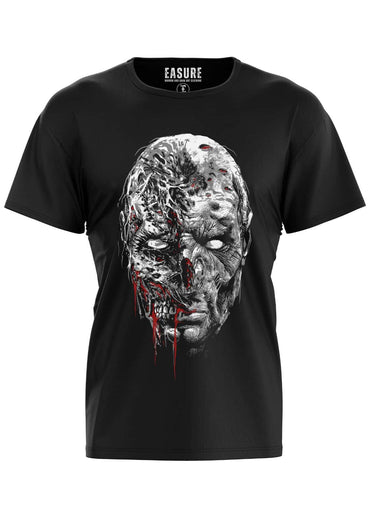
Prints of decaying hands, torn faces, figures breaking out of graves
Comic-style zombies for a mix of horror and humor
Stylish undead in tattoo style , combined with roses, bones, and voodoo elements.
Zombie fashion: shirts, hoodies, accessories
As a trendy shop, EASURE also recognizes the zombie as a fashion statement .
Organic T-shirts and hoodies with zombie prints
Imagine:
Black organic cotton t-shirt, hand-printed in small batches
Front print: a horde of zombies roaming through a post-apocalyptic city
Subtle details that only become apparent upon closer inspection: rotting hands, occult symbols, perhaps an anti-fascist sign in the background.
These pieces tell stories . You're not just wearing a motif, you're wearing an attitude:
I reject mindless mainstream media.
I'm into dark art that has something to say.
I focus on sustainable materials instead of cheap mass production.
Jewelry and accessories with zombie vibes
Not every day calls for a full-body zombie print. You can play up the zombie look subtly:
Pins and patches with zombie heads, bones, gravestones – perfect for robes, backpacks and jackets
Hair ornaments with small skulls or rotting hands
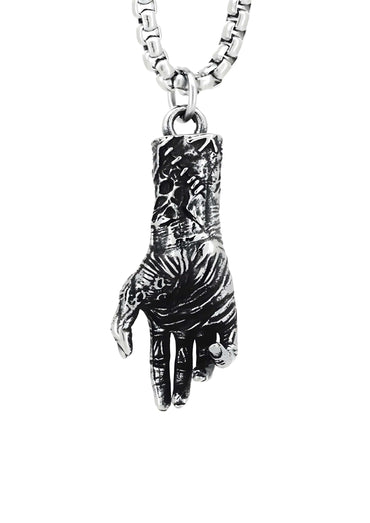
Necklaces in coffin or sarcophagus designs , whose symbolism plays on the undead, graves, and dark romance.
Zombie looks for festivals, Halloween and conventions
Zombie aesthetics thrive on staging . Especially at festivals, Halloween parties, and conventions, the undead unfold their full charm.
Elements of a strong zombie outfit
Base layer Dark, robust parts as a basis:
Black gothic trousers with rips or bondage details
You combine fake blood and costume with real Gothic fashion that you can wear again outside of Halloween.
Table: Overview of Zombie Meanings
For quick orientation – different uses of the term “zombie” at a glance:
context
Meaning of "zombie"
Typical characteristics
Voodoo / Religion
A will-less human, controlled by magic
Trance state, lack of free will, symbol of enslavement
Horror film / series
Undead, flesh-eating monster
Bite infection, decay, hordes, apocalypse
Music (“Zombie” – The Cranberries)
Metaphor for mental and moral hardening
Protest song, political message, strong emotion
cocktail
Strong Tiki drink made from several types of rum
Very high alcohol content, fruity taste, party classic
everyday language
Tired, apathetic, overwhelmed person
"I am a zombie today," "Zombie Company"
Gothic Fashion & Dark Art
Style and motif world surrounding the undead
T-shirts, hoodies, jewelry, art with undead motifs
Zombie and language – “Zombie English” and Co.
If you search for "zombie english", it's usually about:
English explanations of the term "zombie"
Translations of "zombie" texts, song lyrics, or film synopses
Linguistic analyses of why the word has become so powerful
Interestingly, the word itself has remained largely unchanged in international use. Whether German, English, French, or Spanish – "zombie" remains "zombie." The connotation changes depending on the context.
English texts are often highly political or socially critical.
In German media, often more film- and gaming-oriented.
In the Gothic scene all over the world with similar dark aesthetics and subcultural roots
Zombies and sustainability – a conscious approach to dark fashion
What does a zombie have to do with sustainability? On the surface: nothing. On a symbolic level: quite a lot.
Consumer zombies vs. conscious scene
Pop culture often uses the image of the "zombie" for consumer criticism :
Bodies that mechanically move through malls
People who adopt trends without thinking
Blank stares in front of overflowing wardrobes
EASURE deliberately sets a counterpoint here:
Hand-printed organic textiles instead of interchangeable mass-produced goods
Small series and dark art designs with attitude
Antifascist and alternative statements instead of empty phrases
You style yourself in a dark way, wear undead and skulls, but you live consciously, alertly, and with strong values . That's the exact opposite of a societal "zombie".
Zombie pop culture and the Gothic community – why we love the undead
Why is the zombie so fascinating – especially for people who move in the Gothic, Dark Wave or Metal scene?
Psychology of the Undead
The zombie touches on themes that go deep:
Fear of losing control
Fear of illness and decline
Fear of becoming internally rigid and "just functioning".
Instead of suppressing these fears, the Gothic community confronts them:
Through music – from melancholic ballads to brutal death metal riffs
Through fashion – dark fashion as a visible statement that you embrace your darkness
Through art and literature – stories in which the undead form the framework, but actually tell of humanity.
Zombie as empowerment
As paradoxical as it sounds: Undead motifs can be empowering.
By consciously surrounding yourself with dark topics, you take away some of their power. You style yourself however you want. You choose which horror stories you celebrate. You decide what you consume.
This reverses the zombie image: You are not without willpower, but you are playing with the figure and making it your symbol.
Frequently asked questions about zombies
Why do we say zombie?
People use the term "zombie" when referring to a resurrected, mindless, or internally dead figure —either in a horror context or as a metaphor. The term likely originates from African languages and Haitian Voodoo, where "zombi" describes a person whose will is broken. In films, series, games, and music, the zombie now symbolizes both the classic undead creature and mindless, apathetic states within society.
What does "zombie" mean in German?
In German, "zombie" roughly translates to undead , reanimated dead person , or mindless shell . Besides horror films and zombie series, you also use the word figuratively in everyday life: "I'm a zombie" after a sleepless night, "zombie company" for economically defunct businesses, or "consumer zombies" for people who blindly follow trends. The German meaning thus covers both the horror figure and critical social commentary.
What is the meaning of the song "Zombie"?
The Cranberries' song "Zombie" is a protest song against violence in the Northern Ireland conflict . The lyrics criticize terrorist attacks, senseless deaths, and a society trapped in old patterns of hatred. The "zombie" in the song doesn't refer to the undead from horror films, but rather to hardened, emotionless states in which people act like they are dead inside. It is precisely this mix of political message, emotional vocals, and dark atmosphere that makes "Zombie" a classic in rock and gothic playlists.
What exactly is in a zombie cocktail?
A classic Zombie cocktail contains several types of rum, citrus juice, sweet syrups, and spices . Typical ingredients include at least three types of rum (light, dark, overproof), lime and grapefruit juice, falernum or other liqueurs, grenadine, Angostura bitters, and occasionally a touch of Pernod or absinthe. Modern recipes add pineapple or passion fruit juice. The Zombie is considered one of the strongest cocktails in the bar world, has a sweet and fruity taste, and gets its name from its ability to quickly induce a "zombie" state in the drinker.
https://www.bpb.de/themen/europa/nordirlandkonflikt/ – Information page of the Federal Agency for Civic Education on the Northern Ireland conflict; the section on the meaning of the song "Zombie" by The Cranberries is particularly useful.