Screen printing explained
Share
If you're interested in screen printing , you'll quickly come across T-shirts, hoodies, and posters. At Easure, this printing process is part of our everyday work – we print our organic T-shirts ourselves in Krefeld and know how much craftsmanship, chemistry, and creativity goes into it. In this guide, we'll show you what screen printing means technically and how to recognize screen-printed art.
What is screen printing?
In screen printing , you press ink through a fine mesh screen (the "screen") onto a material such as textile, paper, wood, metal, glass, or plastic using a squeegee. You cover all areas of the screen where you don't want the ink to pass through – with photo emulsion or a screen printing stencil. Only the design remains open, allowing the ink to flow through.
Imagine the sieve as a digital mask, only analog and physical:
- Open areas in the screen = your design
- Closed areas = remain color-free
Each color gets its own screen. Multicolored prints are created by printing one after the other with different screens, which are placed on top of each other with millimeter precision.
Especially in the textile sector, there are many advantages to this method: vibrant colors, long durability, and a look that suits clear designs and fans of genuine craftsmanship.
Why screen printing is a perfect fit for our fashion
You move in a scene that loves statement pieces , symbolism, and a clear stance. Screen printing is perfectly suited for exactly that.
Strong contrasts for dark art
Our designs are based on:
- white as a contrast on black
- fine lines
- occult symbolism
- clear forms that are effective even from a distance
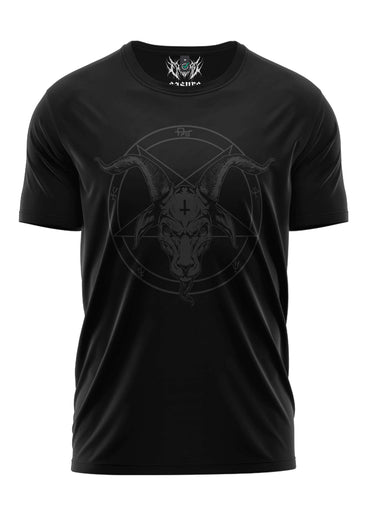
In screen printing , you apply opaque, highly pigmented colors directly to the fiber. Black lines don't bleed, white areas remain crisp, and red pentagrams stand out against black fabric. Especially on organic cotton, this creates a print that doesn't look like "fast fashion," but rather like a deliberate choice.
If you look at our hand-printed shirts, hoodies and long-sleeved shirts in the Gothic clothing section, you will see exactly this kind of screen-printed look: powerful prints that blend with the fabric and yet remain present.
Sustainability & Organic Textiles
It's no longer just about aesthetics, but also about values: anti-fascism, inclusivity, conscious consumption. Screen printing can be easily combined with these principles.
- Printing on organic cotton
- Use of water-based and PVC-free paints
- On-site production control in Krefeld
If you want to delve deeper into the topic of sustainable materials, it's worth taking a look at our page on vegan and sustainable materials . There we explain how we select textiles and accessories according to these standards.
The components of a screen printing setup
To understand the process, it helps to look at the hardware. A typical screen printing kit for textiles contains:
- Screen printing frame (wood or aluminum) with fabric
- Photo emulsion or film stencil
- Squeegee with rubber lip
- Ink (plastisol or water-based screen printing ink)
- Exposure unit or strong light source
- Washing unit / high-pressure cleaner
- carousel or printing table
- Dryer for fixing
Fabric – the actual sieve
The screen printing fabric is taut in the frame. It has different levels of fineness depending on its application:
- coarse weave (e.g. 43T): high color application, perfect for textiles
- Finer weave (e.g., 77T and above): finer details, reduced layer thickness
The coarser the fabric, the thicker and more textured the print appears. This is especially noticeable on hoodies or thick sweatshirts, creating an almost "armored" print effect that suits martial motifs or occult sigils. You can find some examples of this in our Easure Hoodies section.
Squeegee – your extended arm
The squeegee is a handle with a rubber lip. You use it to pull the ink across the screen, pressing it through the mesh and onto the fabric. Important parameters:
- Squeegee hardness : softer squeegees apply more paint, harder ones less.
- Squeegee angle : shallower angle = more paint, steeper angle = less paint
- Pressure and speed : affect opacity and sharpness
Even small differences in angle or pressure change the result – that's why screen printing feels very "handmade", even if you work routinely.
Photo emulsion & screen printing stencil
The screen printing stencil is created by coating the mesh with a light-sensitive emulsion, letting it dry, and then exposing it with your design. Light areas in the film harden the emulsion, while dark areas (the design) remain water-soluble and are washed away. Your design is left behind as open areas in the screen.
Step by step: How does screen printing on textiles work?
Let's take a look at the complete workflow in screen printing on textiles – this is similar to how we produce our own series in Krefeld.
1. Motif & Color Separation
First, you choose the design. Prepare your file for screen printing as follows:
- High-resolution graphics, crisp edges
- Create contrasts in such a way that lines have an effect on the fabric.
- A separate layer (color channel) for each color shade.
These layers later become the films you use to expose the screens.
2. Coat and expose the screen
Screen printing requires preparation: coating the screen, exposing it, washing it out, mixing the ink, and making a test print. This can easily take two days.
After preparing the motif:
- Clean the sieve with degreaser
- Coat both sides evenly with photo emulsion
- Leave to dry in complete darkness
- Place film with motif
- Expose
- Wash off any uncured emulsion with water.
- Check the sieve and retouch any minor errors if necessary.
- Expose again if necessary.
Now you have a screen printing stencil in which your design is exposed, while the rest of the area is impermeable to color.
3. Clamping, aligning, test print
The screen is clamped into the screen printing machine – often a simple swivel arm for hobbyists, a multi-station rotary carousel in the more professional segment. Here:
- Do you align the design on the fabric?
- You fix the textile to the printing table with glue.
- Check that the sieve is seated without tension and is clean.
Before you go into production, you print tests on reject material or sample fabric . Color, opacity, position, edge coverage – everything has to be perfect.
4. Printing: Color, squeegee, rhythm
During the actual printing process:
- Place textile
- Place the paint in front of the design in the screen.
- Guide the squeegee over the motif in a smooth, even stroke.
- Lift sieve, check pressure
- Dry in between and repeat as desired.
- Carefully remove the textile.
- Next part
Depending on the design and color, you will need:
- one or more pre-printed forms (“Flash”) where you use intermediate drying
- White backgrounds so that colors stand out against black
- Combinations of water-based paint and effect paints
If you look at our shirts in the Dark Art Shirts section, you can see how striking such a print can be when the ink application and the background are right.
5. Drying and fixing
To ensure the print remains wash-resistant, you heat the ink to a specific temperature:
- Plastisol inks: usually 150–170 °C
- Water-based paints: depending on the system and manufacturer, often require hot air or continuous dryers
Only when the paint has fully hardened will it survive washing machines, club nights and festival mud.
Screen printing, digital printing & Co. compared
The question "When is screen printing worthwhile?" comes up again and again online. Especially when you have T-shirts or hoodies printed, you are often faced with the choice between digital printing (DTG), DTF transfers and classic screen printing.
Here is a clear table showing how the processes in the textile sector typically differ:
| Proceedings | Ideal for | Advantages | Disadvantages |
|---|---|---|---|
| screen printing | medium to large quantities, clear designs | Extremely durable, vibrant colors, iconic look | Setup costs per design, less for single pieces |
| Digital printing (DTG) | Unique pieces, many colors, photos | No sieves needed, fine color gradients | shorter lifespan, high costs |
| DTF transfer | small to medium quantities | Flexible in terms of motifs and storage of transfers | feels "applied" and tears easily. |
| Flex/flock printing | simple lettering, numbers | affordable, fast | Limited optics, hardly suitable for complex subjects |
Screen printing is worthwhile if:
- you use a motif more often
- you value feel and durability
- Your design consists of clear surfaces and lines.
- your requirements go beyond "fun shirt for one night"
That's why we primarily use screen printing for our Easure shirts, hoodies, long-sleeved shirts and gym bags, rather than fast digital printing solutions that lose intensity after a few washes.
Screen printing art – from posters to galleries
The term screen printing art often appears in connection with Pop Art and Street Art. No wonder: artists like Andy Warhol made the process world-famous in the art context.
Why artists love screen printing
For artists, screen printing has some special appeals:
- Serial work : Editions in which each sheet is an original.
- Experimental color effects : layering, overprints, metallics, neon
- Combination of photography, illustration and typography
- Works on paper, cardboard, wood, metal or plexiglass
Screen printing in English – a short language guide
If you are dealing with this topic internationally, you will encounter the following terms:
- Screen printing = screen printing
- Screen print = the finished print
- Screen = sieve
- Squeegee = squeegee
- Stencil = template
- Screen printing ink = screen printing ink
If you're working with international artists, printers, or tutorials, this vocabulary will help you speak on the same wavelength.
Screen printing on organic textiles – how Easure works
At Easure, we chose organic cotton and hand printing because this mix fits our community and our values.
Organic cotton and dark fashion
Our ease shirts, hoodies, and sweatshirts are based on carefully selected textile blanks, many of which are certified organic and fair trade. We explain the manufacturing process of these blanks in detail in our blog article "Earth Positive – Manufacturing the Textile Blanks" .
The screen printing process creates:
- a durable print that lasts the lifetime of the shirt
- a look that clearly stands out from generic mass-produced goods
- a surface that subtly develops over time, instead of simply peeling off.
Handicrafts in Krefeld
In our article "We print our own shirts – craftsmanship, attitude, and dark identity," we show in detail how we work: from the screen to the inks to the finished shirt. In short:
- Design of motifs with a focus on dark art and occultism
- Exposure and screen creation in our own studio
- Hand-printed in small series, often with motifs on black fabrics
- Drying, inspection and shipping directly from Krefeld
This creates a direct connection between the print shop, the shop and the community – you know where your shirt comes from, who printed it and what attitude it represents.
What colors are used in screen printing?
Not every screen printing ink is suitable for every material. In the textile sector, two groups dominate:
Plastisol paints
- consist of PVC and plasticizers
- They provide extremely good coverage, especially on dark fabrics.
- build up a noticeable layer on the fabric
- They require heat to cure.
They deliver the classic, rich T-shirt print that feels slightly rubberized.
Water-based screen printing inks
- They bind to textiles using water and resins.
- They feel softer because they penetrate deeper into the fiber.
- require a little more care when drying and cleaning
- Not as film-forming as plastisol, they can easily tear over time.
In our Vegan Glossary “Vegan & sustainable” you will find further background information on which materials we use and what we pay attention to during production and finishing.
Screen printing on textiles vs. other materials
Although textile printing takes up the most space, screen printing is suitable for many other surfaces:
- Paper & Cardboard : Art prints, posters, cards
- Wood : Signs, decorative elements, small altar panels
- Metal & Aluminum : Signs, panels, printed metal plates
- Glass & Ceramics : Bottles, Cups, Tiles
- Plastics : sheets, housings, films
Practical tips if you want to buy screen printing supplies
Are you looking for screen-printed art or textiles with screen printing and don't want to be disappointed? Keep a few things in mind:
Print quality
- Are the lines sharp and closed?
- Does the paint adhere evenly, without any "holes"?
- Does the print not look cheaply shiny, but rather appropriate to the fabric?
Especially with dark Gothic designs, white lines and fine details reveal whether the printing was clean. If the shop provides detailed images, it's worth taking a closer look.
Quality of the textile
A perfect print on a weak blank disc is useless. Check:
- Fabric weight (too thin = short-lived)
- Seams and workmanship
- Certifications (organic, fair trade, vegan), if that's important to you.
We provide a lot of information about this transparently in the shop and in our article about textile production and finishing , for example in the article “Earth Positive – Production of textile blanks” .
Frequently asked questions about screen printing
FAQ about screen printing
When is screen printing worthwhile?
Screen printing is worthwhile as soon as you want to print a design in medium to large quantities on textiles such as shirts, hoodies, or bags. Setting up the screen printing stencils involves a one-time effort and expense, but beyond a certain quantity, every print becomes extremely durable and color-intensive. For band merchandise, gothic collections, festivals, or series like our hand-printed Easure shirts with front prints, screen printing is therefore significantly more practical than simple digital printing.
What is screen printing explained simply?
In screen printing, you use a squeegee to pull ink through a fine-mesh screen onto a substrate. An emulsion covers all the areas in the screen that shouldn't allow ink to pass through. Only the open areas form your design; the screen printing ink penetrates these areas and transfers to the textile, paper, or other materials. This creates a clear, opaque print that is perfect for dark art designs, band t-shirts, and alternative fashion.
What are the advantages of screen printing on textiles?
Screen printing offers several advantages: vibrant, long-lasting colors, strong contrasts on dark fabrics, high wash resistance, and a distinctive look that's ideal for Gothic clothing. Because a separate screen is used for each color, the process is particularly suitable for clear designs, logos, symbols, and lettering, like those you see in our Gothic Shirts and Easure Hoodies collections.
Which materials can be screen printed?
Screen printing allows you to print not only on cotton shirts and hoodies, but also on paper, cardboard, wood, metal, glass, and many plastics. This results in a wide range of possibilities: from band merchandise and patches to art prints and posters, all the way to aluminum panels.
What is the difference between screen printing and digital printing?
In screen printing, you press thicker, pigment-rich ink through a stencil onto the fabric, each color using its own screen. The result is vibrant and long-lasting, but requires more setup. In digital printing (DTG), a printhead applies the ink directly onto the shirt, similar to an inkjet printer. This is well-suited for individual items and photorealistic designs, but usually doesn't achieve the durability and opacity of traditional screen printing and is more expensive.
Can I do screen printing myself?
Yes, you can do screen printing yourself if you're willing to invest in a screen printing kit and practice. You'll need a frame with mesh, photo emulsion or a ready-made screen printing stencil, a squeegee, fabric paint, and a suitable light source for exposure. Test on old shirts and fabric scraps first before tackling your favorite band t-shirts or battle jacket projects. The scene thrives on DIY projects—perfect if you want to bring your own dark art aesthetic to fabric.
What role does sustainability play in screen printing?
Sustainability in screen printing depends on several factors: the textiles used, the screen printing inks employed, and the production methods. Organic cotton, fair trade practices, certified inks, and local production significantly improve the overall impact. Easure focuses on hand-printed organic textiles, avoids unnecessary overproduction, and explains in its Vegan and Sustainability Glossary how we select materials and manufacturing processes to ensure your Gothic fashion remains not only dark but also conscious.
- https://www.hwk.de/artikel/siebdruck-grundlagen-und-anwendung-im-handwerk-76,0,12345.html – Chamber of Skilled Crafts article with technical basics on screen printing and areas of application.
- https://www.fespa.com/de/neuigkeiten/features/wasserbasierte-siebdruckfarben-im-textildruck – Technical article by an industry association on the role of water-based screen printing inks in textile printing and their environmental aspects.
- https://www.bundesumweltamt.de/themen/abfall-ressourcen/ressourcenschonung/nachhaltige-textilien – Information page of the Federal Environment Agency on sustainable textiles, resources and environmental aspects.
- https://www.bghw.de/medien-center/fachinformationen/brancheninfos/druckindustrie/siebdruck – Industry information on occupational safety and technology in screen printing from the statutory accident insurance.
- https://www.printing.org/library/technical-papers/screen-printing-basics – Technical paper from an international printing association on “Screen Printing Basics”, explaining setup, squeegee, mesh and process parameters
Prev post

Digital printing (DTG printing) explained
Updated on 17 March 2026
Next post

We print our shirts ourselves – craftsmanship, attitude and dark identity
Updated on 21 January 2026