Anweisungen
Share
If you're looking for hair dye, you'll inevitably come across one word sooner or later: Directions . This cult hair dye pops up in festival photos, club bathrooms, and bathroom mirrors—wherever someone literally dyes their inner beauty. In this guide from Easure, you'll get a comprehensive overview of Directions hair color, application, common mistakes, and special shades like Directions Rubine.
Note: This article is about the semi-permanent, direct-dye Directions hair color (La Riche). You can find it in the Easure Shop in the Directions hair color category – including many shades from black to neon.
What exactly is Directions hair dye?
Directions is a semi-permanent, direct-acting hair dye . Direct-acting means that the color pigments adhere to and penetrate the top layer of your hair without being mixed with a developer like peroxide. You apply the color directly from the jar, without mixing it with oxidizing agents.
The most important features of Directions at a glance:
- Semi-permanent: The color does not grow out like classic permanent hair color, but washes out gradually.
- Without ammonia and without peroxide: Directions damages the hair structure less than many oxidative dyes.
- Vegan and cruelty-free: For many, a clear argument.
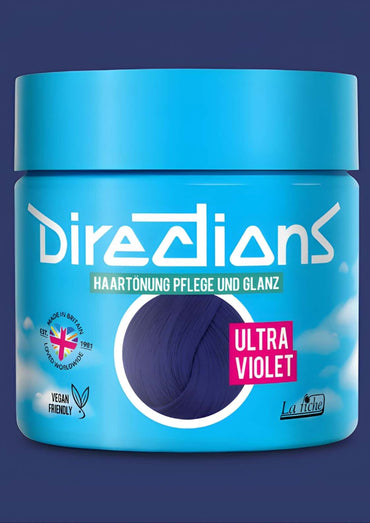
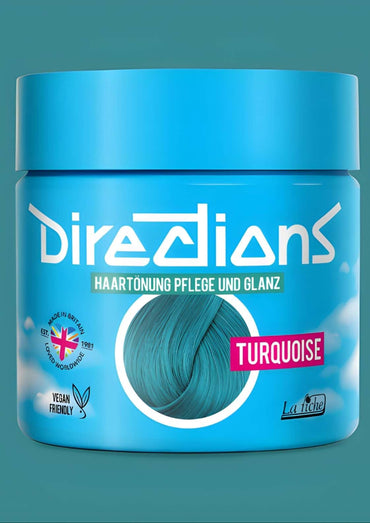
- A huge number of shades: from pastel to bright to very dark – including classics like Directions Rubine , Turquoise, Midnight Blue, Plum or Ebony.
- Mixable: You can mix several Directions shades together and lighten them with conditioner.
Who is Directions suitable for?
Directions is right for you if you:
- You live an alternative style and color is part of your expression,
- Prefer vegan, cruelty-free products,
- You like to experiment and change your looks,
- You are prepared to bleach your hair beforehand if you want extreme radiance.
Why Directions has cult status in the alternative scene
Bold hair colors are no longer just a teenage experiment. In the alternative scene, they are part of a conscious aesthetic statement . Directions plays a central role in this, as the brand has existed alongside bands, club nights, and festivals for decades.
What makes Directions so iconic:
- Color intensity: Shades like Plum, Atlantic Blue, Rubine or Dark Tulip create depth on lightened hair.
- Control over fading: While permanent dyes often veer into undefined mixed colors, Directions semi-permanent dyes usually fade in predictable stages. You control how long the look lasts through washing frequency, shampoo, and conditioner.
- Freedom to experiment: Since you don't need a developer, you can mix spontaneously, create pastel shades, try dip-dye, or just add individual strands.
- Values: Vegan, cruelty-free and ammonia-free directly appeals to the scene that is already critical of consumption, animal suffering and exploitation.
Basics: How Directions hair dye works
To understand why your results sometimes look different than on Instagram, it's worth taking a brief look at how it works.
1. Direct-drawing pigments
Directions hair color contains pre-developed pigments that coat the outer layer of the hair and are partially absorbed. It does not chemically lighten your natural hair color. Therefore, your starting color will not become lighter – it will only be covered or tinted.
2. Hair structure as a key
The more porous your hair, the more firmly the pigments adhere. Bleached hair absorbs Directions more intensely and the color lasts longer. Healthy, untreated hair often loses the dye more quickly or absorbs it less evenly.
3. No oxidation process
Unlike many drugstore hair dyes, Directions color pigments do not react with a developer. This means:
- No brightening,
- significantly less structural damage,
- Colors are easier to vary, refresh, and tone down.
4. Semi-permanent durability
The statement "lasts up to X washes" is only a rough guideline. Factors such as:
- Frequency of hair washing,
- Type of shampoo (sulfates, pH value),
- Exposure to heat (straightening iron, hairdryer),
- UV radiation
This affects how quickly your Directions hair dye fades.
The Directions color chart: Orientation in the color jungle
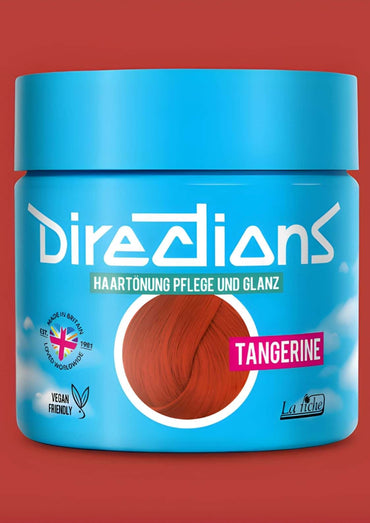
When you first stand in front of a Directions color chart , it looks like a candy aisle: Plum, Rubine, Turquoise, Midnight Blue, Ebony, Lilac, Flamingo Pink, Apple Green, White Toner, and many more. Each shade has its own unique character.
How do you read the Directions color chart correctly?
- It shows you how the color looks on ideally prepared, very light hair.
- Darker natural hair colors produce weaker or different results than shown on the color chart.
- Intermediate shades are created by mixing – the color chart only provides the basis.
Typical categories on the Directions color chart:
- Shades of blue and green: Turquoise, Atlantic Blue, Midnight Blue, Apple Green, Alpine Green
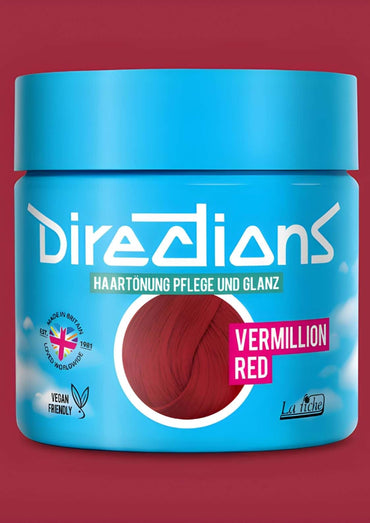
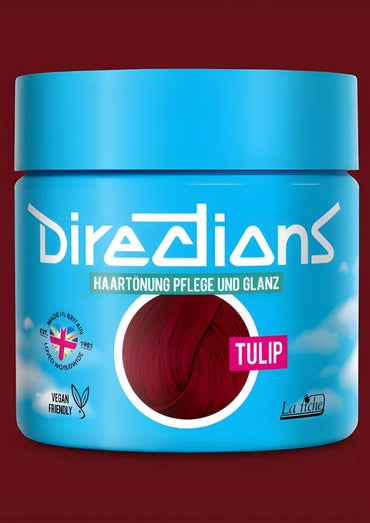
- Red and pink tones: Rubine, Pillarbox Red, Dark Tulip, Rose Red, Flamingo Pink
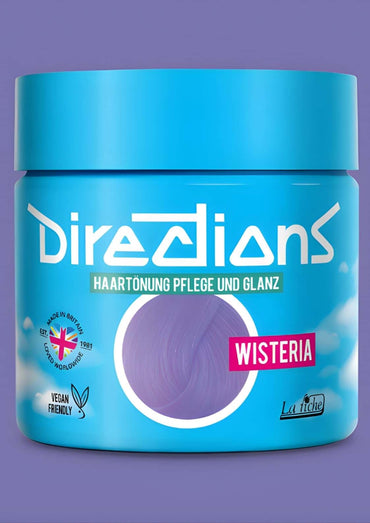
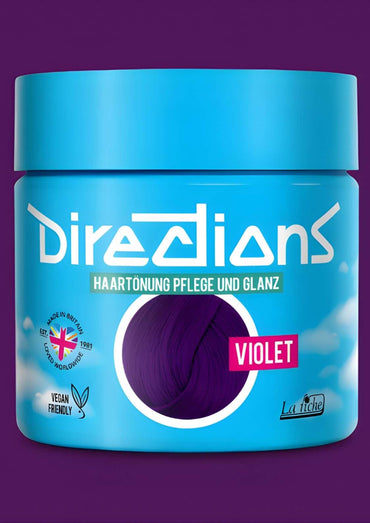
- Lilac and violet tones: Plum, Violet, Lavender
- Dark and natural tones: Ebony, Dark Tulip (depending on the base), possible combinations with White Toner
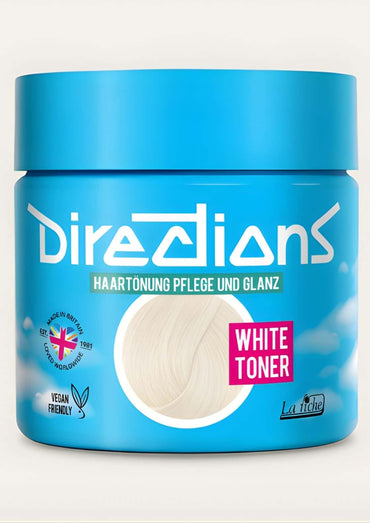
- Specials: White Toner for yellow neutralization, Silver for grey to silvery effects
If you'd like to find inspiration in peace and quiet, in our hair color category you'll find Directions as well as other brands and suitable products for complete color concepts.
Preparation: What you should clarify before applying Directions
Before you put on your gloves and start applying the dye, you need a plan. Good preparation is crucial for an even, vibrant result.
1. Analyze your starting hair color
Ask yourself:
- How dark is your hair currently?
- Is it natural, already dyed, or heavily bleached?
- Are there any stains, banding, or uneven levels?
Basic rule: The lighter and more even your hair, the closer you come to the representation of the Directions color chart.
2. Bleaching: yes or no?
For vibrant Directions colors like Turquoise, Rubine, Atlantic Blue, or Flamingo Pink, you usually need a lightened base. Special bleaching products, such as those found in the bleaching category, are suitable for this.
If you only want a slight tint on naturally brown hair or use very dark tones (Plum, Ebony, Dark Tulip), you can sometimes avoid full bleaching – however, the result will then be more subtle and less bright.
3. Check the condition of your hair
Bleaching stresses the hair structure. Check:
- Does your hair break easily?
- Does it feel extremely dry?
- Are many of the tips already white and rubbery?
Severely damaged hair absorbs Directions pigments unevenly. If in doubt, plan a haircut before coloring and opt for rich conditioning treatments and less aggressive lightening products.
4. Allergy test and skin protection
Even though Directions is considered more tolerable compared to many oxidative dyes, a short test is worthwhile:
- Apply a small amount of paint to the inside of your elbow or behind your ear,
- Leave to soak in for a few hours.
- Pay attention to reactions (redness, itching, burning).
Additionally, you protect your skin with:
- Apply cream along the hairline and around the ears,
- old clothes or cloak,
- Gloves.
Step-by-step: Directions application explained
Applying Directions seems simple at first glance, but typical mistakes often creep in. Here's a step-by-step guide that you can easily follow at home.
1. Wash and prepare your hair
- Wash your hair with a deep cleansing shampoo or a shampoo without silicones.
- Avoid using rich treatments or silicone conditioners immediately before coloring, as they form a barrier on the hair surface.
- Dry your hair with a towel until it is towel-dried: not dripping wet, but also not completely dry.
Tip: Comb your hair carefully so that you can evenly coat each strand with Directions hair color later.
2. Prepare Directions hair dye
- Open the jar and stir the paint briefly to redistribute any settled pigments.
- If you want a pastel shade, mix the Directions dye with a white, silicone-free conditioner in a bowl.
- When combining two or more tones, first mix them thoroughly until a homogeneous color is achieved.
Important point: Directions hair color is not mixed with developer. Use it neat or with conditioner – never with peroxide.
3. Application: Strand by strand
- Divide your hair into sections (e.g., top of head, sides, back of head).
- Apply the Directions hair dye strand by strand using a dye brush.
- Make sure to completely saturate each strand – including the undersides and ends.
- Comb the paint through with a wide-toothed comb to distribute it evenly.
The amount depends on the hair length. 50 ml is often enough for shoulder-length hair; for very long or thick hair you will need more.
4. Exposure time and heat
Recommended processing time: 15–30 minutes. However, many people deliberately leave Directions on longer to increase the intensity. Since no developer is active, the hair structure is not altered by oxidation.
Optionally you can:
- put on a shower cap
- work with gentle warm air,
- Wrap the hair in foil to retain heat.
However, be careful that your scalp doesn't get uncomfortably hot.
5. Rinse
- Rinse your hair with lukewarm water until the water runs almost clear.
- Avoid using shampoo immediately after applying Directions.
- You can use a light conditioner if your hair feels rough after coloring.
Then dry your hair as usual and admire your result in the mirror.
Typical mistakes when using Directions – and how to avoid them
Many frustrating experiences with Directions hair dye have similar causes. Here are the most common mistakes and solutions.
1. Unwashed, heavily groomed hair
Heavy treatments, silicone serums, or oils block the pigments. Wash your hair thoroughly before applying Directions and use only light conditioning products.
2. Uneven bleaching
If your base color is patchy, yellow-orange, or multi-layered, the Directions hair dye will also appear patchy. It's best to plan for a clean base using a good bleach from our bleaching category.
3. Insufficient exposure time
Leaving Directions on your hair for only 5-10 minutes often results in a weaker color than shown in the product images. A processing time of 20-30 minutes usually yields significantly better results.
4. Incorrect color expectations (especially with rubies)
If you have a deep, dark wine red in your mind, but apply rubies to a light, neutral blonde, the result will likely be more of a neon magenta. In such cases, a test strand or combining it with darker tones is recommended.
5. Deep cleansing shampoo after every wash
Sure, that will quickly remove the pigments from your hair. But if you want to keep the color longer, use mild shampoos and lukewarm water.
Durability and fading: How long does Directions last?
There is no single answer. The longevity of Directions hair dye depends on several factors:
- Hair structure: Porous, bleached hair often holds pigments longer, while natural hair releases them more quickly.
- Color depth: Dark, red and violet Directions shades (e.g. Plum, Rubine, Dark Tulip) usually last longer than pastel shades.
- Care: Mild shampoos, cool water temperature and low heat maintain the intensity.
- Frequency of hair washing: The less often you wash your hair, the longer the color will remain intense.
Realistic range:
From about 5-8 washes for pastel shades to several weeks for dark, highly pigmented colors like plum or ruby. On very light, heavily bleached hair, residual pigments can remain in the hair longer and fade only slowly.
Controlled fading
For many, controlled fading is part of their style. An initially intense midnight blue can develop into a smoky blue-gray, while rubies fade into softer pink tones. By taking these different phases into account, you can strategically shape your look over several weeks.
Mixing colors: Creating your own Directions shades
A major appeal of Directions lies in the mixability of the shades . You are not bound to the color chart, but can mix your own signature red, pastel lilac or petrol green.
Basic rules for mixing:
- Only mix colors that you have previously stirred together in a bowl – not directly on the head.
- Test your mixture on a white sheet of paper or a strand of synthetic hair to get a feel for the tone.
- Remember the approximate mixing ratios if you want to recreate the result later.
Popular mixing ideas:
- Rubine + Dark Tulip for a darker, less neon-like red-magenta
- Midnight Blue + Turquoise for a deep petrol blue
- Plum + Violet for an intense, mystical purple with a deep undertone.
- Any Directions color + white conditioner for pastel variations (e.g. pastel pink, pastel purple).
Important: The base color always influences how your mixed shade will ultimately look. A slightly yellowish blonde tone will make your pastel shade warmer, while a neutral to cool base will keep it clearer.
Directions in German: Terms you will encounter during your research
If you search for " Directions in German ", you'll come across many hairdressing terminology that often remains unclear. Here's a brief overview.
- Semi-permanent hair color / hair tint: Color that washes out over time and only minimally alters the hair structure.
- Direct dye hair color: Pigments that are applied directly to the hair without a developer, such as Directions.
- Oxidative hair color: Classic permanent hair color that is mixed with developer (peroxide) and lightens or permanently pigments the hair.
- White toner: A product that neutralizes yellowish blonde tones and shifts them towards white blonde.
- Pastel hair color: Highly diluted, light tones that become visible on very light hair.
If you read terms like "direct dye", "semi-permanent" or "toner" in descriptions of hair coloring accessories or hair tinting products , you will now know how this relates to Directions.
Post-coloring care: How to keep your Directions hair color vibrant for longer
Once you've achieved your desired color, the goal is to maintain its vibrancy for as long as possible without ruining your hair.
1. Shampoo and washing frequency
- Use mild shampoos without harsh sulfates.
- Wash with lukewarm rather than hot water to keep the cuticle layer closed.
- Schedule your wash days deliberately – the less frequent the wash, the longer the pigments remain active.
2. Care products
- Use conditioners and hair treatments that strengthen your hair but don't coat it excessively.
- Silicones don't have to be completely taboo, but they can make it more difficult for pigments to re-penetrate your hair if you frequently redye.
- Leave-in products protect against heat and UV radiation.
3. Heat and Styling
- Reduce the use of hair straighteners and curling irons to a minimum.
- Use heat protection when styling your hair.
- Let your hair air dry more often instead of using a hot hairdryer.
4. Refresh with Directions
- Mix a small amount of your Directions hair dye with conditioner.
- Distribute the mixture like a treatment in washed, towel-dried hair.
- Leave it on for 10-20 minutes and then rinse.
This way you can refresh your tone without having to start a complete dyeing procedure every time.
Color change: How to get rid of or change Directions
At some point, you'll want to change your look: from rubies to midnight blue, from bright to subtle, or back to natural hair.
1. Wash patiently.
- Wash more frequently with a slightly stronger shampoo.
- Use anti-dandruff shampoo only when necessary, as it can irritate the scalp.
- Treat your hair to rich conditioning afterwards.
2. Color removal and cleaning
There are special pigment removal products that are gentler than bleach. However, they don't completely remove every Directions shade and can also damage the hair structure. Always allow your hair time to recover.
3. Neutralize with a counter-tone
For slight residual shimmer, you can sometimes work with complementary colors, for example:
- Balance out greenish residues with reddish tones,
- Neutralize yellow tones with violet tones (toner).
This method requires experience and testing on individual strands to avoid a muddy tone.
4. From Directions to natural tones
If you want to go back to a more natural hair color:
- Wash out as many pigments as possible.
- If in doubt, seek professional advice before covering over-pigmented Directions residue with permanent dye.
- Work with light tints in natural shades before taking radical steps.
Safety Basics: How to handle Directions hair dye safely
Even though Directions is considered relatively gentle compared to many other hair coloring products, hair color remains a product that you should handle responsibly.
1. Avoid contact with eyes and mucous membranes
- Wear gloves when applying the product.
- Make sure no paint gets into your eyes or mouth.
- If so, rinse thoroughly with water immediately and contact a doctor if in doubt.
2. Perform an allergy test
Even vegan, ammonia-free dyes can trigger allergies. A quick skin test before first use will save you a lot of stress if something goes wrong.
3. Protect the work environment
- Cover bathroom tiles, sinks and furniture with foil or old towels.
- Wipe away any paint splashes immediately, as Directions can also discolor plastic and silicone joints.
4. Dealing with children and pets
- Keep jars out of reach of children.
- Do not allow pets to lick open containers or come into contact with paint drops.
How to find the right Directions shade for your complexion and style
Not every hair color suits every complexion, face shape, and style. However, there are no hard and fast rules. Ultimately, what matters is what makes you feel right.
1. Skin tone and undertone
- For cool skin undertones (slight pinkish tint), blue, violet and cool red tones such as plum, midnight blue or a cool ruby often look harmonious.
- For warm undertones (light golden or olive skin), rubies with a warm shimmer, Dark Tulip or petrol tones are a very good match.
- A neutral complexion can handle almost any Directions shade – you decide on style, not rules.
2. Contrast level
- If you have very fair skin and wear almost exclusively black, neon colors will enhance the contrast for a dramatic look.
- If you prefer more subdued looks, darker tones like ebony, plum or deep midnight blue are a good choice.
Frequently asked questions about Directions hair dye
How do you apply Directions hair dye correctly?
For a clean Directions application , first wash your hair with a silicone-free shampoo, towel dry it, and apply the Directions hair color to towel-dried hair. Part your hair into sections, apply the color strand by strand with a brush, and comb through thoroughly. Leave the semi-permanent color on for 15–30 minutes, rinse it out with lukewarm water, and avoid shampooing immediately afterward. This way, you'll get the most out of the Directions' direct dyeing action.
How long does Directions hair dye last in the hair?
The longevity of Directions hair color depends on hair structure, care, and shade. Darker shades and reds like Directions Rubine, Plum, or Dark Tulip often last for several weeks and survive eight or more washes, while pastel shades fade more quickly. Sulfate-free shampoos, cool water, and low heat help your Directions color stay vibrant longer and fade evenly.
What hair color do I need for Directions to make the colors vibrant?
For intense, vibrant results, your hair should be as light and evenly bleached as possible before applying Directions , often in the blonde range of level 9-10. Neon and bright shades like Turquoise, Flamingo Pink, or Directions Rubine, in particular, only achieve their full radiance on heavily bleached hair. On medium to dark natural hair colors, Directions tends to appear as a shimmer or light tint and won't be as intense as shown on the Directions color chart.
Is Directions hair dye vegan and cruelty-free?
Yes, Directions hair color is considered vegan and cruelty-free. The formula contains no animal-derived ingredients, ammonia, or peroxide developer. This makes Directions a good fit for a lifestyle that combines vegan hair color, sustainable fashion, and alternative values.
What color is Directions Rubine exactly – more red or pink?
Directions Rubine lies between red and pink, with a distinct magenta undertone. On very light, neutral blonde hair, Rubine often appears as a vibrant neon magenta, while on slightly yellowish blonde it looks more like an intense pinkish-red. If you're expecting a classic dark red, a combination of Rubine and darker shades like Dark Tulip or Plum is a better match. The representation on the Directions color chart is always based on very light blonde hair; on darker hair, the result will be significantly more subtle.
Can I mix Directions hair dye with conditioner to get pastel shades?
Yes, you can mix Directions hair color with a white, silicone-free conditioner to create pastel shades. Pour some Directions color into a bowl and gradually lighten it with conditioner until you achieve the desired pastel shade. This mixture works best on very light blonde hair, as darker base colors will significantly dilute the delicate shade. Be sure to mix the pastel mixture thoroughly and use it immediately to ensure the pigments and conditioning agents are evenly distributed throughout your hair.
How do I remove Directions hair dye from my hair?
To remove Directions hair color , wash your hair with a slightly stronger shampoo, using warm water, and give the color time to wash out. Pastel shades fade faster, while darker tones like Rubine or Midnight Blue often leave residual pigment for longer. You can also use clarifying treatments or special color removers, but be sure to condition your hair thoroughly afterward. Before applying permanent hair color directly over Directions residue, it's worth taking a conscious washing-out period and, if in doubt, seeking professional advice to avoid unnecessary damage to your hair.
- https://www.bvl.bund.de/DE/Arbeitsbereiche/04_Verbraucherprodukte/02_Verbraucherprodukte_node.html – Information from the Federal Office of Consumer Protection on cosmetic products and their safety.
- https://www.bfr.bund.de/de/a-z_index/kosmetika-1308.html – Technical information from the Federal Institute for Risk Assessment on cosmetics, ingredients and health aspects.
- https://www.bundesgesundheitsministerium.de/themen/praevention/kosmetische-mittel.html – Overview page of the Federal Ministry of Health on cosmetic products and legal regulations.
- https://www.dkfz.de/de/hautzentrum/haare-und-kopfhaut.html – German Cancer Research Center with information on hair, scalp and influencing factors.
- https://www.umweltbundesamt.de/themen/chemikalien/kosmetika – Federal Environment Agency with information on cosmetics, environmental aspects and sustainable consumption.
Prev post

hair dye
Updated on 17 March 2026
Next post

Mixing Directions hair dye – How to achieve the perfect color
Updated on 31 January 2026