Digital printing (DTG printing) explained
Share
DTG printing seems like magic at first glance: You send a graphic to the printer, the printer spits out a shirt – and your design is directly embedded in the fabric. In this guide, we explain DTG printing step by step, show you its strengths, its limitations, and why and when we at EASURE rely on this particular technique.
What is DTG printing?
DTG stands for Direct to Garment . In DTG printing, a special textile printer sprays ink directly onto the fabric, similar to how an inkjet printer prints on paper. The design is created without foil, transfer, or screen – directly within the fabric.
The inks are water-based pigment inks that bond firmly to the fibers (primarily cotton) after fixing. This creates a print that:
- appears very detailed
- depicts many colors and gradients
- feels soft and not like a glued-on "board"
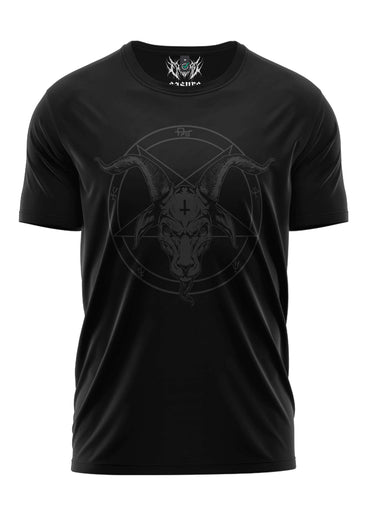
For us as a Gothic label, this means: fine lines, shading, runes, pentagrams, occult symbols and dark art illustrations come cleanly, clearly and vividly in color on the shirt.
Why DTG printing is a perfect fit for Gothic and alternative fashion
If you wear Gothic fashion, you're not looking for a generic print. You're looking for images, symbols, and statements that say something about you: spirituality, rebellion, anti-fascism, dark aesthetics. DTG prints excel precisely in this area.
What DTG printing can do for you:
- Extremely detailed motifs – shading in skulls, fur textures on wolves, fine ornaments, sigils, tarot details
- Many colors and gradients – ideal for dark color palettes, fog effects, blood-red accents
- Soft feel – even with large chest prints, your shirt remains comfortable to wear.
- Small editions and unique pieces – limited, individual, without mass production
As an independent Gothic shop in Krefeld, we print small series and limited drops without having to produce thousands of items. This aligns with our stance against overproduction and fast fashion, and with your desire for unique pieces instead of generic mass-produced goods .
This is how DTG printing works technically.
To help you appreciate what goes into a high-quality DTG print, we'll walk you through the process in detail. This will also help you understand the price differences and develop realistic expectations regarding print quality and durability.
1. Motif preparation – from artwork to print-ready file
It all starts with your design: an illustration, lettering, a collage, a digital draft. For a high-quality DTG print, we pay attention to:
- Sufficient resolution (at least 300 dpi at the final print size)
- Clean edges and clear contrasts
- Correct color profiles for textile printing (usually RGB or printer profile, not CMYK from offset printing)
- Transparent backgrounds for isolated subjects
Especially with dark art and complex gothic illustrations, clean preparation makes the difference between "okay" and "wow, that looks like a digital painting on fabric" .
2. Choosing the right fabric – why cotton remains king
Classic DTG printing works best on cotton , ideally 100% organic cotton . Blended fabrics with a high polyester content reduce color vibrancy and wash resistance.
For our EASURE shirts, hoodies and long-sleeved shirts, we consistently rely on:
- Organic cotton with fair production standards
- Dense, smooth fabrics, so that the ink adheres precisely.
- Cuts that are suitable for everyday wear, clubbing, and festivals.
If you are interested in how the blanks are made, you can find a deeper insight into sustainable production in our blog post about the production of textile blanks :
A look at sustainable textile blanks at EASURE .
3. Pretreatment – the invisible helper
Dark textiles require pretreatment for DTG printing. This liquid ensures that:
- the white and colored pigments do not sink too deeply into the fiber
- the ink adheres better to the fabric
- Keep edges and details clean
The fabric is sprayed with pretreatment, evenly distributed, and pre-dried. Afterwards, the textile will feel slightly stiffer for a short time. This effect disappears after the first few washes.
4. Printing – the garment printer in action
Now comes the actual direct-to-garment printing :
- The shirt is stretched over a board to prevent it from slipping.
- The printer first sprays a layer of white ink onto dark fabrics, which serve as a base.
- The colored layers then follow in high resolution, controlled by the software.
The printing process is reminiscent of a large, very precise desktop inkjet printer – only specifically built for textiles, with different mechanics and different ink.
5. Fixing – turning ink into a permanent print
Freshly printed DTG designs remain delicate and can transfer ink to skin and clothing. To make the ink wash-resistant , it is then fixed using a heat press or tunnel curing process .
- defined temperature
- defined time
- adjusted pressure
In this process, the pigments cross-link with the fiber. Only after this step is the print considered durable and resilient.
DTG printing vs. screen printing – which is suitable for which design?
One of the most frequently asked questions: “DTG printing vs. screen printing – which is better?” The honest answer: It depends on the design, quantity and application.
Strengths of screen printing
- Ideal for large print runs (bands, tour merch, clubs)
- Extremely durable when properly executed
- Strong, solid surfaces and a few, saturated colors
Strengths of DTG printing
- Perfect for small print runs and individual pieces
- Many colors, gradients, photos, dark art paintings
- No complicated sieve setup, no color change
For limited-edition Gothic fashion, like what we offer at EASURE, DTG printing provides the freedom to realize even experimental designs without a minimum order quantity. If you'd like to see what something like this looks like when worn, take a look at our Gothic shirts with dark art designs :
Browse through our Gothic shirts with Dark Art Prints .
DTG printing vs. DTF printing – what are DTF and DTG printing?
In recent years, another abbreviation has appeared in the textile industry: DTF . Many people are asking: "What are DTF and DTG printing?" and "DTG or DTF printing – which is better for my shirt?"
Briefly explained: What is DTF printing?
DTF stands for Direct to Film . Here, the design is first placed on a special film, sprinkled with powder, fixed, and then transferred to the fabric using heat. The process is similar to heat transfer printing.
Features of DTF printing:
- There is some pressure on the fabric.
- very robust and abrasion-resistant
- good for polyester, functional textiles and difficult fabrics
- Good for logos, fonts, simple vector graphics
DTG or DTF printing – what are the differences?
| aspect | DTG printing (Direct to Garment) | DTF printing (Direct to Film) |
|---|---|---|
| carrier | Direct printing on cotton | Print on foil, then transfer onto textile |
| Haptics | Soft, “in the fabric” | Noticeably flat, depending on the motif, denser film |
| Motives | Photos, gradients, dark art, detailed illustrations | Logos, lettering, graphic designs, high edge sharpness |
| materials | Best results on cotton | Functional textiles, polyester, blended fabrics work well |
| durability | High with proper care | Generally very robust and washable |
| Wearing comfort | Pleasant for large front prints | With large solid surfaces, sometimes a slight "board" effect can occur. |
| Ideal for | small print runs, limited edition fashion | Teams, clubs, workwear, sportswear |
For our Gothic shirts, hoodies and sweaters, we deliberately use screen printing and DTG printing because the look, level of detail and feel of the fabric perfectly match the dark fashion world.
DTG print durability – how long will your design last?
A key issue: durability . How long does a DTG printed T-shirt look good before the colors fade?
What durability in DTG printing depends on
Ink and printer quality
High-quality pigment inks, correct settings and professional equipment ensure stable results.
Pretreatment and fixation
Without proper pretreatment on dark textiles and without a clean fixing process, wash resistance suffers.
Textile quality
Dense, smooth organic cotton absorbs ink better than thin, coarse fabrics.
Care from you
Washing temperature, detergent, dryer – everything affects the lifespan of your print.
Care tips to ensure your DTG print lasts a long time
With proper care, you can enjoy your Gothic design for many washes:
- Wash inside out to reduce friction on the printed side.
- Temperatures of 30–40 °C are sufficient
- Use a gentle detergent , no harsh bleach.
- No dryer , air drying is preferable.
- If you iron, do it from the reverse side or with a cloth over the print.
Pay attention to the care instructions in the product descriptions to ensure your shirt print lasts. stays strong and beautiful for a long time.
Buying a DTG printer – what's inside such a device?
If you delve deeper into the subject, you'll quickly stumble across search terms like "buy DTG printer" . The temptation is strong to add such a system to your own Crypt. Before buying, it's worth taking a closer look.
Structure and function of a DTG printer
A professional DTG printer consists of:
- Mechanism that holds a textile absolutely stable on a printing plate
- Printheads that apply pigment ink in the finest droplets
- Tanks or cartridges for white and colored inks
- Software / RIP that controls colors, resolution and print order
- Cleaning and maintenance systems that keep nozzles clear and functional
Brands such as Epson, Brother, Kornit and others develop their own systems, inks and pre-treatment solutions that are coordinated with each other.
Costs and reality behind “buying a DTG printer”
Anyone searching for "buy DTG printer" will quickly realize that it is a professional investment item :
- Acquisition costs in the five-figure range for reliable systems
- Additional costs include pre-treatment equipment, drying equipment, extraction system, and workplace.
- Consumables such as ink, pretreatment, cleaning fluids
- Ongoing maintenance and spare parts
For many labels in the Gothic and alternative scene, owning a DTG printer only makes sense if it leads to a fully-fledged textile printing operation. Those who "only" want to print their own designs on shirts are much better off working with a specialized partner or shop.
At EASURE, the focus has always been on design, symbolism, motif selection, and textile quality . We produce in small batches, know our machines and materials intimately, and have tailored all processes to organic cotton, dark art, and durable prints .
DTG printed T-shirt – how to recognize good quality
Not every DTG printed T-shirt lives up to the product page's promises. The following points will help you assess the quality:
1. Fabric quality and cut
Good DTG shirts consist of:
- medium to heavyweight cotton (usually 160–200 g/m² or more)
- preferably ring-spun, combed organic cotton
- clean seams that remain stable even after many washes
A high-quality shirt serves as a stage for your design. A poor-quality blank shirt diminishes the overall impression, even if the print initially looks good.
2. Surface image of the print
Pay attention to:
- Sharp edges on lines and fonts
- Uniform color areas , no "holes" or strong show-through of the fabric.
- No visible print lines
With dark art graphics, you can see the quality immediately: smooth transitions, clean contrast, no "pixelated" edges.
3. Haptics
A good DTG print:
- It feels smooth, but not thick like plastic.
- It feels like you're "in the fabric" with your hand, rather than like a rubberized surface.
4. Behavior after the first washes
A solid DTG print:
- After the first two washes, it loses at most a slight initial brilliance.
- It remains stable over many wash cycles.
- shows no massive cracks or severe peeling.
Where exactly does EASURE use DTG printing?
As a Gothic online shop specializing in hand-printed organic textiles, we use DTG printing wherever dark art and complex design are important:
- Unisex shirts with large, colorful front or back prints.
We deliberately combine DTG printing with:
- Limited editions to make your clothes a statement piece
- sustainable choices such as organic cotton, local production routes and avoiding overstocking
You can read more about how we create our own prints in our article about craftsmanship, attitude and dark identity :
Click here to read our article on how we print our own shirts .
Buying tips: How to recognize good DTG merch
Whether you buy from us or another brand – these points will help you distinguish reputable DTG suppliers from uninspired dropshipping shops:
Transparency in the printing process
Shops that openly communicate their use of DTG printing or other methods generally have a strong awareness of quality. If someone hides their printing method, it quickly raises suspicion.
Information on fabrics and sustainability
Mentions such as organic cotton, fair production, certified blanks show that there is more behind the motives than pure marketing.
Clear care instructions
Those who value durability will explain how to wash, dry, and care for your shirt.
Community feedback
Reviews and reactions from the scene send a strong signal. The Gothic community does not forgive crumbling printing or cheap-looking merchandise.
At EASURE, we consciously chose hand-printed organic textiles because we want to convey not only designs, but also attitude and responsibility .
DTG printing and sustainability
DTG printing demonstrates its qualities not only in terms of appearance, but also in terms of sustainability , if companies use it consciously.
Ecological aspects of DTG
On-demand production
DTG is ideally suited for small production runs. This reduces overproduction and leftover stock that would otherwise end up in the trash.
Water-based inks
Modern DTG inks are water-based and do not contain aggressive solvents.
No sieve chemical waste
In contrast to screen printing, no emulsions, strippers and similar chemicals are produced.
At the same time, responsibly used DTG printing requires:
- energy-efficient drying and fixing systems
- sensible bundling of print jobs
- high-quality blanks that extend the lifespan of the products
In combination with organic cotton , like the kind we use at EASURE, the result is a complete package that is significantly more resource-efficient than classic fast-fashion corporations with mass production.
Frequently Asked Questions about DTG Printing
What is DTG printing?
DTG printing stands for Direct to Garment . A special textile printer sprays water-based pigment ink directly onto the fabric, usually cotton. This creates a highly detailed print with many colors and gradients, which feels soft and is particularly well-suited for Gothic shirts, dark art designs, and limited edition collections .
What does DTG mean in the printing industry?
In the printing industry, DTG stands for Direct to Garment Printing , meaning printing directly onto the finished garment. Instead of paper or foil, the ink is applied directly to the shirt, hoodie, or long-sleeved shirt. This technique is particularly suitable for small print runs, personalized textiles, and highly detailed designs , such as those popular in the Gothic and metal scenes.
What are DTF and DTG printing?
DTG (Direct to Garment) printing prints directly onto the fabric. The ink penetrates the fibers, creating a soft, natural feel, especially on cotton shirts.
DTF (Direct to Film) printing first prints the design onto a film, sprinkles it with powder, and then presses it onto the fabric. The result is more durable and has a noticeable feel on the material. DTG printing is ideal for dark art prints and large designs , while DTF excels at logos, workwear, and performance textiles.
DTG printing vs. screen printing – which method is better?
DTG printing excels with a wide range of colors, gradients, and small print runs , for example, for custom gothic shirts or limited editions. Screen printing shines with large print runs using a few vibrant colors , such as band merchandise for tours. For intricate dark art graphics on organic textiles, DTG printing offers the more flexible and often more aesthetically pleasing solution.
How durable is DTG printing?
The durability of DTG printing depends on the fabric quality, ink, pretreatment, and your care. On good quality cotton shirts with professional fixation, a DTG print will last for many washes without cracking or fading completely. Washing your shirt inside out at 30–40°C, avoiding fabric softener, and tumble drying will help the print stay vibrant for a long time.
Is DTG printing suitable for every T-shirt?
DTG printing is best suited for cotton shirts , ideally organic cotton . On very cheap, coarse fabrics or high polyester content, the quality suffers. That's why at EASURE we use high-quality blanks to ensure that the DTG-printed T-shirt and design make a strong impression . For pure polyester or performance shirts, the industry often uses DTF or sublimation printing.
Should I buy a DTG printer or have the printing done professionally?
Owning a DTG printer requires significant investment, expertise, maintenance, and suitable infrastructure. For individuals, bands, or small Gothic labels, purchasing one is rarely worthwhile. It's considerably less stressful to work with a specialized partner or shop that combines DTG printing, organic textiles, and an understanding of the scene – this is precisely the field where EASURE operates with its hand-printed Gothic clothing.
- https://www.fespa.com/de/learn/articles/direct-to-garment-printing-basics – Technical article from an industry association on getting started with direct-to-garment printing
- https://www.ifai.com/2021/04/01/digital-textile-printing-technology-overview/ – Technical overview of digital textile printing from a trade association
- https://www.oeko-tex.com/de/nachhaltigkeit/textile-nachhaltigkeit – Information on sustainable textile production and certifications
- https://www.unep.org/resources/report/sustainability-and-circularity-textile-value-chain – UN report on sustainability in the textile industry
- https://www.iso.org/standard/72823.html – ISO guideline on textile care labels
Next post

Screen printing explained
Updated on 17 March 2026